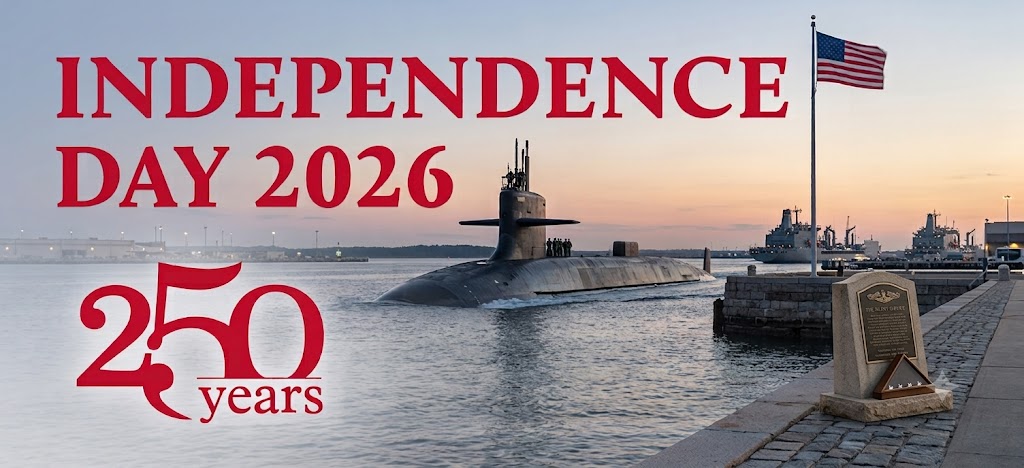
As the United States readies to celebrate 250 years of a grand experiment in liberty, innovation, and resilience tomorrow—we naturally look to the skyward monuments, the sprawling battlefields, and the open seas to trace our history. Yet, some of the most critical chapters of the American story were written where the sun never shines.
For two and a half centuries, the United States Submarine Force has served as the nation’s silent vanguard. From a hand-cranked wooden barrel to nuclear-powered titans cruising the deep, the evolution of the “Silent Service” mirrors the evolution of America itself: daring, technologically unmatched, and deeply committed to the defense of freedom.
1776: The Audacious Beginnings
Long before submersibles were a recognized instrument of naval warfare, an American inventor named David Bushnell had a wild idea. In 1776, as George Washington’s continental army struggled against the might of the British Royal Navy, Bushnell created the Turtle.
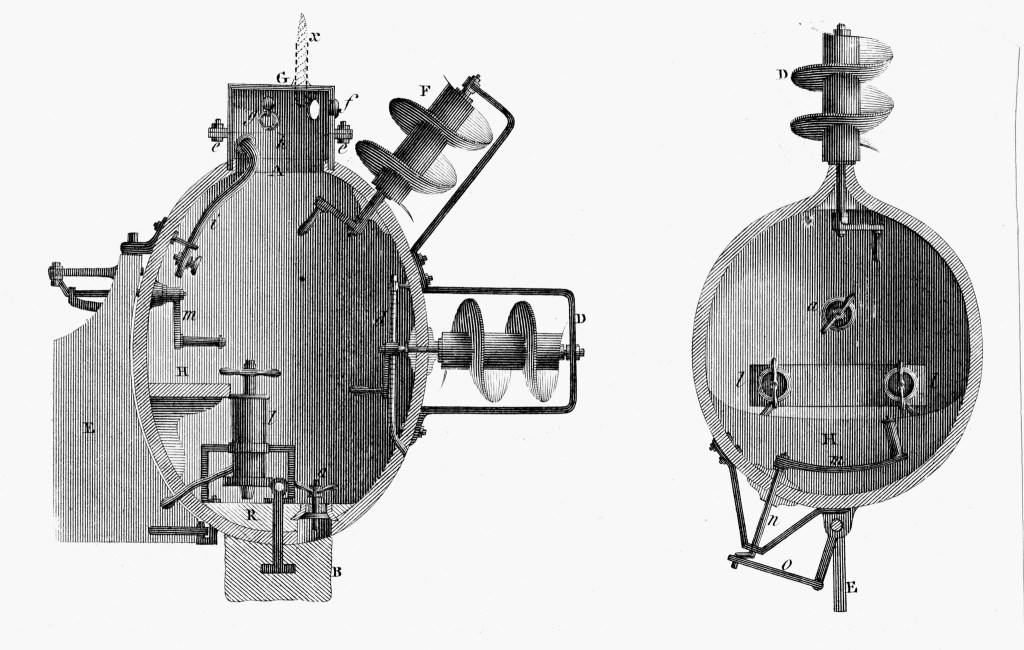
An oak-and-iron, single-man vessel powered entirely by hand cranks, the Turtle attempted the world’s first submarine attack in New York Harbor against the British flagship HMS Eagle. While the mission didn’t sink the ship, it proved a fundamentally American truth: ingenuity and courage could level the playing field against the world’s greatest empires.
The Crucible of Global Conflict
By World War II, the submarine force had evolved from an experimental novelty into a strategic centerpiece. Though submariners made up less than 2% of the total U.S. Navy personnel during the war, they shouldered a monumental burden.
Operating in perilous, uncharted waters, U.S. submarines cut off critical enemy supply lines across the Pacific.
– They destroyed over 1,300 merchant ships.
– They accounted for 55% of all Japanese maritime losses.
– The cost was devastatingly steep: 52 American submarines were lost, and over 3,500 submariners made the ultimate sacrifice.
Their valor under pressure laid the foundation for the Allied victory, earning the force an enduring reputation for quiet heroism.
1954: Underway on Nuclear Power
As America entered the atomic age and faced the existential threat of the Cold War, the Silent Service underwent a revolution that would change global strategy forever.
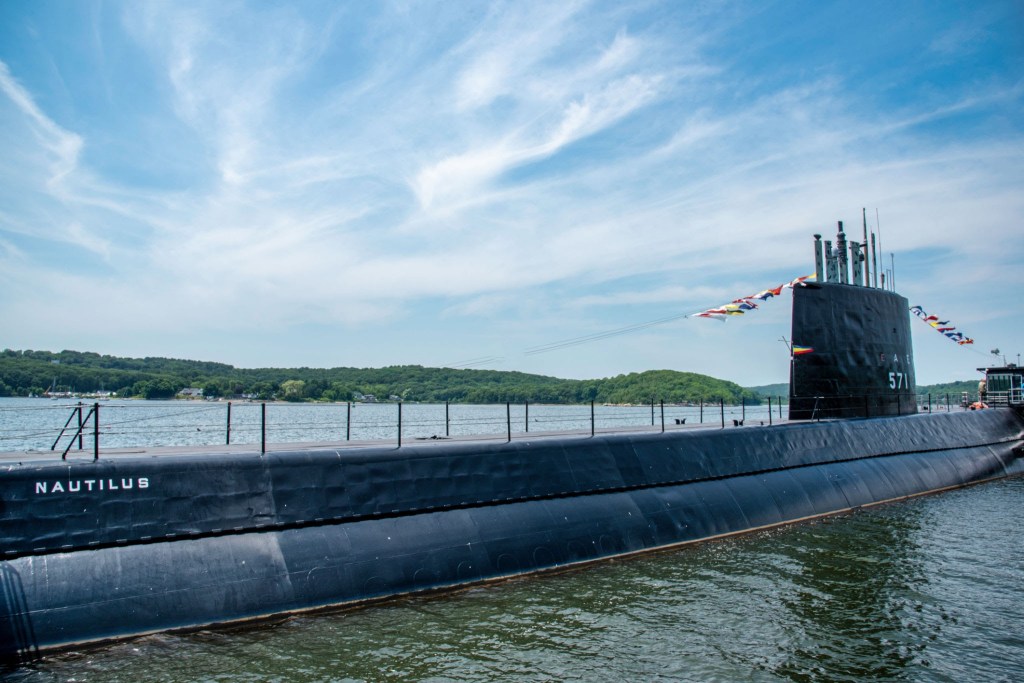
After 25 years of service, the USS Nautilus was decommissioned on March 3, 1980. It was designated a National Historic Landmark in 1982. The Nautilus is preserved as a museum ship at the Submarine Force Library and Museum in Groton, Connecticut. It is open to the public and serves as an educational exhibit, highlighting the history and impact of nuclear-powered submarines.
In 1954, the launch of the USS Nautilus (SSN-571)—the world’s first nuclear-powered submarine—shattered all previous limits of naval engineering. No longer tethered to the surface for air or diesel fuel, the Nautilus could remain submerged indefinitely. In 1958, it accomplished the seemingly impossible, transiting beneath the North Pole ice cap.
During the tense decades of the Cold War, the nuclear ballistic missile submarine (SSBN) emerged as the ultimate guarantor of peace. Operating invisibly in the deep ocean, these vessels formed the most survivable leg of the nuclear triad, ensuring deterrence and preventing a third world war through sheer, silent presence.
The Modern Vanguard: 250 Years and Beyond
Today, the legacy of the Turtle and the Nautilus lives on in the ultra-advanced Virginia and Ohio-class submarines, and the emerging Columbia-class.
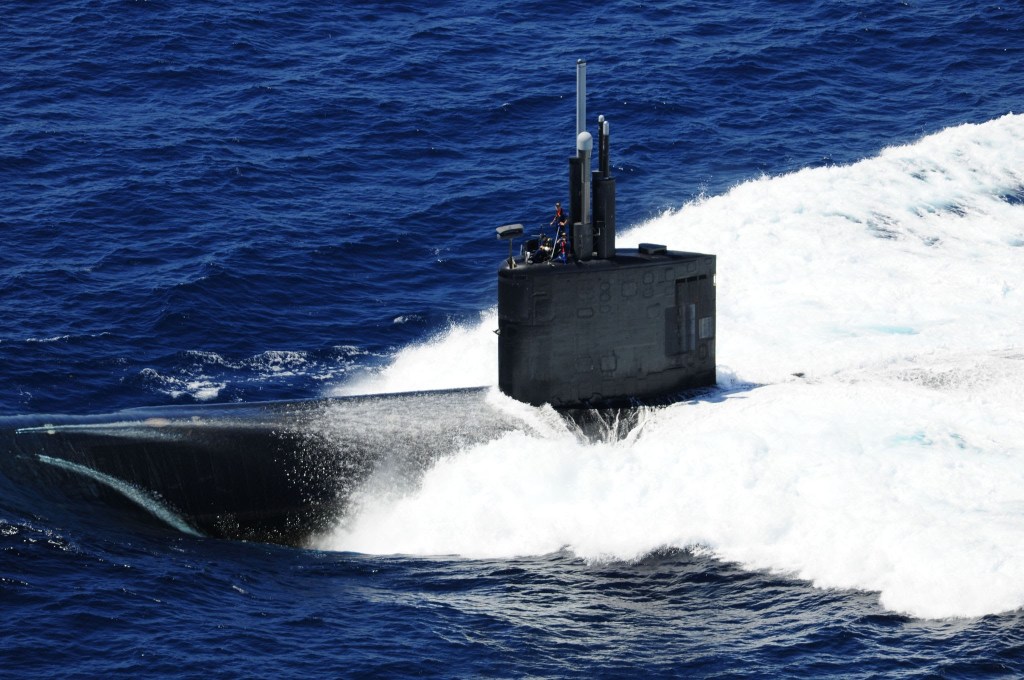
As the U.S. navigates a complex, modern global landscape, the Submarine Force remains the ultimate instrument of stealth, intelligence, and power projection.
| Era | Key Vessel | Primary Propulsion | Strategic Role |
| 1776 | Turtle | Manual Hand Crank | Revolutionary asymmetric warfare |
| 1941–1945 | Gato / Balao Class | Diesel-Electric | Crippling enemy supply lines |
| Cold War–Present | Los Angeles / Virginia Class | Nuclear Reactor | Power projection, intelligence, deterrence |
The strength of the Silent Service has never just been the steel hulls or the nuclear reactors; it is the unique breed of sailors who volunteer to inhabit them. To live for months beneath hundreds of feet of water requires an elite level of trust, discipline, and devotion to duty.
As America reflects on 250 years of triumph, trials, and progress, the nation owes a profound debt to those who watch over the country from the depths—unseen, unheard, but ever vigilant.