
Tradewinds August 2026

Volume 85

To perpetuate the memory of our shipmates who gave their lives while voluntarily serving in submarine warfare in the pursuit of their duties while serving their country. That their dedication, deeds and supreme sacrifice be a constant source of motivation toward greater accomplishments. To further promote and keep alive the spirit and unity that existed among submarine crewmen during World War II. To promote sociability general welfare and good fellowship among our members. To pledge loyalty and patriotism to the United States of America and it’s constitution.

1. Bowfin Pearl Harbor Base

Bowfin Meeting – We conducted our August meeting at Clean Sweep Bar, Lockwood Hall. The following members attended – Base Commander Vice Commander Tim Sparks, Secretary Brett Kulbis, Treasurer Pat Suenaga, COB Gary Johnson, and members Dave Atkins, Jim Bazemore, David Bilek, Rodney Boucher, Karl Dye, Nelson Greer, Gary Grisham, John Johnson, Ace Parker, Crichton Roberts, Wade Thode, and Ken Voorhees.

Welcomed Guests – Miya Bilek, Nancy Kreis, Ann Gosling, Gregg Parker, and Will and Wes Thode.

Binnacle List – Please keep the all our members and their families in your good thoughts and prayers, especially Doi Brown, Paul Ferguson, Chris Cunha, and Charlie Womack.

Hauʻoli Lā Hānau! Bowfin Birthdays for the month of August.

Patrol Reports

✝️ In Memoriam — Rear Admiral Winford G. “Jerry” Ellis, USN (Ret.)

Dan’s Doing It Again!

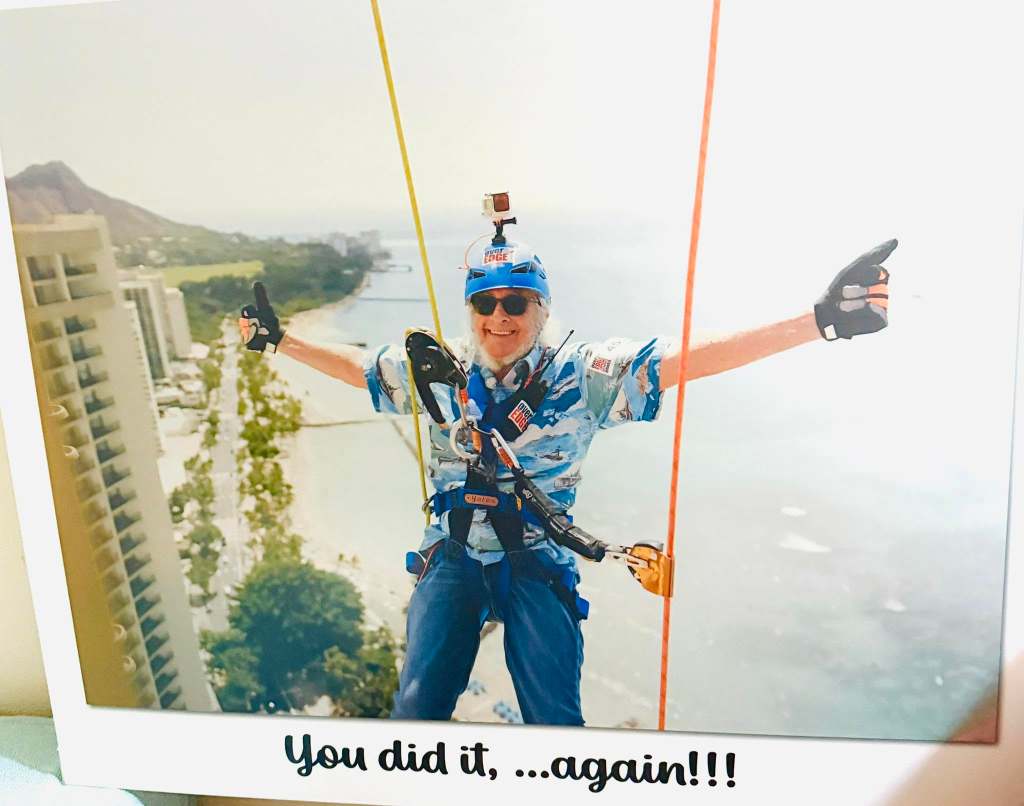
Dan Del Monte will be going “Over the Edge” again this year with a goal to raise $10,000, and asks that you “Please donate for these wonderful folks.”  To donate click HERE.

July 2026

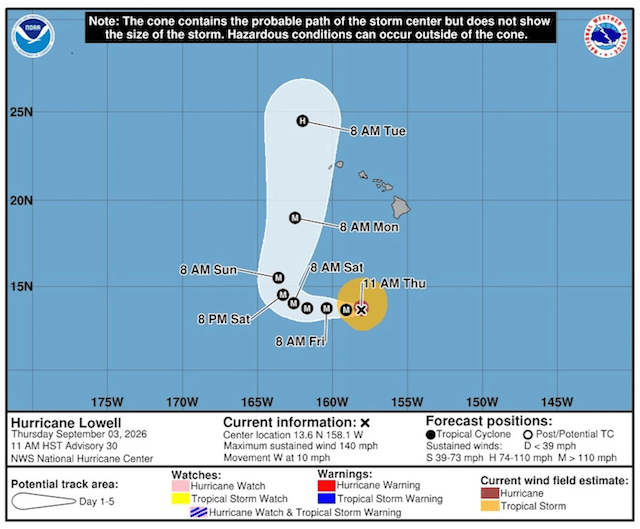
Hurricane Season

Bowfin Holland Club Members

This Month in Base History

2009 – Newsletter of the Year 2009 (Class I Winner)

Base Officers & Staff

Commander Paul T. Jurcsak
Vice Commander Tim Sparks
Secretary Brett Kulbis
Treasurer Pat Suenaga
Chief of the Boat Gary G. Johnson
Storekeeper George F. Barlett

2. U.S. Submarine Veterans Inc.

News and Bulletins
American Submariner

USSVI Officers & Stafff

USSVI National Commander Jon D. Jaques
USSVI Western Region Director Peter T. Juhos
USSVI Western District 6 Commander Dave Vanderveen
USSVI Office Manager Charles F. Murray

3.Information of Interest

VA News Releases
Defense News – Early Bird

4.Still On Patrol

Tolling of the bells for boats lost in the month of August.

5.Important Links

Bowfin Base Pearl Harbor
Plan of the Day
Bowfin Pearl Harbor Base Photo Album
USSVI Bowfin Base Facebook (Like Us, Follow Us and Share with your shipmates)
Past Bowfin Base Eblasts
Friends of the Submarine Memorial Chapel Facebook (Like Us, Follow Us and Share with your shipmates)
USS Bowfin Submarine Museum & Park
American Submariner Magazine
Pearl Harbor Dolphin Store (Your one stop shop for submarine merchandise.)

6.Submarine Humor

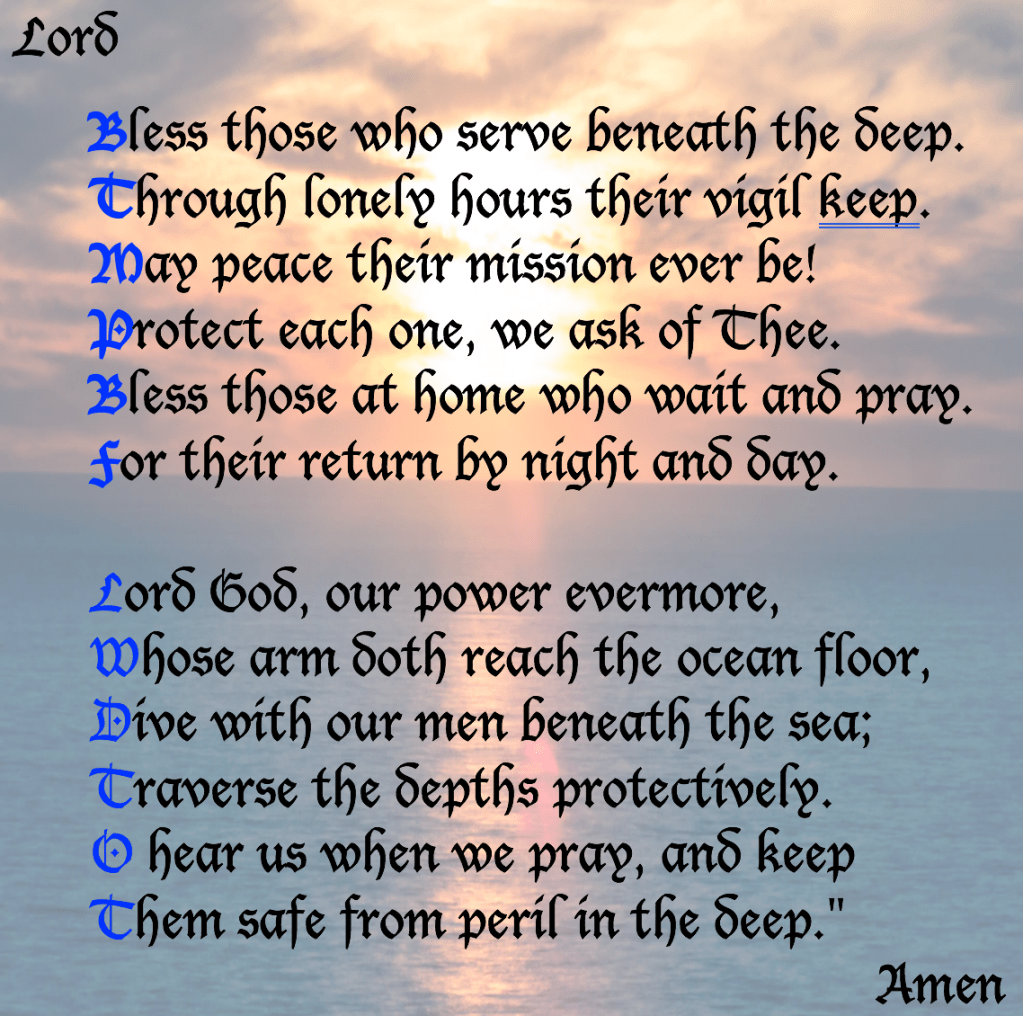
7.Submariners Prayer

Our mailing address is:
USSVI Bowfin Base Pearl Harbor
94-219 Wehena Place
Waipahu, Hawaii 96797

Virginia-class submarine USS Minnesota completes first deployment

Military Times | 31 July 2026

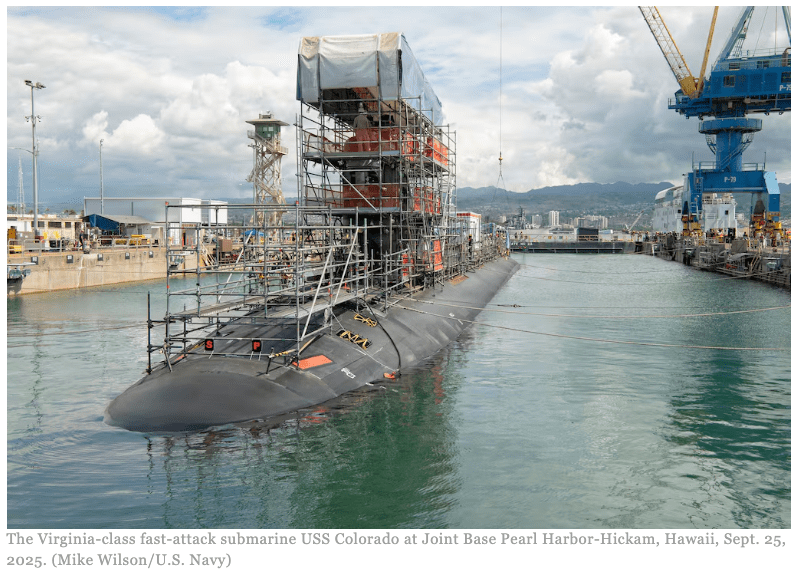
The nuclear-powered fast attack submarine USS Minnesota returned to Naval Base Guam on July 29, completing its first deployment as the Navy’s first forward-deployed Virginia-class boat.

The successful deployment amplified the Navy’s ability to operate and employ advanced capabilities in the Indo-Pacific, a service release noted. The boat is one of four forward-deployed fast-attack submarines.

Read Full Story.

Bowfin Birthdays for the Month of August

From all of us to each of you, we wish you a Hauʻoli Lā Hānau!

Rodney W. Boucher
John A. Carlin ✝️
Richard G. Cicero
Allen Clemons
John E. Dalrymple
Frank Diaz
Winford G. Ellis
Edwin J. D. Erickson
Edward W. Finan
Paul H. Gagnon ✝️
Barry Gittleman
Brett Kulbis
Richard R. Lychywek
Charles K. Merkel, Jr.
Thomas O’Shea
Denison A. Parker Jr.

Velton Parker ✝️
Gilbert J. Raynor
Joseph K. Shook
Howard P. Smith ✝️
Ronald L. Swetnam
Walter C.Taggart ✝️
Wade A. Thode
Mike Trotto
Joseph H. Winzenried

Discovery of USS Herring Submarine

Pacific Fleet Submarine Museum | June 29, 2026

The recent identification of the sunken World War II-era submarine USS Herring (SS-233) by the U.S. Navy’s Naval History and Heritage Command highlights an important role the Pacific Fleet Submarine Museum plays in preserving the legacy of America’s lost submariners and connecting with their families.

The USS Herring was lost off the Kurile Islands during its eighth and last war patrol during World War II with 83 crew members aboard. The U.S. Navy confirmed the sunken submarine’s location on June 1, 2026.

Read Full Story Here

Tradewinds July 2027

Volume 84

To perpetuate the memory of our shipmates who gave their lives while voluntarily serving in submarine warfare in the pursuit of their duties while serving their country. That their dedication, deeds and supreme sacrifice be a constant source of motivation toward greater accomplishments. To further promote and keep alive the spirit and unity that existed among submarine crewmen during World War II. To promote sociability general welfare and good fellowship among our members. To pledge loyalty and patriotism to the United States of America and it’s constitution.

1. Bowfin Pearl Harbor Base

Bowfin Meeting – We conducted our July meeting at Clean Sweep Bar, Lockwood Hall. The following members attended – Base Commander Paul Jurcsak, Secretary Brett Kulbis, Treasurer Pat Suenaga, COB Gary Johnson, and members Jim Bazemore, David Bilek, Dan Del Monte, Karl Dye, Nelson Greer, John Johnson, Ace Parker, Crichton Roberts, Thom Sousa, Wade Thode, and Joe Winzenried.

Welcomed Guests – Miya Bilek, Nancy Kreis, Anne Gosling, Gregg Parker, Wesley and William Thode.

Binnacle List – Please keep all our members and their families in your good thoughts and prayers.

Hauʻoli Lā Hānau! Bowfin Birthdays for the month of July.

Patrol Reports

Pearl Harbor SubVets March in 77th Annual Kailua Independence Day Parade

Dan’s Doing It Again!

Dan Del Monte will be going “Over the Edge” again this year with a goal to raise $10,000, and asks that you “Please donate for these wonderful folks.”  To donate click HERE.
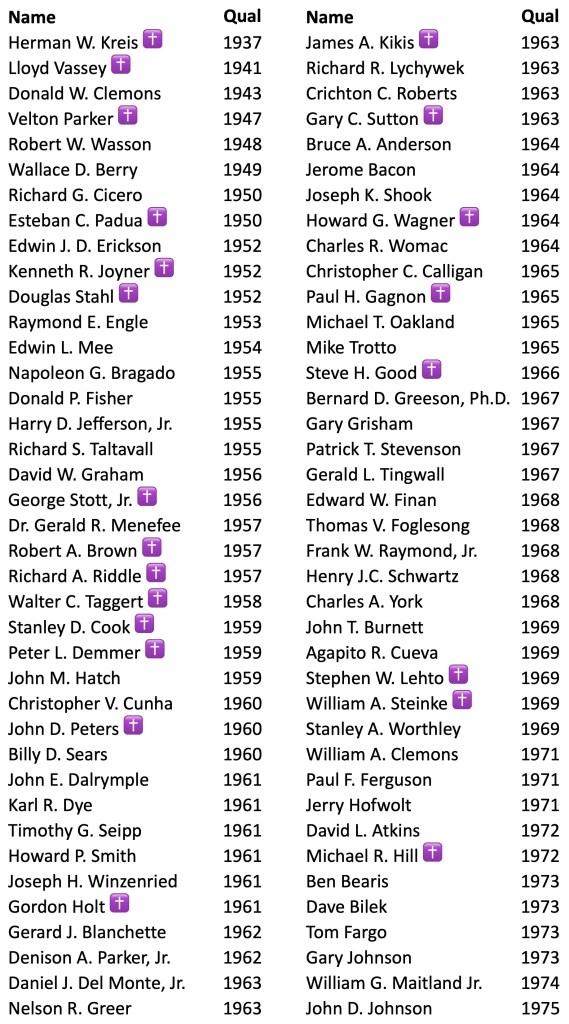
Bowfin Holland Club Members
This Month in Base History

1970 – USSVI of WWII Hawai’i Chapter participated in their 1st Kailua July 4th Parade with the American Legion.

1955 – United States Submarine Veterans of WWII Founded.

Base Officers & Staff

Commander Paul T. Jurcsak
Vice Commander Tim Sparks
Secretary Brett Kulbis
Treasurer Pat Suenaga
Chief of the Boat Gary G. Johnson
Storekeeper George F. Barlett

2. U.S. Submarine Veterans Inc.

News and Bulletins
American Submariner

USSVI Officers & Staff

USSVI National Commander Jon D. Jaques
USSVI Western Region Director Peter T. Juhos
USSVI Western District 6 Commander Dave Vanderveen
USSVI Office Manager Charles F. Murray

3.Information of Interest

VA News Releases
Defense News – Early Bird

4.Still On Patrol

Tolling of the bells for boats lost in the month of July.

5.Important Links

Bowfin Base Pearl Harbor
Plan of the Day
Bowfin Pearl Harbor Base Photo Album
USSVI Bowfin Base Facebook (Like Us, Follow Us and Share with your shipmates)
Past Bowfin Base Eblasts
Friends of the Submarine Memorial Chapel Facebook (Like Us, Follow Us and Share with your shipmates)
USS Bowfin Submarine Museum & Park
American Submariner Magazine
Pearl Harbor Dolphin Store (Your one stop shop for submarine merchandise.)

6.Submarine Humor

7.Submariners Prayer

Our mailing address is:
USSVI Bowfin Base Pearl Harbor
94-219 Wehena Place
Waipahu, Hawaii 96797

Pearl Harbor SubVets March in 77th Annual Kailua Independence Day Parade
Bowfin Pearl Harbor Base | July 4, 2026
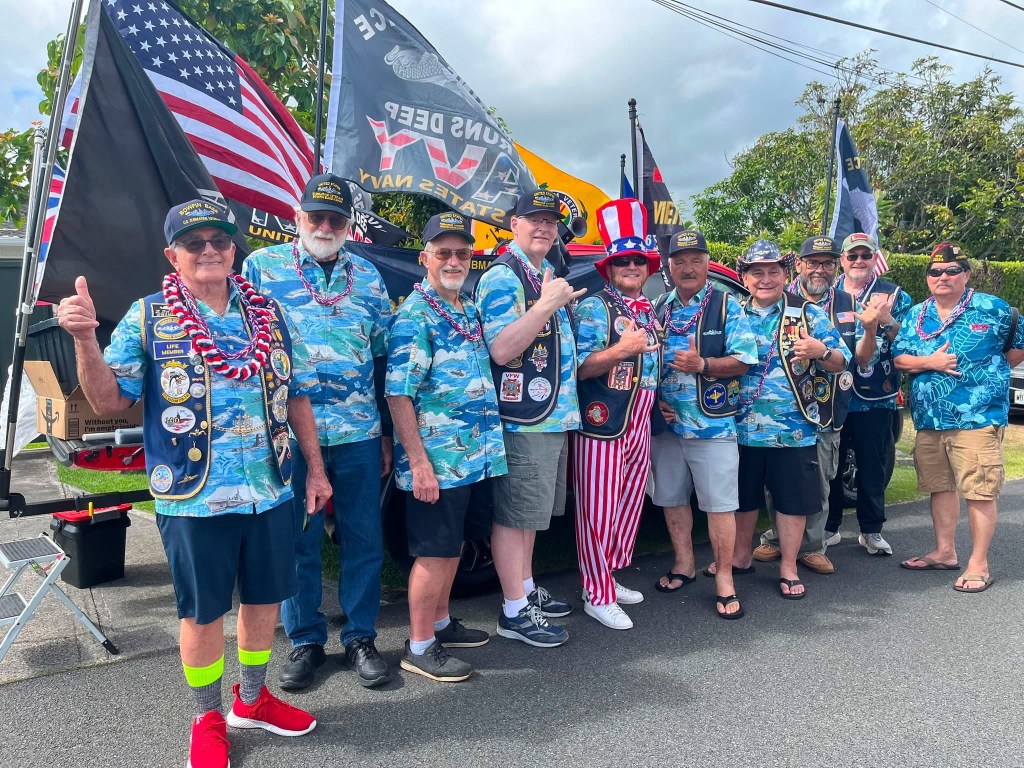
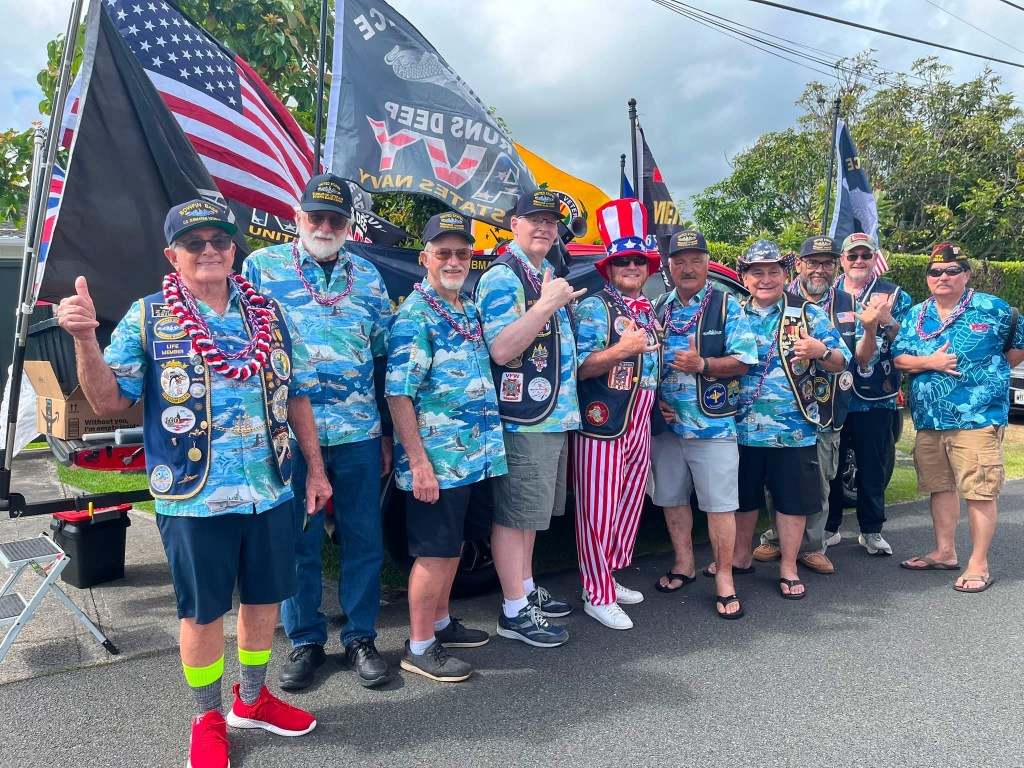
On the morning of Saturday, July 4, 2026, ten proud members of the United States Submarine Veterans, Inc. (USSVI) Bowfin Pearl Harbor Base joined thousands of Windward Oʻahu residents and spectators to march in the 77th Annual Kailua Independence Day Parade. This long‑running community tradition took on special meaning in 2026 as part of America’s 250th birthday celebrations, and Bowfin SubVets were honored to represent the Silent Service in the heart of Kailua.

Under a clear Hawaiian sky, our Bowfin Base contingent stepped off down Kainalu Drive at 10:00 AM, proudly representing America’s submarine veterans before cheering crowds lining the streets. At the head of our entry was Base Commander Paul Jurcsak, leading the group with the steady presence and quiet professionalism that submariners know so well.

Ferrying the contingent in style was a patriotically decorated truck provided by Base Treasurer Pat Suenaga. Draped with submarine‑themed decorations, Pat’s truck became a rolling tribute to all who have served beneath the waves.

A Special Year: America’s 250th Birthday

This year’s Kailua Independence Day Parade carried the theme “America The Beautiful,” chosen in honor of the 250th anniversary of the founding of the United States as part of the nationwide America250 commemorations. Across Hawaiʻi, parades and fireworks on July 4, 2026 were recognized as official America250 semiquincentennial events, and organizers anticipated record crowds for the 77‑year‑old Kailua tradition.

For submarine veterans, that milestone resonates deeply. The freedoms celebrated on Independence Day are the same freedoms submariners have defended from World War II diesel boats to today’s nuclear‑powered submarines deployed around the globe. In the difficult months after the attack on Pearl Harbor, the Submarine Force carried a disproportionate share of the fight in the Pacific — a legacy remembered every time Bowfin Base members step out in public in their signature vests and aloha shirts.

As they moved down the parade route in Kailua, they did so mindful of the crews and every submarine and shipmate still on eternal patrol. Their participation was a small but meaningful way to tie that history to the living community on Oʻahu’s Windward side.

A Tradition of Service and Presence

Hawaii’s submarine veterans have long participated in the Kailua parade. The 77th Annual Kailua Independence Day Parade continued that tradition, with Bowfin Base adding the unique character of SubVets to a lineup that included marching bands, civic groups, and elected officials walking past Kailua’s front yards.

The ten‑member contingent in 2026 may have been modest in size, but the significance of seeing submarine veterans in the middle of Kailua’s flagship community event was not. Each shipmate who donned his ball cap and vest, and stepped off beside Base Commander Jurcsak helped remind the community that the freedoms being celebrated were bought and preserved by real people — some of whom now call Kailua, and the surrounding areas home.

For those who marched, there was a special pride in hearing children point at the truck and ask their parents, “Are those Navy submariners?”, or their excitement when the heard the submarine klaxon. Those questions and conversations are exactly why Bowfin Base continues to show up when the community gathers.

Mahalo and Fair Winds

The 77th Annual Kailua Independence Day Parade was a celebration of community, country, and shared history — and Bowfin Pearl Harbor Base was proud to be part of it. Fair winds and following seas to all our shipmates, and aloha to the Kailua community for welcoming submarine veterans into your Independence Day tradition.

Under the Surface, Guarding the Horizon: 250 Years of the U.S. Submarine Force

As the United States readies to celebrate 250 years of a grand experiment in liberty, innovation, and resilience tomorrow—we naturally look to the skyward monuments, the sprawling battlefields, and the open seas to trace our history. Yet, some of the most critical chapters of the American story were written where the sun never shines.

For two and a half centuries, the United States Submarine Force has served as the nation’s silent vanguard. From a hand-cranked wooden barrel to nuclear-powered titans cruising the deep, the evolution of the “Silent Service” mirrors the evolution of America itself: daring, technologically unmatched, and deeply committed to the defense of freedom.

1776: The Audacious Beginnings

Long before submersibles were a recognized instrument of naval warfare, an American inventor named David Bushnell had a wild idea. In 1776, as George Washington’s continental army struggled against the might of the British Royal Navy, Bushnell created the Turtle.

‘Turtle’, submarine designed by David Bushnell, 1787. Bushnell (1742-1824) built the Turtle, the first American submarine, in 1776. The Turtle was powered by a propeller operated by its single occupant turning a handle and would normally float with approximately six inches of exposed surface. The volume of air in the vessel was sufficient for it to remain submerged for up to 30 minutes. Several unsuccessful attempts were made to use the Turtle to deliver and attach underwater bombs to British warships during the American War of Independence. (Photo by Ann Ronan Pictures/Print Collector/Getty Images)

An oak-and-iron, single-man vessel powered entirely by hand cranks, the Turtle attempted the world’s first submarine attack in New York Harbor against the British flagship HMS Eagle. While the mission didn’t sink the ship, it proved a fundamentally American truth: ingenuity and courage could level the playing field against the world’s greatest empires.

The Crucible of Global Conflict

By World War II, the submarine force had evolved from an experimental novelty into a strategic centerpiece. Though submariners made up less than 2% of the total U.S. Navy personnel during the war, they shouldered a monumental burden.

Operating in perilous, uncharted waters, U.S. submarines cut off critical enemy supply lines across the Pacific.

– They destroyed over 1,300 merchant ships.
– They accounted for 55% of all Japanese maritime losses.
– The cost was devastatingly steep: 52 American submarines were lost, and over 3,500 submariners made the ultimate sacrifice.

Their valor under pressure laid the foundation for the Allied victory, earning the force an enduring reputation for quiet heroism.

1954: Underway on Nuclear Power

As America entered the atomic age and faced the existential threat of the Cold War, the Silent Service underwent a revolution that would change global strategy forever.

The USS Nautilus (SSN-571) holds a significant place in history as the world’s first operational nuclear-powered submarine. It was constructed by General Dynamics Electric Boat Division in Groton, Connecticut. Its keel was laid on June 14, 1952, and it was launched on January 21, 1954.

After 25 years of service, the USS Nautilus was decommissioned on March 3, 1980. It was designated a National Historic Landmark in 1982. The Nautilus is preserved as a museum ship at the Submarine Force Library and Museum in Groton, Connecticut. It is open to the public and serves as an educational exhibit, highlighting the history and impact of nuclear-powered submarines.

In 1954, the launch of the USS Nautilus (SSN-571)—the world’s first nuclear-powered submarine—shattered all previous limits of naval engineering. No longer tethered to the surface for air or diesel fuel, the Nautilus could remain submerged indefinitely. In 1958, it accomplished the seemingly impossible, transiting beneath the North Pole ice cap.

During the tense decades of the Cold War, the nuclear ballistic missile submarine (SSBN) emerged as the ultimate guarantor of peace. Operating invisibly in the deep ocean, these vessels formed the most survivable leg of the nuclear triad, ensuring deterrence and preventing a third world war through sheer, silent presence.

The Modern Vanguard: 250 Years and Beyond

Today, the legacy of the Turtle and the Nautilus lives on in the ultra-advanced Virginia and Ohio-class submarines, and the emerging Columbia-class.

Atlantic Ocean, June 27, 2012 – The fast-attack submarine USS Alexandria (SSN 779) surfaces for a formation sailing event while participating in the War of 1812 fleet exercise.

As the U.S. navigates a complex, modern global landscape, the Submarine Force remains the ultimate instrument of stealth, intelligence, and power projection.

EraKey VesselPrimary PropulsionStrategic Role
1776TurtleManual Hand CrankRevolutionary asymmetric warfare
1941–1945Gato / Balao ClassDiesel-ElectricCrippling enemy supply lines
Cold War–PresentLos Angeles / Virginia ClassNuclear ReactorPower projection, intelligence, deterrence

The strength of the Silent Service has never just been the steel hulls or the nuclear reactors; it is the unique breed of sailors who volunteer to inhabit them. To live for months beneath hundreds of feet of water requires an elite level of trust, discipline, and devotion to duty.

As America reflects on 250 years of triumph, trials, and progress, the nation owes a profound debt to those who watch over the country from the depths—unseen, unheard, but ever vigilant.

Happy Flag Day

The Origins of Flag Day

Flag Day traces its roots to June 14, 1777, when the Continental Congress adopted the resolution that “the flag of the thirteen United States be thirteen stripes, alternate red and white; that the union be thirteen stars, white in a blue field, representing a new constellation”. However, the formal observance of Flag Day as a national holiday took more than a century to develop.

The modern Flag Day celebration began with the dedicated efforts of Bernard J. Cigrand, a 19-year-old schoolteacher in Waubeka, Wisconsin. On June 14, 1885, Cigrand placed a small American flag in an inkwell on his desk and asked his students to write essays about what the flag meant to them, referring to that day as the flag’s birthday. This simple classroom exercise would spark Cigrand’s lifelong campaign to establish a national Flag Day observance.

Cigrand’s advocacy efforts gained momentum throughout the late 1800s and early 1900s. He moved to Chicago to attend dental school and in 1886 published an article titled “The Fourteenth of June” in the Chicago Argus newspaper, publicly proposing an annual observance of the flag’s birth. His persistence paid off when President Woodrow Wilson issued a proclamation on May 30, 1916, establishing June 14 as Flag Day.

Wilson’s proclamation was particularly significant, as it called for Flag Day to be observed “with special patriotic exercises, at which means shall be taken to give significant expression to our thoughtful love of America, our comprehension of the great mission of liberty and justice to which we have devoted ourselves as a people”. The proclamation emphasized Flag Day as “a day of renewal and reminder” for American ideals and principles.

The U.S. Submarine Force Flag Day Connection


USS Nautilus (SSN 571) Christening January 1954

The most significant connection between Flag Day and the submarine force occurred on June 14, 1952, when President Harry S. Truman laid the keel of the USS Nautilus (SSN-571), the world’s first nuclear-powered submarine. This ceremony at the Electric Boat shipyard in Groton, Connecticut, was deliberately scheduled for Flag Day, marking what Truman called “one of the most significant developments of our time”.

In his Flag Day address at the keel-laying ceremony, Truman reflected on the dual significance of the occasion. He noted that June 14, 1777, marked the 175th anniversary of the flag’s adoption, while also celebrating the dawn of the nuclear age in naval warfare. Truman emphasized that the ceremony represented “not because we are starting a new ship for war, but because we are making a great advance in use of atomic energy for peace”.

The symbolism was profound: on the same date that commemorated America’s national banner, the nation was launching into a new era of maritime power that would fundamentally alter the strategic balance of the Cold War. Truman declared, “Today, we stand on the threshold of a new age of power”.

The Nautilus went on to make history, becoming the first vessel to reach the geographic North Pole on August 3, 1958, and establishing numerous speed and distance records during its 25-year career. The submarine’s achievements validated the revolutionary technology that was born on Flag Day 1952.

In Summary

Submarine operations, by their very nature, often occur far from public view, making the symbolic connection to the flag even more important. The submarine force’s motto of operating “Unseen and On Scene” emphasizes how submarines serve as silent guardians of American interests while carrying the flag into the world’s most remote and dangerous waters.

The intertwined history of Flag Day and the U.S. Submarine Force represents more than mere coincidence, it reflects the deep connection between American naval tradition and national identity. From the Revolutionary War submarine Turtle to the nuclear-powered vessels of today, submarines have served as extensions of American sovereignty and power projection capabilities.

The Flag Day keel-laying of the USS Nautilus in 1952 created a lasting bond between the national holiday and the submarine force, symbolizing how American technological innovation and naval tradition combine to protect and advance national interests. This connection continues to resonate in contemporary submarine force traditions, ceremonies, and observances that honor both the flag and those who have served beneath it in the silent service.

As the submarine force continues to evolve and modernize, the Flag Day connection serves as a reminder of the enduring values and principles that guide American naval service. The flag that was adopted on June 14, 1777, continues to fly over submarines that patrol the world’s oceans, carrying forward the legacy of those who came before and maintaining the proud traditions of the silent service.

President Reagan’s Remarks at a Flag Day Ceremony in Baltimore, Maryland — 6/14/85 (Video) 

The History of Flag Day

How the Flag Came to be Called Old Glory

National Constitution Center “The History of the U.S. Flag” (Video)

Military Retirement (Video)

“Flag- Folding Ceremony” – Meaning of each Fold (Video)

Robin Williams as the America Flag (Video)

D-Day 82nd Anniversary – All Gave Some, Some Gave All, Lest We Forget!

Video

June 6, 2026

On June 6th, 1944 Allied soldiers, in one of the most pivotal battles of World War II, invaded the French coastline in order to propel German soldiers out of Western Europe and lead the way for victory against the tyrants of that era. Overlord was the largest air, land, and sea operation undertaken before or since June 6, 1944. The landing included over 5,000 ships, 11,000 airplanes, and over 150,000 service men.

 After years of meticulous planning and seemingly endless training, for the Allied Forces, it all came down to this: The boat ramp goes down, then jump, swim, run, and crawl to the cliffs. Many of the first young men (most not yet 20 years old) entered the surf carrying eighty pounds of equipment. They faced over 200 yards of beach before reaching the first natural feature offering any protection. Blanketed by small-arms fire and bracketed by artillery, they found themselves in hell.

 When it was over, the Allied Forces had suffered nearly 10,000 casualties; more than 4,000 were dead. Yet somehow, due to planning and preparation, and due to the valor, fidelity, and sacrifice of the Allied Forces, Fortress Europe had been breached.

National D-Day Memorial

The National D-Day Memorial is a war memorial located in Bedford, Virginia. It serves as the national memorial for American D-Day veterans. However, its scope is international in that it states, “In Tribute to the valor, fidelity and sacrifice of Allied Forces on D-Day, June 6, 1944” and commends all Allied Armed Forces during the D-Day invasion of Normandy, France on June 6, 1944 during World War II.

National D-Day Memorial Webpage
National D-Day Memorial Video

The “Bedford Boys”

The memorial, bordering the Blue Ridge Mountains in southwestern Virginia, is an area of over 50 acres that overlooks the town of Bedford.

Thirty-four Virginia National Guard soldiers from the town of Bedford were part of D-Day. Nineteen of them were killed during the first day of the invasion, and four more died during the rest of the Normandy campaign. The town and the “Bedford Boys” had proportionately suffered the greatest losses of the campaign, thus inspiring the United States Congress to establish the D-Day memorial in Bedford.

The Bedford Boys included three sets of brothers: twins Roy and Ray Stevens, with Ray killed during the landing while Roy survived, Clyde and Jack Powers, with Jack killed and Clyde wounded but surviving, and Bedford and Raymond Hoback, both killed. The losses by the soldiers from Bedford were chronicled in the best-selling book “The Bedford Boys” by Alex Kershaw, and helped inspire the movie Saving Private Ryan.

The X-Craft and D-Day

The landing at Normandy has come to mark the “beginning of the end” of the war in Europe. The Higgins landing craft has become synonymous with the invasion as the boat that won the war. However, one type of vessel that is often forgotten from the narrative is the British midget submarines that played a key role in the landing efforts.

Preparations for D-day were extensive. Operation Neptune, the codename for cross-channel portion of the invasion, under Neptune was Operation Gambit, the use of two X -class British submarines that would mark the ends of the British and Canadian invasion beaches.

The submarine could carry a four-man crew and remain at sea for days. She could dive up to 300 feet. Due to her small size, the X-craft had only one access hatch and a small periscope that was mostly unreliable. Navigation was done through a Browns A Gyro Compass and Auto Helmsman. The X-craft could either be towed by a conventional submarine or launched from the deck of a submarine to reach its intended target. Two 3,570-lb mines were attached to its sides. A hand crank could release them when they were positioned below the hull of an enemy ship. The small crew consisted of one commanding officer, a first lieutenant, an engineer, and a diver.

Two X-class submarines would return to the beaches of Normandy leading up to the invasion to help aid in what would become the eventual downfall of the German troops. HMS X-23 and HMS X-20 would be the first vessels off the shores of Normandy leading up to the attack. Arriving on June 4, the X-crafts fixed their positions and waited for nightfall to surface to begin their mission. It wasn’t until they surfaced that they received the message that the operation had been postponed due to bad weather.

On 6 June at 0445 the submarines surfaced in rough seas. They set up the 18 feet high navigation beacons that each were carrying and switched them on. These shone a green light indicating their position away from the coast, visible up to 5 miles away although undetectable to anyone on land. They used the radio beacon and echo sounder to tap out a message for the minelayers approaching Sword and Juno beaches. The incoming fleet appeared on time and roared past them.

Operation Gambit was a success, the British and Canadian forces were able to land on their respective shores without falling off course or hitting any rocks, thanks to the beacons from the X-crafts.

While the X-20 and X-23, served only a minor role in the D-Day invasion, it shows the vital role a submarine can play in a nation’s arsenal.