
Pacific Fleet Submarine Museum | March 30, 2024
Behind many of our artifacts at the Pacific Fleet Submarine Museum is a fascinating backstory. Some of the museum items on display were donated by World War II U.S. submariners and their families (including those of the Bowfin crew).
Two pieces of World War II history on exhibit are a sextant and binoculars. Interestingly, they were not used aboard a “friendly” American vessel, but a captured German submarine that made an incredible journey across the Atlantic Ocean from Argentina to the United States.

With the war wrapping up in September 1945, military officials ordered a captured German U-977 submarine be brought back to America to inspect the vessel’s technology (German U-boats were known for their superior design) and showcase the boat to the American public.
A U.S. Navy crew led by U.S Navy Chief Urbaniak was tasked with navigating the captured U-977 to Boston, Massachusetts from Argentina, where the Germans had relinquished control of the boat at the end of World War II.
While the submarine no longer faced the perilous prospect of combat during its trip, the American crew still had the daunting and dangerous task of navigating U-977 – deemed in poor working condition – across the vast Atlantic. The crew spent weeks cleaning, repairing, and learning to operate the unfamiliar German vessel, with U.S. Navy Lieutenant Commander Cooper playing a pivotal role in preparing the vessel for its voyage.
Their dedication was tested further when the vessel’s engines failed at sea, forcing them to make repairs on the open ocean.
Despite the challenges, the crew persevered and finally arrived in Boston in November 1945. The U-977 then went on a “Victory Tour” along the U.S. East Coast, showcasing the captured German technology and raising financial support for the war effort. In November 1946, the sub was sailed to the Portsmouth Naval Shipyard, where it was sunk by the U.S. Navy off the coast of Massachusetts.
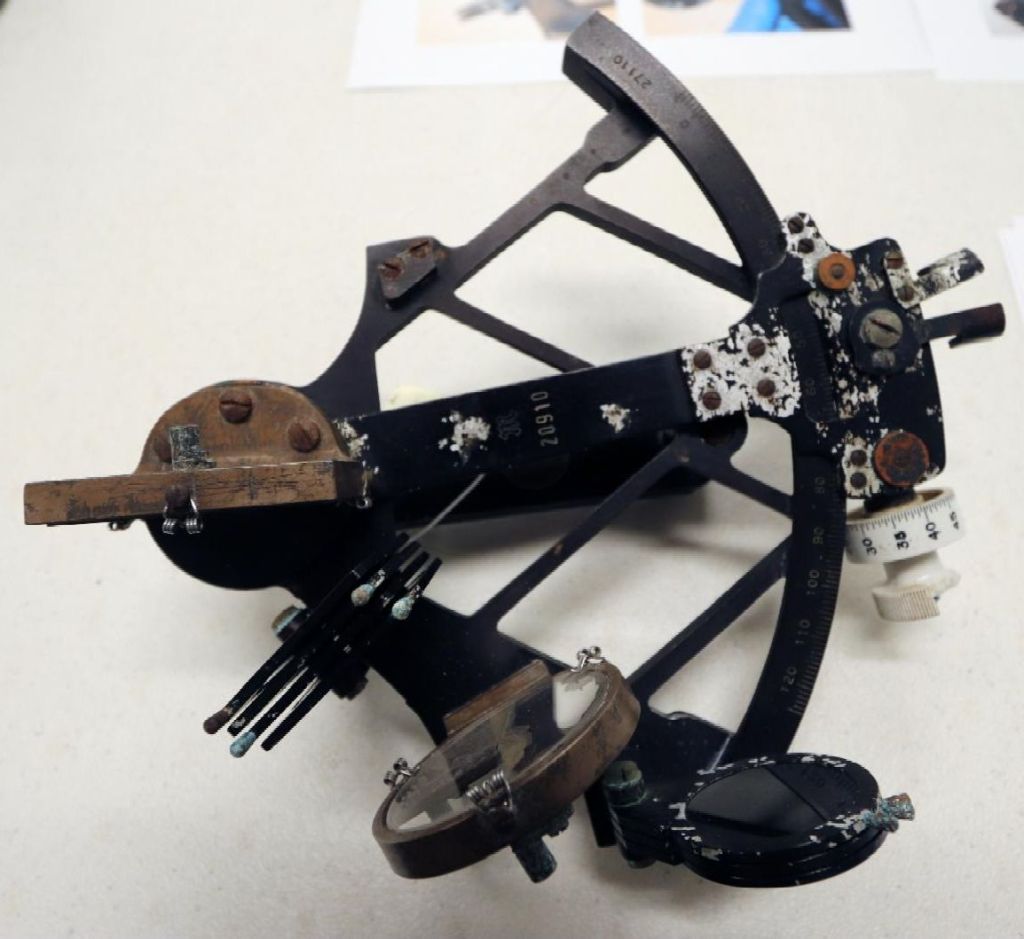
Today, the U-977’s sextant and binoculars on display stands as a reminder of its extraordinary voyage to America following the war. These artifacts bring history to life, offering a tangible connection to the past and serving as reminder of the American crew’s resilience and adaptability.
 Bowfin Pearl Harbor Base