Tolling of the Boats Lost in September

The S-5 rescue was a miraculous story of great determination and resourcefulness by the crew.
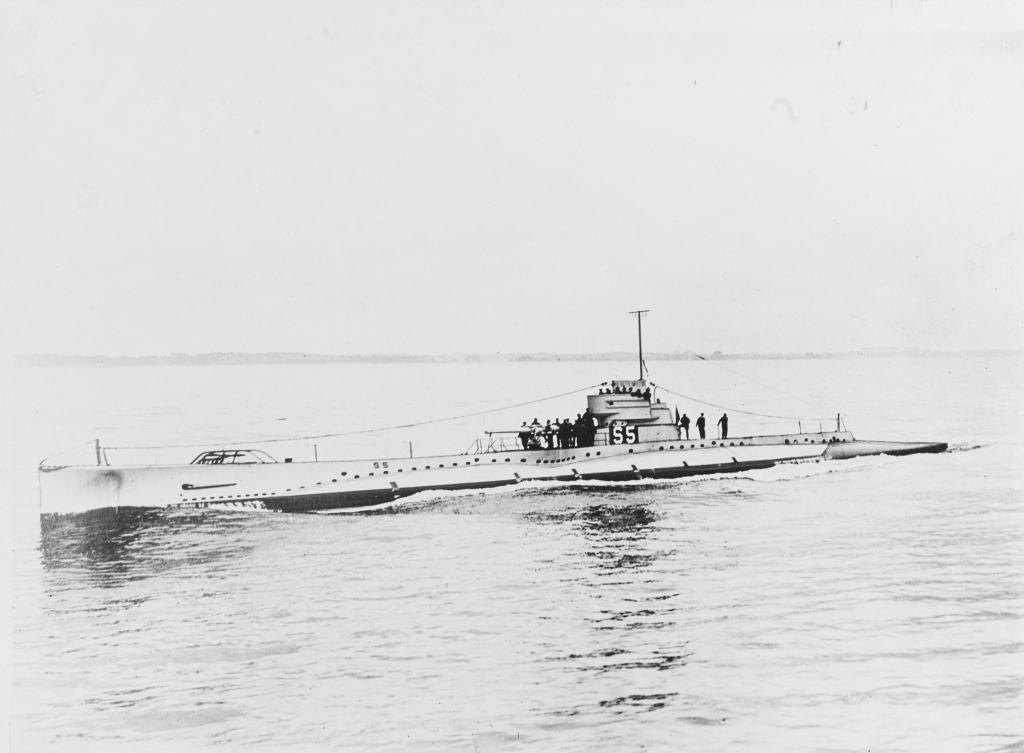
S-5 sank when the forward torpedo room was accidentally flooded preventing a successful surfacing. In a desperate move all main ballast tanks were blown to bring the stern out of the water. The result was more than 60 degree down angle with the nose stuck in the mud; 17 feet of the stern extended out of the water. 

The crew was literally walking on the bulkheads; the decks had become bulkheads. There were 34 men on board, crowded into the aft compartments. All kinds of problems were overcome, but they were still trapped with no electricity other than flashlights. The commanding officer, LCDR “Savvy” Cooke, crawled into the tiller room with two chiefs. After eight hours of exhausting effort, using a breast hand drill, they drilled a ¾ inch hole through the pressure hull.

Several more holes were drilled and connected with handsaws and chisels. The effort produced a hole of 1 ½ inches by 4 inches. It was large enough to push a stick with the captain’s shirt on it out of the hole. By then the main problem was putrid air and lack of fresh water. After a painful wait, SS Alanthus’s Captain Johnson was attracted by the odd sight. The ship’s captain approached this small Tower of Pisa in a rowboat. 

Using the small opening the following conversation took place:

Johnson: “What ship is this?”

Cooke: “S-5. U.S. Navy”

Johnson: “Who is speaking?”

Cook: “LCDR Charles Cook, commanding.”

Johnson: “Where is your destination?”

Cook: “To Hell by Compass!”

Whereupon both laughed.

This plate was cut from the stern of the USS S-5 to provide egress for the crew from the damaged submarine. The plate reads:

“Removed from the United States Submarine S-5 to allow the crew of that vessel to escape after being imprisoned for 37 hours, the S-5 while engaged in diving exercises flooded a forward compartment and sank at 2:00 pm September 1, 1920 in 165ft of water. After repeated efforts, the crew managed to bring the stern of the vessel to the surface. The vessel was lying at an angle of 60 degrees with the bow resting on the bottom. The crew managed to cut a small hole in the hull and by an improvised signal attracted the attention of the passing steamer ALANTHUS. Later the Pan-American steamer GEORGE W. GOETHALS arrived on the scene. The chief engineer of that that vessel, assisted by the chief engineer of the ALANTHUS, worked with a ratchet drill and chisel, removed this plate at 3:00am September 3, 1920 and the crew of S-5 numbering 34 men were rescued.“

Tolling of the Boats Lost in July

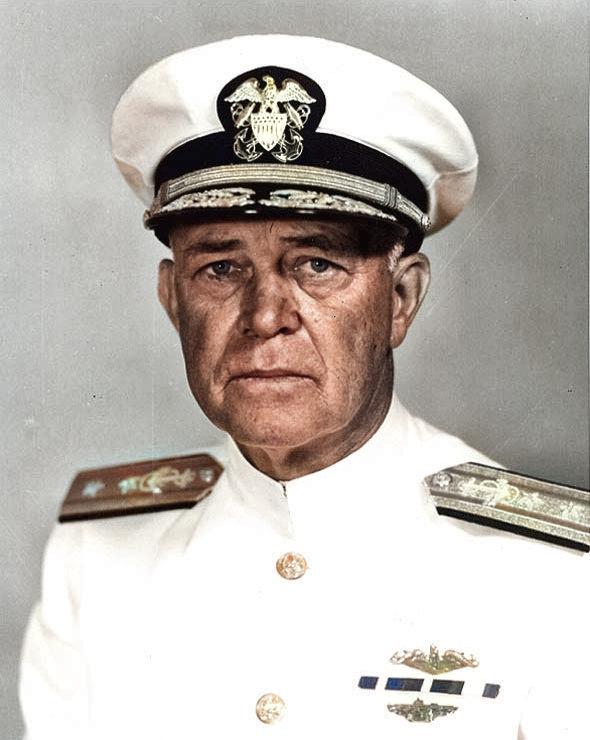
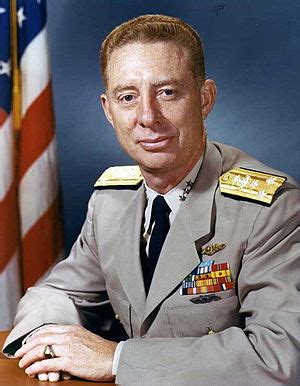
Admiral Lawson P. Ramage

Lawson Paterson Ramage was born on January 14, 1909 in Monroe Bridge, Massachusetts. He graduated from the U.S. Naval Academy in 1931 and was subsequently commissioned as an Ensign in the U.S. Navy. From 1931 to 1935, he served onboard several ships, including the USS S-29 (S-134).

During World War II, Admiral Ramage was highly decorated for his actions in combat — being awarded the Silver Star, two Navy Crosses, and the Medal of Honor. Admiral Ramage was stationed at Pearl Harbor on the staff of the Commander, Submarines Pacific during the Japanese attack in December 1941. In early 1942, he served on his first patrol of the war as the Navigator of the USS GRENADIER. He was awarded the Silver Star as a member of the GRENADIER’S crew for “conspicuous gallantry and intrepidity” while patrolling enemy waters. In June 1942, he assumed his first command — the USS TROUT. Under his command TROUT sank three ships during his four war patrols. He was awarded the Navy Cross for valor for actions while in command of the TROUT at Midway, Truk, the Solomons, and the South China Sea. In May 1943, he assumed command of the new BALAO-class submarine, the USS PARCHE (SS-384). On July 31, 1944, CDR Ramage commanded the PARCHE in a daring dawn assault on a heavily-escorted Japanese convoy, during which the PARCHE sunk two ships and badly damaged three others. For this he was awarded the Medal of Honor which was personally presented to him by President Franklin D. Roosevelt on January 10, 1945.

The CITATION reads:

“For conspicuous gallantry and intrepidity at the risk of his life above and beyond the call of duty as commanding officer of the U.S.S. PARCHE in a predawn attack on a Japanese convoy, 31 July 1944. Boldly penetrating the screen of a heavily escorted convoy, CDR. Ramage launched a perilous surface attack by delivering a crippling stern shot into a freighter and quickly following up with a series of bow and stern torpedoes to sink the leading tanker and damage the second one. Exposed by the light of bursting flares and bravely defiant of terrific shellfire passing close overhead, he struck again, sinking a transport by two forward reloads. In the mounting fury of fire from the damaged and sinking tanker, he calmly ordered his men below, remaining on the bridge to fight it out with an enemy now disorganized and confused. Swift to act as a fast transport closed in to ram, CDR. Ramage daringly swung the stern of the speeding PARCHE as she crossed the bow of the onrushing ship, clearing by less than 50 feet but placing his submarine in a deadly crossfire from escorts on all sides and with the transport dead ahead.

Undaunted, he sent 3 smashing “down the throat” bow shots to stop the target, then scored a killing hit as a climax to 46 minutes of violent action with the PARCHE and her valiant fighting company retiring victorious and unscathed.”

The Parche Memorial stands as a lasting tribute to CDR Ramage and the decisive fighting spirit that won the war.

Tolling of the Boats Lost in May

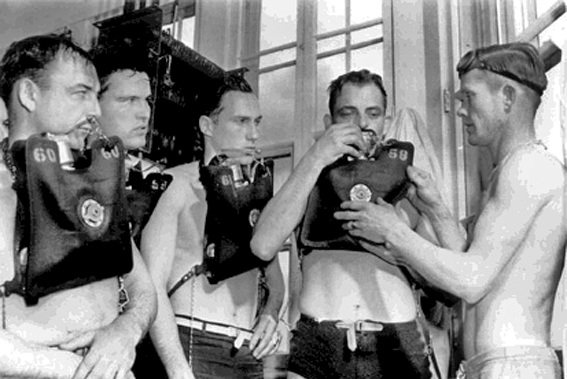
The Momsen Lung

The Momsen lung was a early underwater rebreather used prior to and during World War II by American submariners as emergency escape gear.

While serving with the Submarine Safety Test Unit, Charles Momsen began working on a device to help sailors surface. It was officially called the Submarine Escape Lung, it consisted of an oblong rubber bag that recycled exhaled air. The press enthusiastically received the device and dubbed it the Momsen Lung, a name that stuck.

The Lung contained a canister of soda lime, which removed poisonous carbon dioxide from exhaled air and then replenished the air with oxygen. Two tubes led from the bag to a mouthpiece: one to inhale oxygen and the other to exhale carbon dioxide. The device hung around the neck and strapped around the waist. Besides providing oxygen for the ascent, it also allowed a submariner to rise slowly to the surface, thus avoiding decompression sickness (“the bends”).

Between June 1929 and September 1932, then-Lt. Momsen developed the lung with Chief Gunner’s Mate Clarence L. Tibbals and Frank M. Hobson, a civilian employee of the Bureau of Ships. In 1929, Momsen received the Distinguished Service Medal for personally testing the device at a depth of 200 feet (61 m). The Lung saved its first lives in October 1944, when eight submariners used it to reach the surface after Tang (SS-306) sank in 180 feet (55 m) of water in the East China Sea. The Lung was eventually supplemented by the Steinke hood and free-ascent techniques.

Tolling of the Boats Lost in December

A day that will live in infamy

The attack on Pearl Harbor (called the Hawaii Operation or Operation Z by the Japanese Imperial General Headquarters, and the Battle of Pearl Harbor by some Americans) was a surprise military strike conducted by the Imperial Japanese Navy against the United States Naval Base at Pearl Harbor, Hawaii on the morning of December 7, 1941. The next day the United States declared war on Japan resulting in their entry into World War II. The attack was intended as a preventive action in order to keep the U.S. Pacific Fleet from influencing the war that the Empire of Japan was planning in Southeast Asia, against Britain and the Netherlands, as well as the U.S. in the Philippines. The base was attacked by Japanese aircraft (a total of 353 planes, in two waves) launched from six aircraft carriers.

Tolling of the Boats Lost in November

Act of valor to preserve the security of the mission – Captain John Cromwell.

John Philip Cromwell was born in Henry, Illinois, on 11 September 1901. Appointed to the U.S. Naval Academy in 1920, he graduated in June 1924 and served initially in the battleship USS MARYLAND (BB-46).

In 1926, he attended submarine school and was assigned to USS S-24 (SS-129) during 1927-29. Lieutenant Cromwell commanded USS S-20 (SS-125) in 1936-37, then served on the staff of Commander Submarine Division 4. He was promoted to the rank of Lieutenant Commander in 1939 and spent two years in Washington, D.C. with the Bureau of Engineering and Bureau of Ships. In May 1941, he became Engineer Officer for the Pacific Fleet Submarine Force. During 1942-43, he commanded Submarine Divisions 203, 44 and 43.

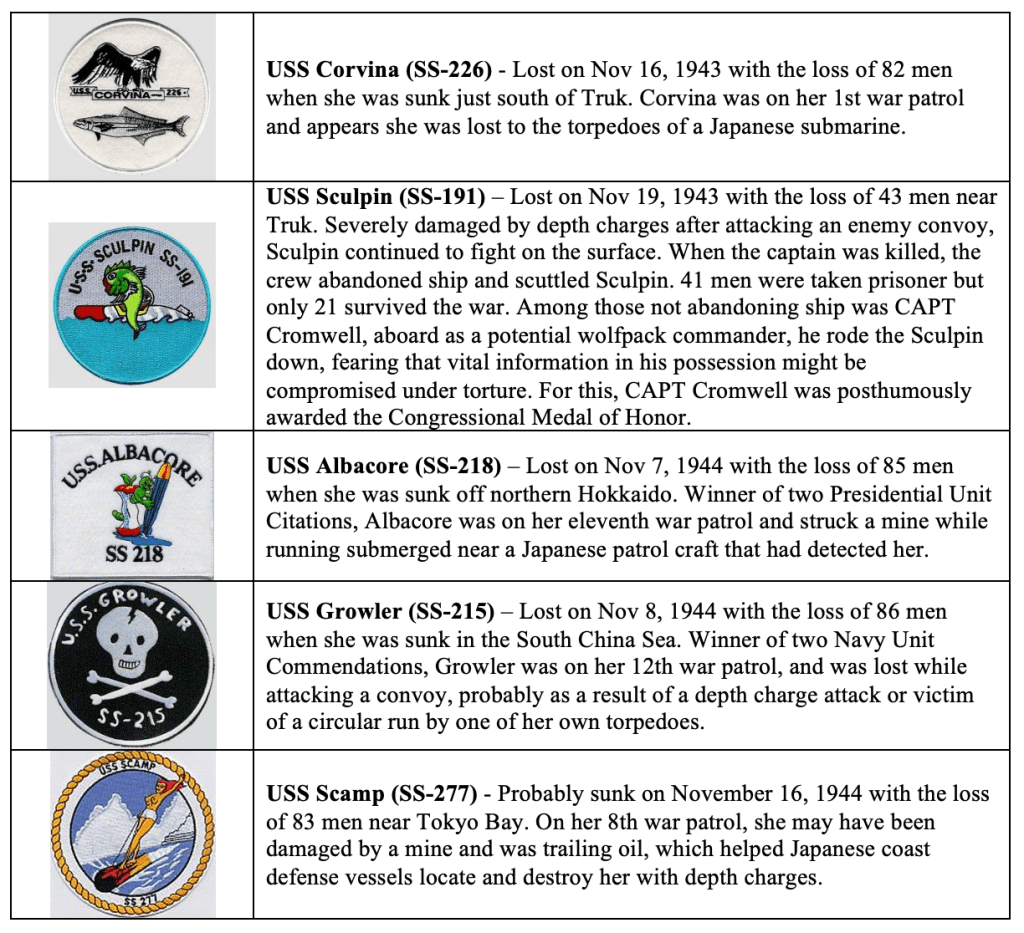
Following promotion to Captain, he went to sea on the USS SCULPIN (SS-191) as prospective commander of a mid-Pacific submarine wolf pack. While attacking a Japanese convoy on 19 November 1943, SCULPIN was forced to the surface, fatally damaged in a gun battle and abandoned by her surviving crew members. Captain Cromwell, who knew secret details of the impending operation to capture the Gilbert Islands, deliberately remained on board as she sank. For his sacrificial heroism in preventing the enemy from obtaining this information, he was posthumously awarded the Medal of Honor.

CAPT Cromwell’s Medal of Honor citation reads:

“For conspicuous gallantry and intrepidity at the risk of his life above and beyond the call of duty as Commander of a Submarine Coordinated Attack Group with Flag in the U.S.S. SCULPIN, during the Ninth War Patrol of that vessel in enemy-controlled waters off Truk Island, November 19, 1943. Undertaking this patrol prior to the launching of our first large-scale offensive in the Pacific, Captain Cromwell, alone of the entire Task Group, possessed secret intelligence information of our submarine strategy and tactics, scheduled Fleet movements and specific attack plans. Constantly vigilant and precise in carrying out his secret orders, he moved his underseas flotilla inexorably forward despite savage opposition and established a line of submarines to southeastward of the main Japanese stronghold at Truk. Cool and undaunted as the submarine, rocked and battered by Japanese depth-charges, sustained terrific battle damage and sank to an excessive depth, he authorized the SCULPIN to surface and engage the enemy in a gun-fight, thereby providing an opportunity for the crew to abandon ship. Determined to sacrifice himself rather than risk capture and subsequent danger of revealing plans under Japanese torture or use of drugs, he stoically remained aboard the mortally wounded vessel as she plunged to her death. Preserving the security of his mission at the cost of his own life, he had served his country as he had served the Navy, with deep integrity and an uncompromising devotion to duty. His great moral courage in the face of certain death adds new luster to the traditions of the United States Naval Service. He gallantly gave his life for his country.”