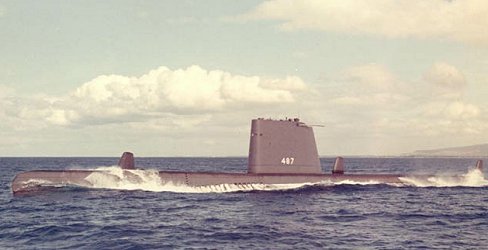
Maybe we were doing an anti-submarine warfare exercise with some ancient black-smoke-belching destroyer on that day in 1963. Or perhaps we were performing precision periscope practice by peering at a panoply of people surfing and sunning on the South Shore of Oahu at Sandy Beach. The men standing watch in the Forward Engine Room of the USS Remora (SS 487) had no periscope to peep through nor sonar to keep an ear on things. No rumbling diesel engines disturbed their peace as the boat was running submerged on the batteries.
It was an easy engine room watch with plenty of time to catch up on swapping sea stories. The only things in operation were a couple of ventilation fans. A wary eye was always kept on the bilges, as an unexplained rise indicates a problem. And this bilge level was rising. An inspection revealed that water was streaming out of our snorkel exhaust drain line, which originated outside the pressure hull. The engine exhaust valves were closed and this section of piping should have been dry. A report was duly made to the powers that be.
The captain surfaced the boat so that the source of the leak could be identified. His fear was that if the snorkel exhaust piping itself was leaking, we would have to abort our beach bunny spy mission and return to Pearl Harbor for repairs. We cobbled together a test rig to put pressure into the drain piping, and all 12 of our Enginemen lay topside to listen for the tell-tale hiss of compressed air escaping.
Fortunately, it was the two-inch-diameter exhaust drain line that proved to be the culprit. Even more fortunately, it was a gasket sandwiched between two pipe flanges that was the source of our problem. This could easily be repaired by us on the spot.
Unfortunately, this pipe joint was located below a maze of other piping in the superstructure underneath our topside deck. The only way to get to it would be to prop open a section of the deck for access, crawl in and belly along the top of the pressure hull to the leaking connection. I was an 18-year-old know-it-all non-qual fireman apprentice Engineman striker, and most importantly, skinny. Our crusty old WWII-era Chief Engineman volunteered me for the task.
This would have been a duck soup job to do in port, and I would have thoroughly enjoyed slithering around like a sea snake. But the Remora was lying dead in the water, rolling in the troughs with a steady southern swell washing through our superstructure every eleven seconds. We were standing topside out of reach of the waves, peering down through the slats of the deck observing the motion of the ocean. We could clearly see our target pipe joint for four seconds. Then it would disappear underwater for seven seconds (and yes, somebody timed it). Just like clockwork. Rising air bubbles removed all doubt that this was the location of our problem. These were not optimal work conditions.
A shipmate handed me two 3/4-inch wrenches and a new gasket and then growled in my ear that a naval operation with 6 submarines, 14 destroyers, 3 aircraft carriers, and a battleship was waiting for me to get my non-qual ass down there and fix that frigging leak. I sloshed and wriggled to my destination and found that I fit very snugly on my belly tightly jammed between the bottom of the snorkel exhaust pipe and the top of the pressure hull. This was a good thing because Mr. Pacific Ocean was trying to wash me away every eleven seconds!
I had been instructed to conserve oxygen by only working when I could breathe, so I would work for four seconds and then hold my breath for seven seconds while I was submerged. That first seven-second span felt like an eternity. I soon became attuned to the rhythm of the sea swallowing and releasing me. It only took the longest half hour of my young life to remove the four nuts and bolts, swap gaskets, and reassemble the joint. I was mighty relieved to be able to slide out backwards and emerge on deck where I could breathe any time I damned well felt like it.
My pack of Pall Malls was on the soggy side of soaked, so the Chief gave me a cigarette and told me to lie below to get some coffee and dry off while they retested the piping and secured the open section of deck. I dropped down the After Battery hatch to the Crew’s Mess and found our Corpsman waiting to check on my condition. I felt indestructible, but had heard through the non-qual grapevine that you could be given medicinal brandy under certain conditions. The only thing I knew about brandy was that it contained alcohol, which my underage self had a hankering for. I saw my opportunity to game the system and asked the Corpsman for brandy. Doc said he needed permission to prescribe that particular potion and quickly ducked through the door into the Control Room. I’m sure he was suppressing a laugh and couldn’t wait to tell our shipmates that this wise-ass, sopping-wet kid the crew had nicknamed ‘Maynard’ was asking for brandy.
Well, he must have asked the Chief of the Boat, the Engineering Officer, Executive Officer, Commanding Officer, DivCom, SubPac, CincPac, CNO, the Pope, possibly President Kennedy, and maybe even the mess cook before he finally returned with a ceramic coffee cup containing an amber liquid he claimed was brandy.
By then I had some hot coffee inside me and my dungarees were halfway dry. I took a sip. This was my first taste of brandy, but even I could tell that the lowest bidder had won the contract to supply the Navy with its stock of this exotic elixir. It was awful. I opted to swallow the foul-tasting liquor rather than swallow my pride.
All was well. The pipe joint passed the pressure test, and we were able to resume our periscope training on whatever tantalizing targets presented themselves. During my ten years in the Navy, I occasionally got wet in weather so cold that I saw icicles hanging from my shipmates’ beards and mustaches, and knew I looked the same. But I never, ever, dared ask for U.S. Navy Brandy again.
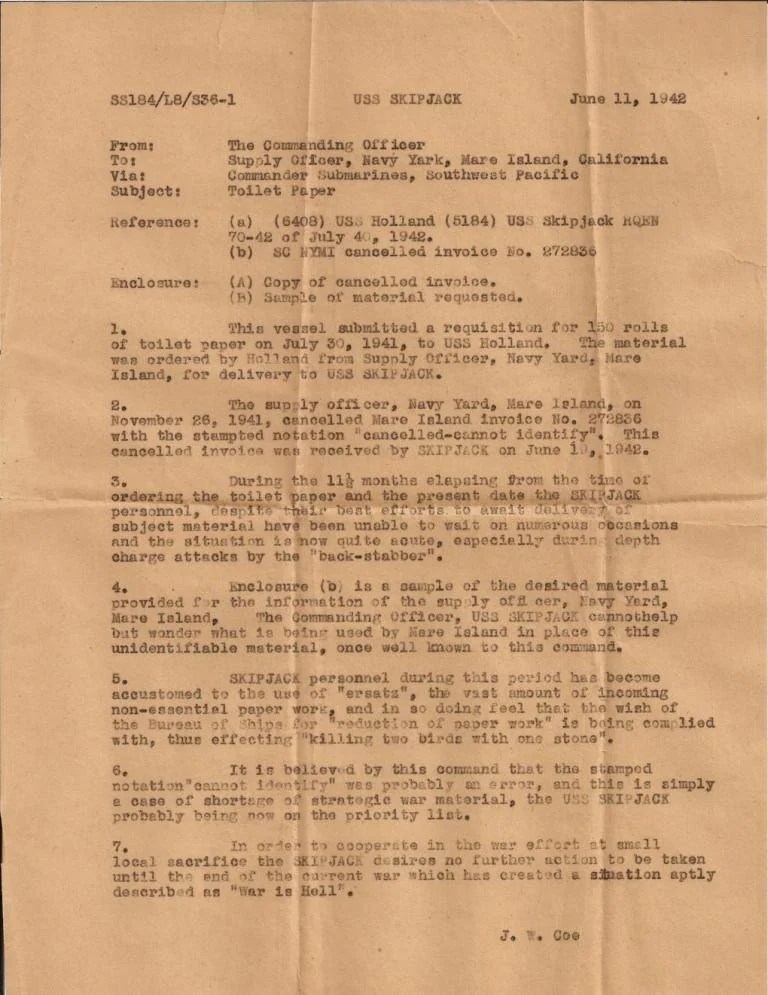
Lieutenant Commander James W. Coe was Commanding Officer of the USS Skipjack (SS 184) when he wrote his famous “Toilet Paper” letter to the Mare Island Supply Office.
USS SKIPJACK June 11, 1942
From: Commanding Officer To: Supply Officer, Navy Yard, Mare Island, California Via: Commander Submarines, Southwest Pacific Subject: Toilet Paper
Reference: (a) USS HOLLAND (5148) USS SKIPJACK req. 70-42 of 30 July 1941. (b) SO NYMI Canceled invoice No. 272836
Enclosure: (1) Copy of cancelled Invoice (2) Sample of material requested.
1. This vessel submitted a requisition for 150 rolls of toilet paper on July 30, 1941, to USS HOLLAND. The material was ordered by HOLLAND from the Supply Officer, Navy Yard, Mare Island, for delivery to USS SKIPJACK.
2. The Supply Officer, Navy Yard, Mare Island, on November 26, 1941, cancelled Mare Island Invoice No. 272836 with the stamped notation “Cancelled—cannot identify.” This cancelled invoice was received by SKIPJACK on June 10, 1942.
3. During the 11 3⁄4 months elapsing from the time of ordering the toilet paper and the present date, the SKIPJACK personnel, despite their best efforts to await delivery of subject material, have been unable to wait on numerous occasions, and the situation is now quite acute, especially during depth charge attack by the “back- stabbers.”
4. Enclosure (2) is a sample of the desired material provided for the information of the Supply Officer, Navy Yard, Mare Island. The Commanding Officer, USS SKIPJACK cannot help but wonder what is being used in Mare Island in place of this unidentifiable material, once well known to this command.
5. SKIPJACK personnel during this period have become accustomed to use of “ersatz,” i.e., the vast amount of incoming non-essential paper work, and in so doing feel that the wish of the Bureau of Ships for the reduction of paper work is being complied with, thus effectively killing two birds with one stone.
6. It is believed by this command that the stamped notation “cannot identify” was possible error, and that this is simply a case of shortage of strategic war material, the SKIPJACK probably being low on the priority list.
7. In order to cooperate in our war effort at a small local sacrifice, the SKIPJACK desires no further action be taken until the end of the current war, which has created a situation aptly described as “war is hell.”
J.W. Coe
Here is the rest of the story:
The letter was given to the Yeoman, telling him to type it up. Once typed and upon reflection, the Yeoman went looking for help in the form of the XO. The XO shared it with the OD and they proceeded to the CO’s cabin and asked if he really wanted it sent. His reply, “I wrote it, didn’t I?“
As a side note, twelve days later, on June 22, 1942 J.W. Coe was awarded the Navy Cross for his actions on the S-39.
The “toilet paper” letter reached Mare Island Supply Depot. A member of that office remembers that all officers in the Supply Department “had to stand at attention for three days because of that letter.” By then, the letter had been copied and was spreading throughout the fleet and even to the President’s son who was aboard the USS Wasp.
As the boat came in from her next patrol, Jim and crew saw toilet-paper streamers blowing from the lights along the pier and pyramids of toilet paper stacked seven feet high on the dock. Two men were carrying a long dowel with toilet paper rolls on it with yards of paper streaming behind them as a band played coming up after the roll holders. Band members wore toilet paper neckties in place of their Navy neckerchiefs. The wind-section had toilet paper pushed up inside their instruments and when they blew, white streamers unfurled from trumpets and horns.
As was the custom for returning boats to be greeted at the pier with cases of fresh fruit/veggies and ice cream, the Skipjack was first greeted thereafter with her own distinctive tribute-cartons and cartons of toilet paper.
This letter became famous in submarine history books and found its way to the movie (“Operation Petticoat”), and eventually coming to rest (copy) at the Navy Supply School at Pensacola, Florida. There, it still hangs on the wall under a banner that reads, “Don’t let this happen to you!” Even John Roosevelt ensured his father got a copy of the letter.
Aboard the USS Tiru (SS 416), September 1967; This Northern Run started off like most diesel submarine Cold War patrols did. We were told not to tell anyone we were leaving our home port of Pearl Harbor for parts unknown, then we painted over our hull number, took aboard umpteen tons worth of food, topped off our fuel oil tanks, and were issued foul weather gear topside in front of God and everybody. So much for secrecy. I had no ‘need to know’ where this here ‘there’ we were headed to was. I still don’t know what we did or where we went. We were told that if anyone should question us, we were on an ‘oceanographic survey mission’. I’m happy to report no one ever asked.
All I knew was that when we raised the top of our snorkel mast just above the surface in order to run the diesel engines, the arctic air we sucked in was so damned cold we wore foul weather jackets and hats in the normally sweltering Engine Rooms. I would stand in a corner to stay away from the frigid blast traveling between the air induction piping and the engine intakes. The occasional slug of ice cold salt water coming in with the air needed to be avoided also. My favorite spot had an electrical switchboard that I leaned back against so that at least my butt was warm.
One day a large hulking Engineman named Lurch (he looked and acted like the butler Lurch on the Addams Family TV show) strolled up to the Control Room after he got off watch to shoot the shit and warm up a bit. The Chief Of The Watch spots him and says “Hey Lurch, go wake up Chief Mac. Tell him he’s late relieving me.”
Lurch, a man of few words and no visible emotions, comes back in a couple of minutes and reports “He can’t wake up. He’s dead”.
The Diving Officer, Torpedoman Chief ‘Spooks’ Merrill (it was his second tour of duty aboard Tiru), jumps in and says “That can’t be!” Lurch calmly looks him in the eye and replies softly, “I worked at a mortuary before I joined the Navy. I know what dead people look like.” No one believes him so a seaman is sent to wake Chief Mac. He can’t rouse him either. “Get the Corpsman!”
‘Doc’ Brandt (a bespectacled First Class pill pusher who was also the night cook and ship’s baker) agrees with Lurch’s prognosis, Chief Mac is dead. The reason for his sudden demise was unknown.
Captain Shilling, who had steered Tiru through many major problems, orders that his body be placed in the freezer. The Chief Of The Boat drafts four volunteers to help Doc load him into a body bag. They carry him out of the Goat Locker in the Forward Battery, through the Control Room, and into the After Battery Compartment. The freezer is located under the mess decks. They lower him down the ladder and lay him out between the salisbury steaks and the boneless pork chops.
You should have heard the bitching and moaning, “Chief Mac is going to contaminate the ice cream” and similar complaints. Hell, Chief Mac was sealed up in his black body bag better than those cardboard boxes of beef, pork, and chickens stored in the freezer! The Captain finally relented and had the Mark 37 torpedo removed from number two torpedo tube. Four new ‘volunteers’ removed him from the freezer, carried him out of the After Battery through Control, through the Forward Battery Compartment, and into the Forward Torpedo Room. They loaded him into #2 tube and closed the inner door. He was already frozen and the sea water surrounding the outside of the tube was 28 degrees. He would keep in there.
The past year had been hard on the Tiru and her crew. We spent three days aground on a reef in Australia, and sailed to Brisbane for emergency repairs after two Aussie ships towed us off the rocks. Unable to submerge, we headed to Yokosuka Japan for an extended dry docking that replaced 3/4 of our keel. We had to pull into some obscure port in Korea for more repairs, had a diesel engine run away (until it broke), visited most of the dry docks in the western Pacific, and made a couple of Vietnam patrols and a Northern Run. We hit some great liberty ports too! Our scheduled six month deployment had turned into a nine month submarine saga. By the time we got back to Pearl Harbor 100 percent of the crew was qualified in submarines. It seemed as if we had barely gotten back home when we were tasked with this patrol. All these tribulations forged very strong bonds amongst the crew. We experienced chaos. We experienced joy. Chief Mac had been through all of this with us. I believe most of the crew walked up to the Torpedo Room individually to pay their respects to the man in number two torpedo tube. I know I did.
While all this underwater drama was unfolding, we headed for a spot in the open ocean where no one could easily surveil us and broke radio silence to ask for instructions. Pacific Submarine Force (SubPac) replied in a few hours with a message that probably went something along the lines of “Proceed undetected to Nome Alaska where a Naval aircraft will rendezvous. Do not divulge to officials in Nome the name of your submarine.”
We dropped anchor in Nome Harbor and our Executive Officer, LCDR. Meaux, rode the pilot boat to shore. He had an old, worn, leather jacket that had several ship’s patches sewn on it, but ours had not yet been added. He wore that to keep ‘em guessing.
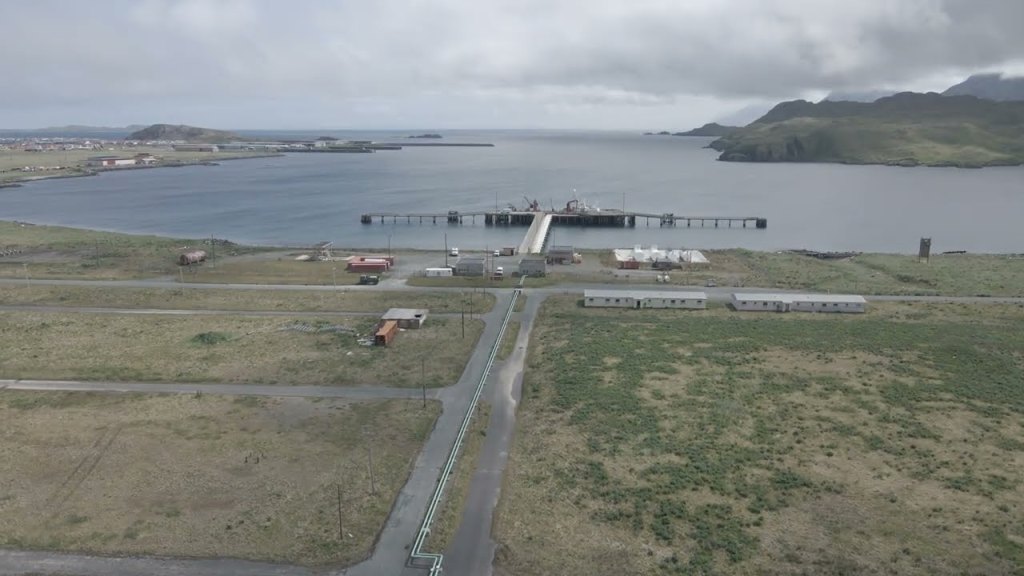
Nome Airstrip
His mission was to secure a boat to transfer Chief Mac to shore, then arrange to get him moved to the Nome airstrip where a plane from Adak Naval Station was due to land. Plus manpower would be needed for the heavy lifting ashore. The Mayor of Nome and three City Councilmen said they would do it in exchange for a tour of the boat.
These burly bearded guys looked like gold miners with their plaid flannel shirts and insulated boots, not politicians. They stopped in the After Battery to chat with us for a few minutes. We went up on deck to get some eyeball liberty. Nome is a desolate looking place, a small town with big mountains and no trees. That Jack London book I read said they had saloons, but we never got the opportunity to carouse in them. We saw Chief Mac off with his escorts aboard a 16 foot outboard motorboat, and when they departed for shore we departed for that who knows where place again. It was back to work for us, the ocean wasn’t going to survey itself.
Chief Quartermaster Davis was due to be transferred so the Captain assigned him to escort Chief Mac on his travels. Davis reported back later that they flew to Anchorage in a P2V Neptune (an anti-submarine warfare plane, ironically) to do an autopsy. The Air Force Base Hospital staff was reluctant, so Davis put the Doctor In Charge on the phone with SubPac. Someone with a lot of horsepower convinced him it was in his best interests to comply. It turned out that a cerebral hemorrhage had caused his death. After a stop in Seattle to attire Chief Mac in a new dress blue uniform, he and Davis were flown to Arlington National Cemetary where his family was gathered for the burial. Chief Davis presided over the ceremony.
Chapter 2. PASS THE PEAS, PLEASE!
And there we were, again!
To make up for the time lost on that little side excursion to Nome our patrol was extended. The cooks hadn’t planned for this circumstance. We still had dehydrated and frozen food, plus flour and coffee, but we ran out of canned food. (For you non bubbleheads, the last of the fresh food was gone six weeks ago). A mess cook was sent to the After Torpedo Room to see if they had missed any provisions stored there. He laid down on his belly in the bilges with a battle lantern, peering into the dark recesses. The light reflected off of something shiny stuck under number ten torpedo tube. He slithered over and pulled it out. It was a can of green peas.
Number 10 cans.
Rumor of his discovery spread like wildfire. The only things we had to look forward to while on patrol to were watching movies and eating, and the movies weren’t very recent (think Rory Calhoun westerns). Canned green anything, yum, that was the next best thing to fresh veggies. A #10 can only holds 3 quarts which would have to be shared by 85 submariners.
We didn’t have space for a surface ship style buffet line, so we always ate family style in three shifts. Mess cooks would put food on the tables and we would take as much as we wanted of each dish. This method worked well and I still wear the belly fat to prove it. These green peas would be in high demand, so the mess cooks were instructed to personally put two tablespoons on each of our plates. I am sure the cook added bacon or dehydrated onion or something to give the peas more volume. There were no leftovers.
When the message arrived that we had surveyed the whole damn ocean and could head south, we gathered on the mess decks and were served a celebratory concoction made with Gilly (180 proof alcohol used in the torpedos, mixed with bug juice similar to kool aid but nastier). Each of our three watch sections would receive their share of this high end hooch after being relieved from duty, as we were not allowed to drink and dive.
Chapter 3. WE GET CRABS!
And then we weren’t there.
We reported our food situation to SubPac and were instructed to pull into Adak Naval Station and take on a weeks worth of vittles to sustain us during our return voyage to Pearl. And, oh, by the way and more importantly, Commander Submarine Force Pacific Admiral Maurer is hosting a big shindig and needs about a ton of crabs which just happen to be stored at Adak. Could you please transport them for him?
Adak, Alaska
Adak is an austere 28 mile long island in the Aleutian Chain, ideally situated for Navy patrol planes to keep an eye out for bad guys. The Tiru tied up to a pier and we loaded stores, sampling various fresh fruits as they were passed hand to hand aboard and stowed below. Not ones to disappoint an Admiral (especially one with two Silver Stars and the Navy Cross), we manhandled cases of crabs down the After Battery hatch and stashed them in our nearly empty freezer.
Admiral Maurer was to do a walk thru as we transited the Pearl Harbor channel, and the boat needed to be thoroughly cleaned. Everything in the Engine Rooms was covered with ‘snorkel dust’, a combination of diesel fuel, lubricating oil, and hydraulic oil bound together with dried salt and carbon from the engine exhaust. Our Chief Engineman, Eugene Gaito (a short New York Italian with a white beard and twinkling eyes, who made all 9 war patrols on USS Bowfin), told me and a couple of other snipes to go to the Adak Commissary and buy cleaning gear. First we went to Chief Of The Boat Christofferson (another WWII Submarine Veteran who had so many medals he had a port list when in his dress uniform) to get some cash from the slush fund, but he turned us down so we had to use our precious beer money for soap and such. We bought the then new ’409’ cleaner which worked so well I still use it to this day.
We got liberty on this port call. The only places to drink on Adak Island were the Officers Club, Chiefs Club, and Enlisted Mens Club. So off we went to mingle with the airdales and other sailors that called this secluded base home. When the EM Club closed, most of us stumbled back to the boat. But the Torpedomen had other ideas.They went to explore “Adak Forest”, which consisted of a traffic circle with the only three trees growing on the island. And a single totem pole.
Early the next morning the Adak Base Police were aboard wanting to know where their totem pole was. As we were the only ship in port we were the prime suspect. This totem pole was no virgin, having been stolen several times before. We heard she made it to Pearl Harbor once, and had to be flown home. They found her resting peacefully in the still torpedoless #2 torpedo tube. They got their totem pole back and we got underway.
Chapter 4. PEARL
And then we headed home.
We ate well on our southward voyage, boiled crab with canned green peas, and fresh salads, and omelets made from real eggs, not the dehydrated powdered crap we had been eating. The Engine Rooms warmed up enough to stand watch sweating and shirtless again. We could cruise on the surface and hang out on the bridge breathing fresh air and enjoy looking at the ocean without the use of a periscope. Life was good.
ComSubPac Admiral Maurer did his walk through, and we transferred his crabs after we tied up at the Submarine Base.The married men went home to catch up on their TV watching, so they said. Us single guys went to the barracks and took a shower, splashed on a quart and a half of Old Spice to mask the diesel submarine smell located deep in our pores, traded our filthy dungarees for spiffy civvies, and headed for our usual haunts in Honolulu.
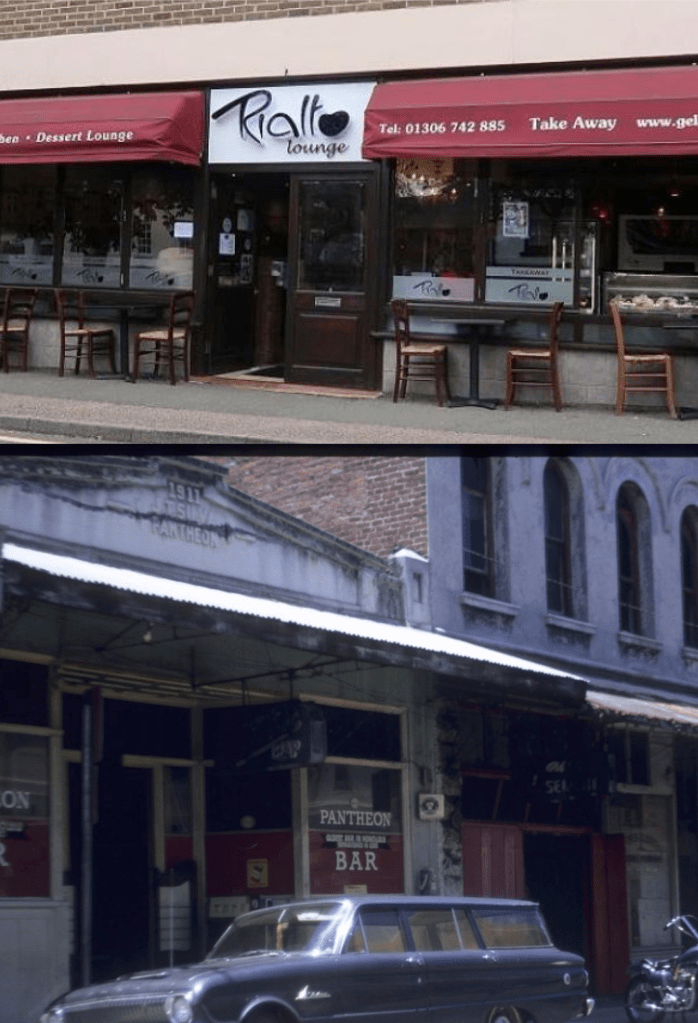
Our first stop was The Dolphin Club on Beretania Street to check in with Big Mary and the girls. We toasted Chief Mac there, and walked to the Pantheon Bar on Nuuanu Avenue and toasted Chief Mac again. There were probably a few other fine drinking establishments that we patronized before arriving at the Rialto Lounge on Hotel Street. This had been Chief Mac’s favorite hangout. Besides the obligatory jukebox, the Rialto had a bowling machine and a shuffleboard that gave us squids something to spend our money on while drinking. It may be just my imagination, but I can still picture Chief Mac sitting on a stool with his back against the Rialto’s bar, smiling at our gin mill antics with the neon beer signs reflecting off of his bald head. We intrepid sailors of the USS Tiru raised our bottles of Primo and Oly and Lucky Lager and said “Here’s to Electrician’s Mate Senior Chief Edward McKeon. Fair Winds And Following Seas, Shipmate.”
Rialto Lounge Hotel St. / Pantheon Bar Nuuanu Ave.
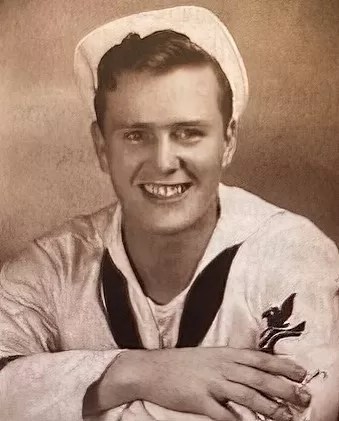
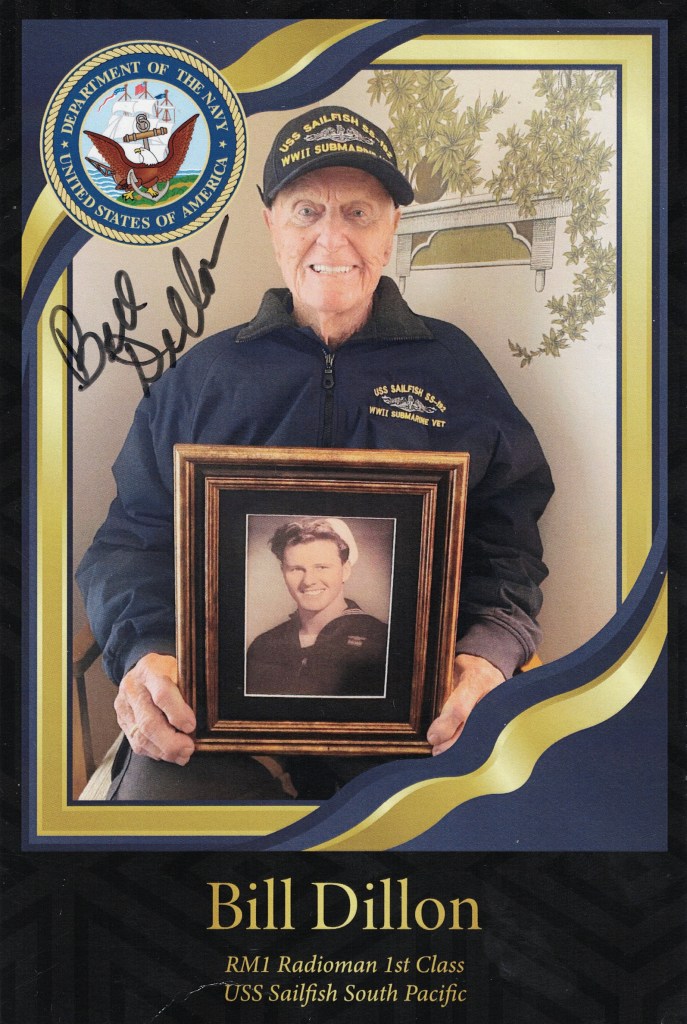
Bill Dillon was a submariner on the USS Sailfish, a radioman first class, and collaborated with the author Stephen L. Moore to tell the harrowing story of how the Sailfish sunk a Japanese Carrier.
Bill Dillion was just 17 when he signed up for military service. He received two Bronze Stars, one with valor, but it’s what he did after the war that he says is most important to him. “During the war I was killing people,” he recounts. “After the war I began helping them.”
Today, he is the sole survivor of the 200 men he served with on the Sailfish, and the last American survivor of the battle of Formosa. Bill served in the Navy from May 1942 to November 1947.
After an undefeated football season, Bill quit high school in his junior year to join the Navy. He was sent to submarine school in New London, CT and then assigned to the submarine the USS Sailfish (SS 192). This submarine was formerly the USS Sgualus which had sunk off the coast of New Hampshire during a test dive in 1939. While 26 crew members were lost, there were 33 rescued and the ship was later salvaged and renamed the USS Sailfish.
Bill served on the USS Sailfish from January 1943 until it was decommissioned in 1945. They had 5 Major War Patrols. The Sailfish sunk several Japanese commercial and military vessels, including an aircraft carrier and 2 destroyers. And rescued 12 pilots and crew that had been shot down or run out of fuel during the Battle of Formosa. They took the rescued airmen to Saipan and returned to their combat war patrol.
Bill remained in the service and got married January 5, 1946 to, Janet, his high school sweetheart. Bill received his GED and applied for college the same date and graduated in June 1951 from the University of Florida.
The U.S. space industry was just beginning, and I became a member of the launch team that placed the first U.S. satellite into orbit. He worked on several different programs including 13 down-range tracking sites; developing the first electronic checkout of launch vehicles; the initial working on the GPS system for Assistant Defense Secretary David Packard; served as Solid Rocket Booster Manager for the Air Force Titan 3 Program; and become the Systems Design Manager for the highly secret system of satellite-tracking all vehicles in space. Receiving a major citation.
Bill and his late wife, Janet, were married for 72 years and had 7 children. There are now 12 grandchildren and 12 great- grandchildren and the family is still growing.
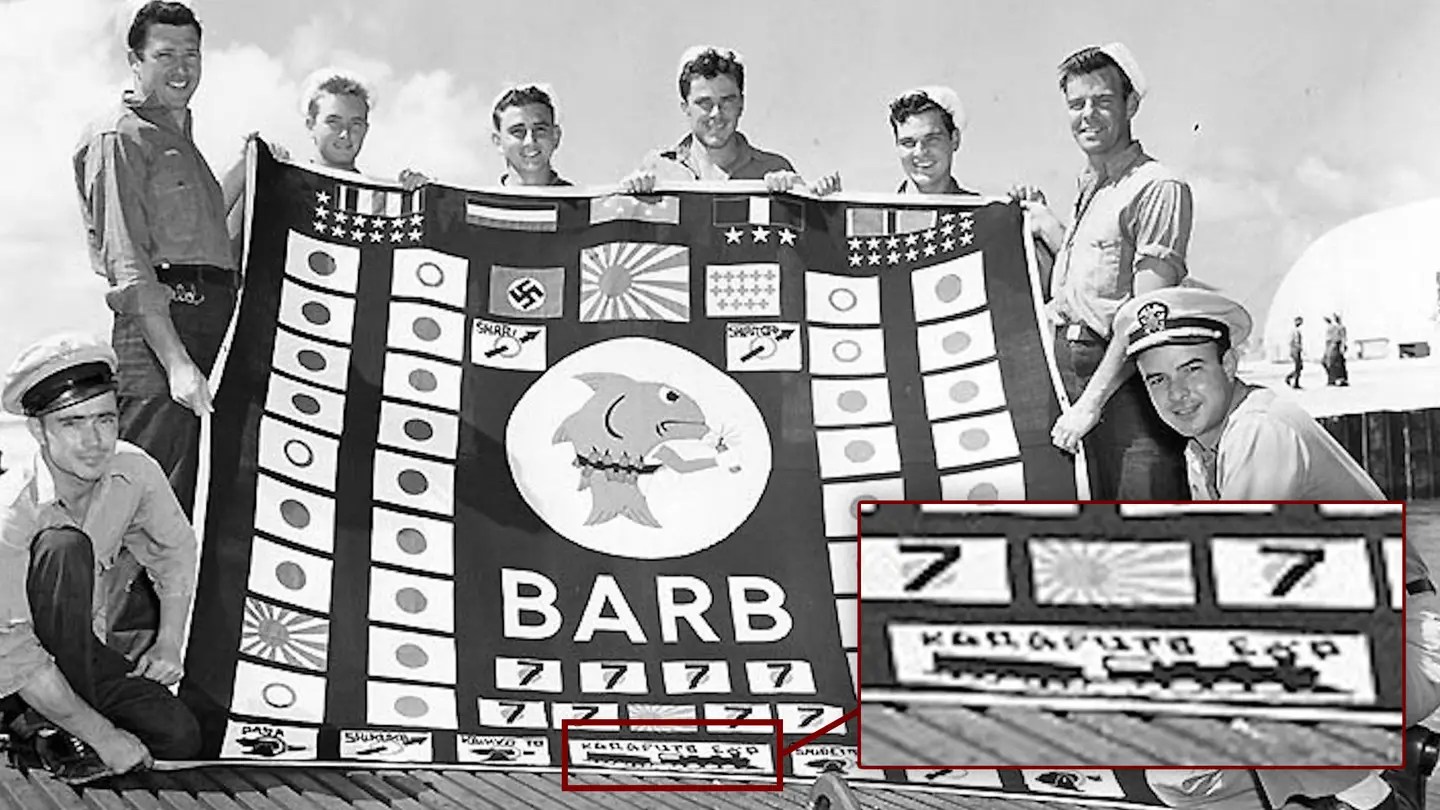
Members of the USS Barb’s crew hold the submarine’s battle flag aloft after returning from a final patrol in 1945. The train kill can be seen in the bottom-center of the flag. (U.S. Navy).
Submarine: 1. Train: 0.
By Ford Murray, USS Missouri Tour Guide
In 1973 an Italian submarine named Enrique Tazzoli was sold for a paltry $100,000 as scrap metal. The submarine, given to the Italian Navy in 1953 was actually an incredible veteran of World War II service with a heritage that never should have passed so unnoticed into the graveyards of the metal recyclers.
The USS Barb was a pioneer, paving the way for the first submarine launched missiles and flying a battle flag unlike that of any other ship. In addition to the Medal of Honor ribbon at the top of the flag identifying the heroism of its captain, Commander Eugene “Lucky” Fluckey, the bottom border of the flag bore the image of a Japanese locomotive. The USS Barb was indeed, the submarine that “SANK A TRAIN”.
The tragic loss of the submarine Thresher and 129 men had a special kind of impact on the nation …..a special kind of sadness, mixed with universal admiration for the men who choose this type of work. One could not mention the Thresher without observing, in the same breath how utterly final and alone the end is when a ship dies at the bottom of the sea….. and what a remarkable specimen of man it must be who accepts such a risk. Most of us might be moved to conclude, too, that a tragedy of this kind would have a damaging effect on the morale of the other men in the submarine service and tend to discourage future enlistment. Actually, there is no evidence that this is so. What is it then, that lures men to careers in which they spend so much of their time in cramped quarters, under great psychological stress, with danger lurking all about them?
Bond Among Them
Togetherness is an overworked term, but in no other branch of our military service is it given such full meaning as in the so called “silent service”. In an undersea craft, each man is totally dependent upon the skill of every other man in the crew, not only for top performance but for actual survival. Each knows that his very life depends on the others and because this is so, there is a bond among them that both challenges and comforts them. All of this gives the submariner a special feeling of pride, because he is indeed a member of an elite corps. The risks, then, are an inspiration rather than a deterrent. The challenge of masculinity is another factor which attracts men to serve on submarines. It certainly is a test of a man’s prowess and power to know he can qualify for this highly selective service. However, it should be emphasized that this desire to prove masculinity is not pathological, as it might be in certain dare-devil pursuits, such as driving a motorcycle through a flaming hoop.
Emotionally Healthy
There is nothing dare-devilish about motivations of the man who decides to dedicate his life to the submarine service. He does, indeed, take pride in demonstrating that he is quite a man, but he does not do so to practice a form of foolhardy brinkmanship, to see how close he can get to failure and still snatch victory from the jaws of defeat.
On the contrary, the aim in the submarine service is to battle the danger, to minimize the risk, to take every measure to make certain that safety rather danger, is maintained at all times.
Are the men in the submarine service braver than those in other pursuits where the possibility of sudden tragedy is constant? The glib answer would be to say they are. It is more accurate, from a psychological point of view, to say they are not necessarily braver, but that they are men who have a little more insight into themselves and their capabilities.
They know themselves a little better than the next man. This has to be so with men who have a healthy reason to volunteer for a risk. They are generally a cut healthier emotionally than others of the similar age and background because of their willingness to push themselves a little bit farther and not settle for an easier kind of existence.
We all have tremendous capabilities but are rarely straining at the upper level of what we can do, these men are.
The country can be proud and grateful that so many of its sound, young, eager men care enough about their own stature in life and the welfare of their country to pool their skills and match them collectively against the power of the sea.
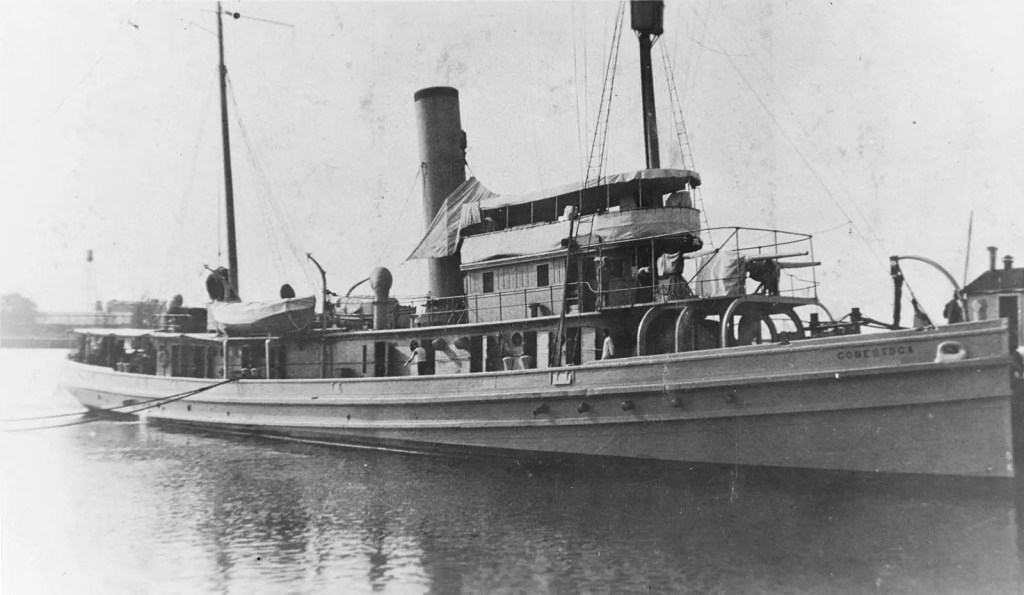
USS Conestoga (AT-54) at San Diego, California (USA), circa early 1921, shortly before she disappeared while en route from San Diego to Samoa, by way of Pearl Harbor, Hawaii.
The USS Conestoga was a seagoing tug that spent World War I hauling supplies across the Atlantic, escorting convoys, and towing ships back to port. When the war ended, it was transferred to the Pacific Fleet, and based in San Diego. In March 1921, it was sent to haul coal to American Samoa. To this day, no one knows why the Conestoga never arrived.
The submarine USS R-14 was dispatched from Pearl Harbor to look for the Conestoga or determine what happened to the seagoing tug two months later. It’s a shame the tug was never found, because R-14 really could have used the help getting back to Hawaii.
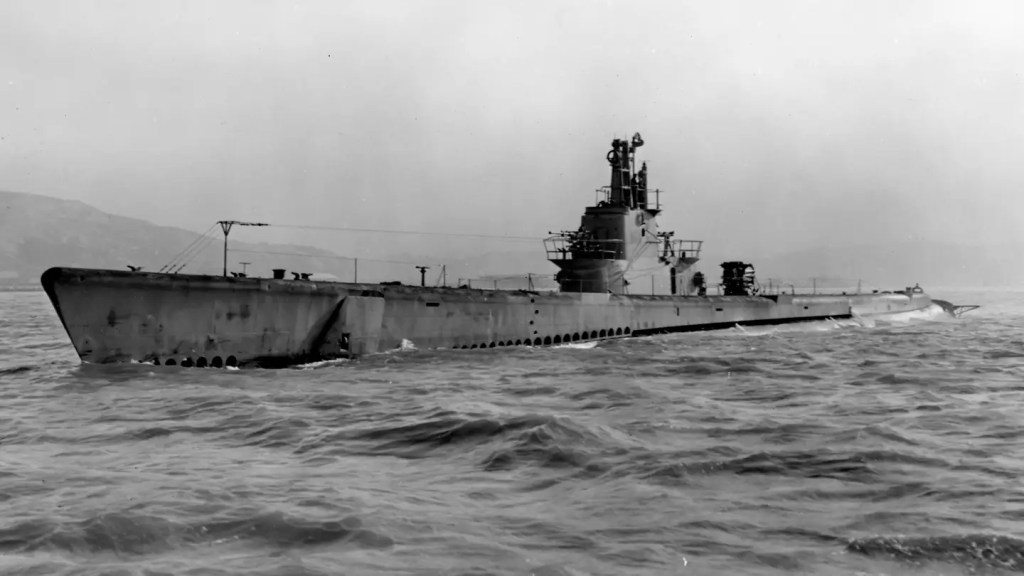
USS R-14 underway, probably during sea trials in late 1919 or early 1920. Her deck gun has not yet been installed.
R-14 seemed to be in good working order when it left the Hawaiian Islands. It was a relatively new boat, built at the end of World War I and commissioned in 1919. It had already run a shakedown cruise in Connecticut, steamed from the U.S. East Coast to the West Coast via the Panama Canal, and arrived in Hawaii in less than a year.
On its mission to find the USS Conestoga, the submarine ran out of usable fuel around 100 nautical miles away from Hawaii. To make matters worse, it also lost its radio communications equipment around the same time. In the vastness of the South Pacific, it was a terrible situation for a submarine and its crew. It was dead in the water, with no means of calling for help.
Luckily for the sub and the men aboard it, the Naval Academy-trained officers weren’t too far removed from the age of sail, and still learned vital sailing and navigation skills in their academy days. One of the officers aboard the vessel, Roy Trent Gallemore, came up with the idea of going old school to get everyone home: sails.
Acting commanding officer, Lt. Alexander Dean Douglas designed a series of sails, honest-to-God sails, from the crew’s hammocks and blankets. Then the crew tied them to some jerry-rigged bunk bed frames and attached the entire apparatus to the kingpost of the boat’s torpedo loading crane to create a foresail. This gave the boat some movement and control of the rudder.
Next, they made a mainsail using six sewn-together blankets tied to the submarine’s radio mast. Another eight blankets were sewn together and tied to a top boom made from the remaining bunk bed frames. Tying this to the vertical part of the torpedo crane provided a mizzenmast. All three sails together gave the steel submarine a top speed of 2.1 knots, or just about 2.5 miles per hour in a good wind.
Stern view of the shipwreck, colonized with sea anemones.
After a couple of days of sailing on the ocean’s surface, LT. Douglas was able to begin charging the submarine’s batteries. 64 hours later, the R-14 was able to come into port at Hijo Harbor, Hawaii, under battery power. For his innovation in an unusual, but potentially deadly situation, Douglas was given a commendation by his Submarine Division Commander, then-Cmdr. Chester Nimitz.
The crew of R-14 would never have found the USS Conestoga unless they too sunk to the bottom of the ocean. The tug’s whereabouts were lost until it was found by divers in 2009, later confirmed to be Conestoga in 2015. Douglas would stay in the Navy through World War II, commanding a submarine escorting convoys to North Africa.
R-14 spent World War II hunting Nazi submarines in the Caribbean, but the only combat it saw was when U.S. Army artillery mistook it for a German submarine off the coast of Key West, Florida and fired on it. The ship was undamaged.
Mahalo to Crichton Roberts of Bowfin Pearl Harbor Base for providing this article.
Yesterday, the corpsman at pharmacy at the U.S. Navy Hospital Yokosuka handed me a Skillcraft pen to sign for an RX. I thought OMG! They still have them. I asked if I could have it and, of course, he said – sure. Its on my desk now.
That brought back a flood of memories. Got my first one on the USS TRUTTA SS-421. I thought, wow a free pen – this Navy is great! I’m re-enlisting.
About 1980, YN1(SS) Jones on the USS USTAFISH made a plea at quarters one morning on the pier. The Navy was out of money and he was out of pens. So he created an “amnesty box” and he put it by the brow. He instructed everyone to go down below and look in their bunk pans and under their flash covers and turn in all those navy pens. He said, No charges will be filed. Everyone loved his announcement and by the noon meal, the “amnesty box” was filled with Navy pens.
So, anyway, I GOOGLED it and this is what I found. Things I never knew. Check it out below. Those should have been some quals questions.
What do A-ganger’s hate to find in a flapper valve? What can you do for one mile in – 40 deg F? etc . . .
Hope it brings back memories for you too. Ah – the good old days!
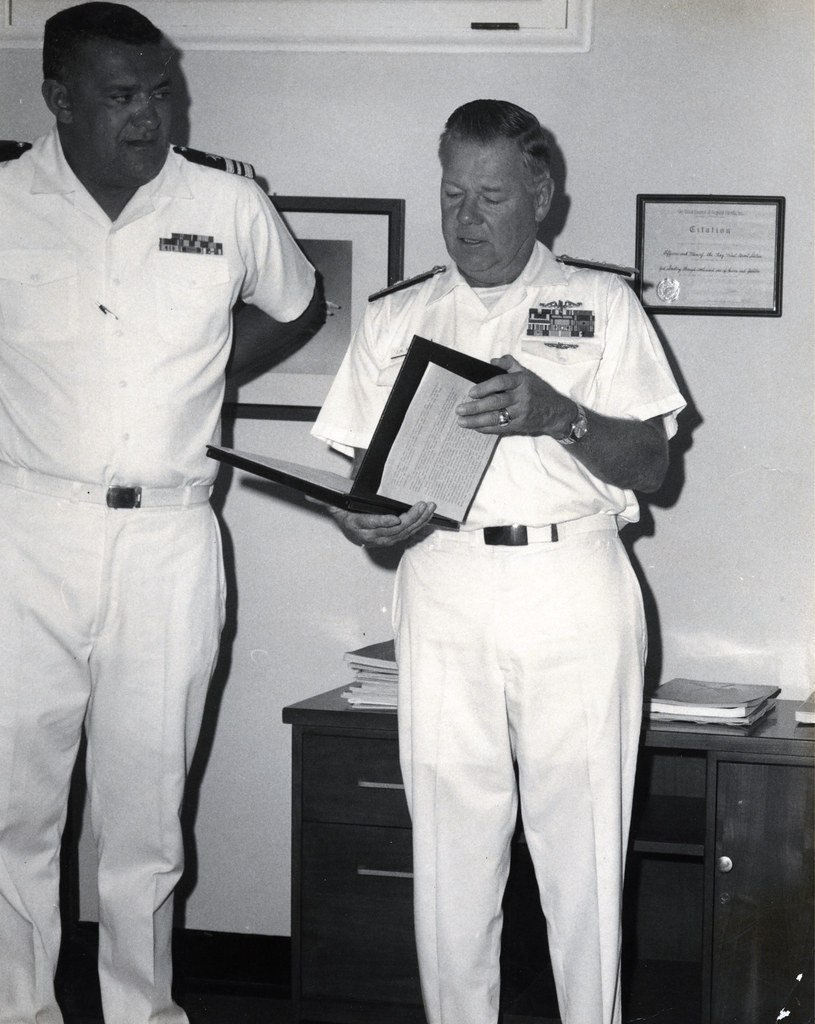
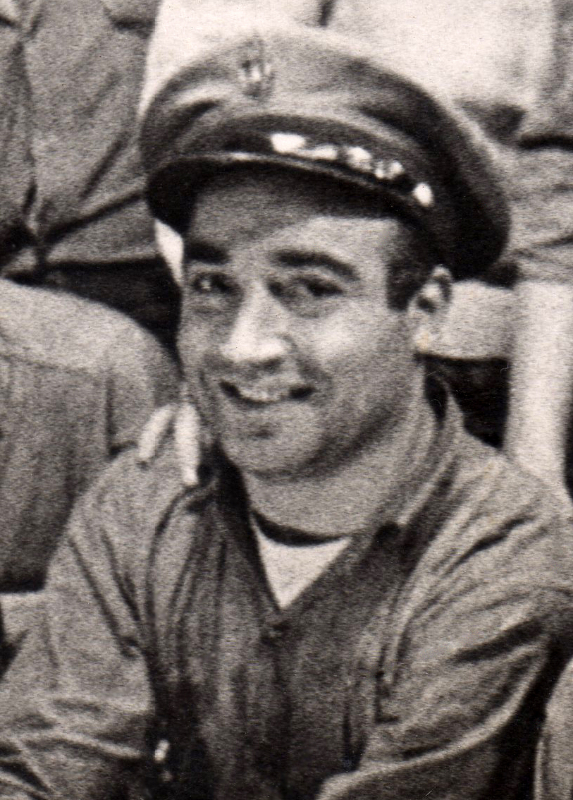
Recently as I was strolling around the USS Bowfin Museum grounds at Pearl Harbor, I ran across a plaque listing the 300 plus crew members who served on her during the course of World War II. I barely glanced at it as I passed, but a name leaped out at me. Eugene Gaito. He was our Chief Engineman on the USS Tiru (SS-416), aboard from January 25, 1966 to October 15, 1967. I had known he served during WW II, but not on which boats. He was part of the commissioning crew of the USS Bowfin (SS-287) and made all nine war patrols between August 1943 and July 1945, one of six crew-members to do so.
That ’66-’67 WestPac trip we made with him on Tiru was memorable, to say the least. Gaito was a great chief, knew his stuff, and gave us young, wild Machinist Mates and Enginemen plenty of slack if we did our jobs, and a royal chewing if he thought we didn’t. He could make us laugh, too. On St. Patrick’s Day 1967 he dyed his white beard green! He was called “Green Gene” for awhile after that.
Gaito was a golfer. While underway he would practice his putting in the Forward Engine Room. Some of the balls would drop down through the hatch in front of the distilling units. Us young squids would have to go down to the lower level and retrieve them. The ones we couldn’t find floating in the bilge would absorb oil and get as big as softballs. A couple of times during Pearl Harbor local operations COMSUBPAC Admiral Fluckey sent a helicopter to pick him up so they could go golfing. ‘Alligator’ Gaito must have been really good at that game.
About a month ago I was cleaning off my bookshelf and found something I had not read, “Bowfin” by Edwin P. Hoyt. I ran across Gaito’s name on page 182. While in the midst of reading the book I watched the History Channel documentary “USS Bowfin – Pearl Harbor Avenger”. About halfway through this guy pops up on my TV screen. It was him, same round face, same curly hair (but black, not white as I remember). What a thrill it was to see him again, though a twenty some years younger version then the picture stored in my memory.
After so many intrusions in such a short time I felt he was saying to me, “Remind the world that I existed, served my country, lived loved laughed, and then died, as all men do.” Or maybe something like that. So here it is, going out to some who remember him, and to others who I think may find something of interest in these few stories of his life and exploits. And to a couple of golfers.
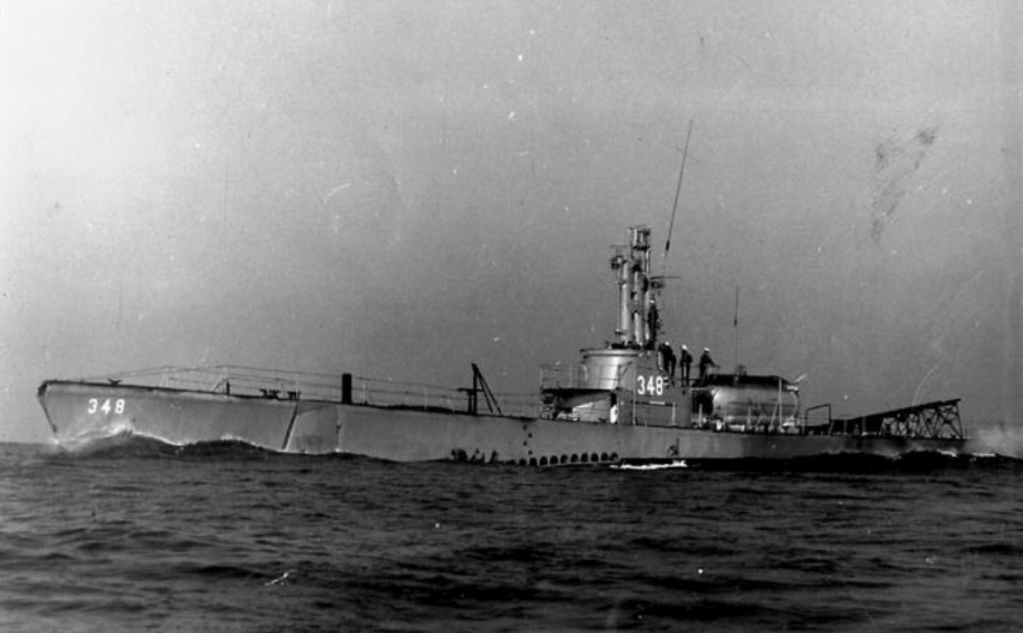
He enlisted in the U.S. Navy as a Motor Machinist Mate on March 7, 1940. Besides Bowfin and Tiru, he rode the USS Bonita (SS-165) from September 27, 1940 to November 26, 1942, USS Queenfish (SS-393) in ’47, USS Sea Dog (SS-401) in ’48, USS Caiman (SS-323) from ’52 to ’56, and was Chief Of The Boat on the USS Cusk (SS-348) between ’60 and ’62.
He lived in Ewa Beach, Hawaii, and died on December 31, 1991, a day short of his 76th birthday. Born January 1, 1916 in New York. Survivors listed in his obituary included a sister, five grandchildren, and eight great grandchildren.
He is buried in Punchbowl National Cemetery, Section CT 1-B, Row 300, site 321. The next time I go to Punchbowl I’ll pay him a visit and say hello.
I am sending this out today, January 1st 2019, because it has been 103 years since his birth. Happy Birthday, shipmate.
Nelson Greer
(Thank you to my USS Tiru shipmates Les Hampton and David McCune for some stories, and to Charles Hinman, Director Of Education Pacific Fleet Submarine Museum, for some hard to find information and the photo of Gene.)
Damn, we had fun. Some of it sure didn’t seem much like fun at the time, but looking back through the mists of time, it was all fun.
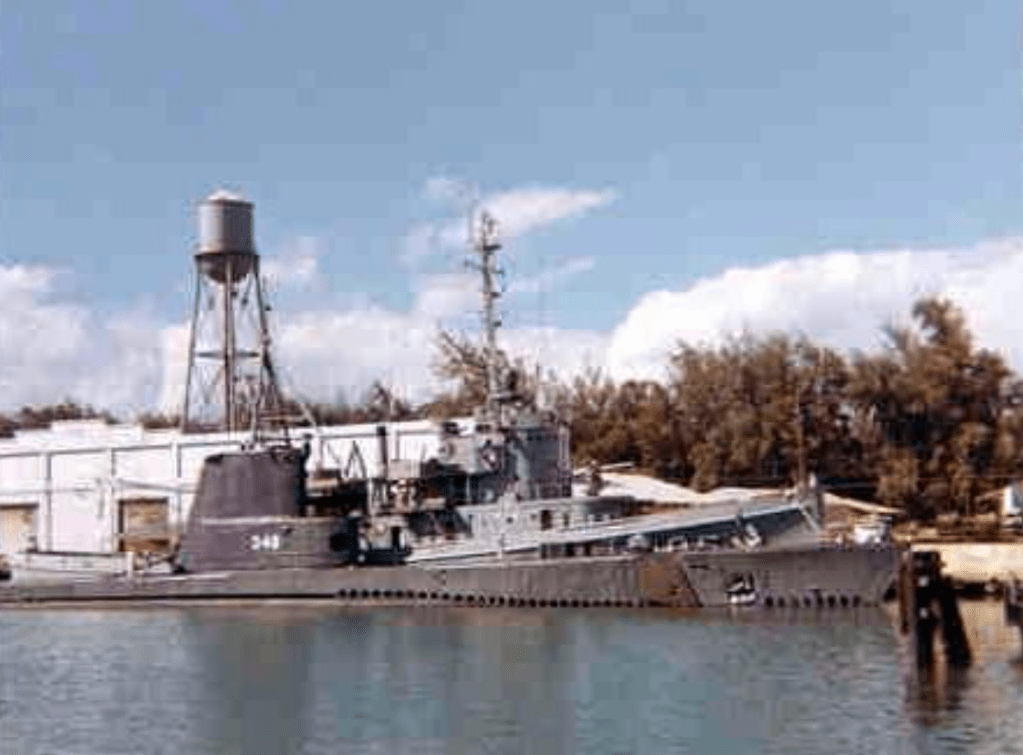
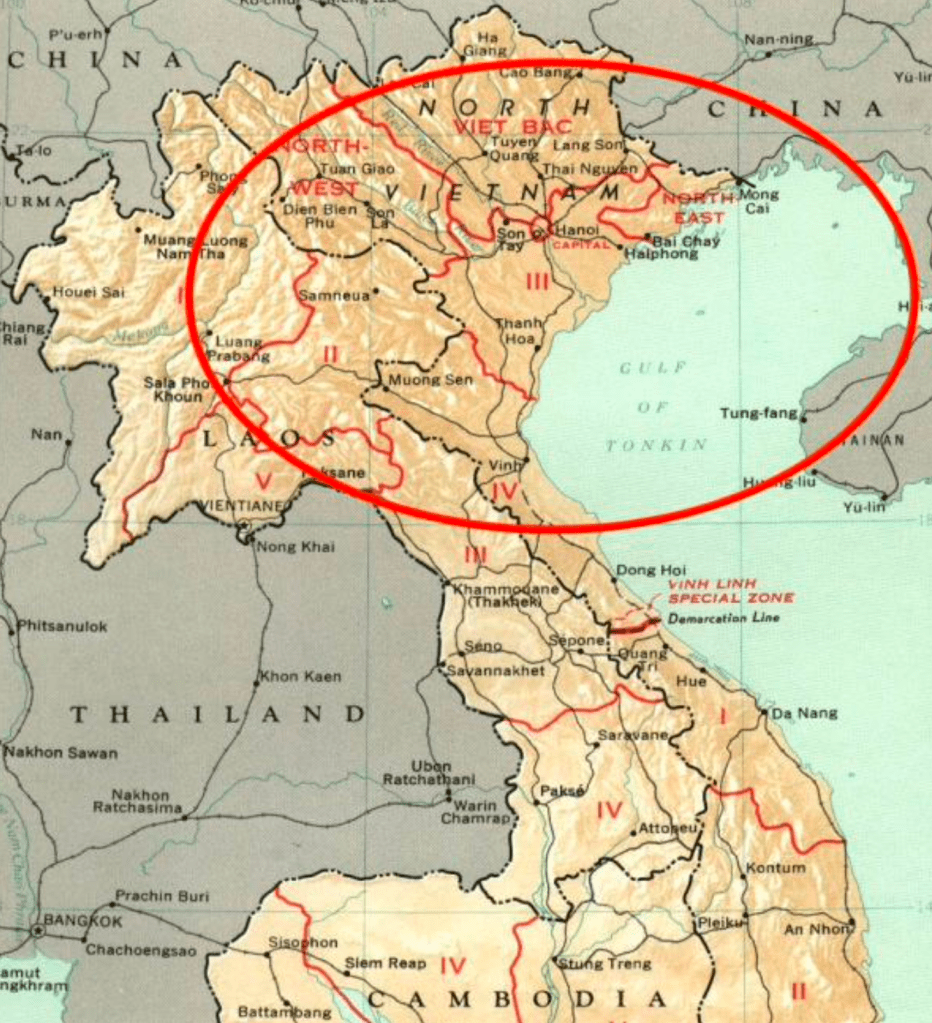
It was summertime, 1965, and the USS Cusk (SS 348) took on a full load of food and fuel, left Pearl Harbor in our wake, and headed for adventure in the Western Pacific. I don’t recollect us doing any Northern Runs that WESTPAC trip. We left the Russians to them new-fangled nukes and the more modern diesel boats. The glory days of the Cusk were the late 40’s, when she was the first submarine in the world to fire a guided missile. Later she got the Guppy II treatment with snorkel, new sail, and updated electronics, but basically, she was a WWII boat, fast on the surface and slow underwater. So, some guy at the top decided to let us patrol the Viet Nam area.
We made 2 or 3 patrols down south, so for brevity I’ll lump everything I remember into one tale. We were assigned lifeguard duty, with a 100 mile grid to patrol. If any airdales decided to ditch in our area on the way back to their carriers, our job was to rescue them. We cruised on one engine at about two knots, submerging once a day just to prove we were still a submarine. Nothing happened to any flyboys in our area, but plenty of irritating stuff happened to us.
You could always tell the Electricians on the boats by their dungarees. They got way too close to battery acid, and their clothes looked like they were headed to a swiss cheese convention. On the Cusk, the whole crew looked like that. Those old boats had a ‘closed cell’ ventilation system, where the Exhaust Blower took a suction directly from our 252 battery cells. This caused battery acid to get into the steel ventilation piping and we know who always wins that battle. The piping runs along the overhead from the Forward Battery compartment, through the Control Room and After Battery compartment, and ends at the Exhaust Blower in the Forward Engine room. The crew worked ate and slept underneath this piping. I remember tasting and then tossing out food when battery acid dripped in my plate. We could never tell if acid dripped in the bug juice, we drank cause the mess cooks mixed it so strong we probably could have used it in the batteries.
The worst acid leak was on the Exhaust Blower itself. And directly underneath was the perfect spot for the throttleman to stand while operating our two distilling units. So, when making water that we weren’t allowed to shower with, we would have acid dripping on us. We had to amuse ourselves at sea somehow so Lonnie Moo Johnson and myself decided to have a “whose dungarees will rot off first” contest. I don’t remember the prize; I suppose it was an ice cold San Miguel beer in Olongapo or something just as useful. After 10 days we compared what was left of our uniforms and Lonnie Moo won. He must have cheated and rolled on the deck to get some extra acid, because I know I stood under that blower 8 hours a day for all 10 days.
Now, the Supply Blower is right next to the Exhaust Blower and there may have been some acid carryover to it. The pipe coming out of the blower splits into a Y shape and forces fresh engine room air through two smaller pipes into the forward part of the boat. Well, right at that Y the piping rotted out and the fellers up forward weren’t getting enough fresh air. We looked at our coffee cans and other types of sheet metal and couldn’t come up with anything to repair it with. Then some genius said, “Dungaree pants”. Somebody had a new pair without any acid holes, we replaced the sheet metal piping with the bell bottom trousers, secured it with that there newly invented duct tape, and they held up until we got into Subic Bay for an upkeep.
Cruising off the coast of Vietnam in the fall was HOT, HOT, HOT! The Cusk had two 12 ton air conditioning units in the After Engine room. Not really good enough to cool the boat very well, but when they both broke down, son-of-a-bitch, it went from just HOT to absolutely miserable. We tried to cool the boat by opening all the watertight doors, closing the main induction, drawing air through the boat from the conning tower hatch to the engines. That helped everybody except the electricians cause the humid Tonkin Gulf air shorted out everything between the conning tower and the engine room. So, we opened the main induction and went back to being miserable again. During the day we were allowed to sit inside the superstructure above the forward torpedo room where we could scoop up cool salt water and pour it over ourselves, which gave us some temporary relief. No one wore shirts except the cooks and mess cooks, as we didn’t want none of their manly chest hairs in our chili con carne. One day I was sitting in the mess decks, and a cook, Ptomaine Greer (no relation), came out of the galley and took off his sweat soaked tee shirt. I have never seen a rash that large before or since. It looked like he was wearing a red tee shirt. I tell you; it was absolutely miserable.
We all know the Government would rather waste a dollar and do nothing than spend a dime to fix a problem. Here is a story to illustrate that truth. The General Motors 278-A diesel engine has four exhaust valves in each of its 16 cylinder heads. The valves have two grooves near the top of the stem. Two ‘keeper’ halves fit around each valve and have two ridges (called ‘lands’) on the inside that fit into the valve grooves, while the outside of the keepers fit into a tapered cup that sits on top of the valve spring. The keepers keep the valve connected to the spring. For you non engineer types, the spring holds the valve shut whilst fuel is exploding inside the cylinder.
The Cusk received a large shipment of refurbished heads prior to deploying to WESTPAC. We overhauled number Two Engine using 16 of the ‘new’ heads just before getting underway. It ran just fine in port. Departure day dawned, and we headed toward the Land of the Rising Sun. A of couple days out and suddenly, BAM, BAM, BAM, BAM shut that engine down, there is something wrong there. Pull the valve covers and, hey, here is the culprit, an exhaust valve is missing, and the only place it could be is between the piston and the head. Diesel engines have a 16 to 1 compression ratio, so there isn’t a whole lot of clearance in there.
So, we yank that head off, and there is our mangled valve laying on top of one very beat up looking piston. The bottom side of the head has matching scars from the wayward valve. We strip the head, salvaging the salvageable parts. “Hey, these valve keepers only have one land” says some sharp sighted sailor. The valve keepers need two lands so are only doing 50% of their job. We check the spare head we are about to slap on. The keepers have just one land. We check all of our recently received spare heads, same thing. No choice, we got to use the crappy keepers. Next day that engine goes BAM, BAM, BAM, BAM again, same story, different cylinder. And so, it goes for the two weeks it takes us to reach Yokosuka, Japan.
We figure we can just get some new keepers from the supply system in Yoko and the problem is on its way to being solved, right? ‘Supply’ had plenty of keepers in stock and they sent them right away. You guessed it, all of them were the new improved one land type guaranteed to drop the exhaust valve into the cylinder while the engine was running. Frantic phone calls were made, but no one cared. Don’t you know there is a war going on down south?
The joke on Jimmy boats was that if there were two coats of paint on the bulkhead outboard of the engines, you would have to chip off one coat for clearance in order to slide a head up off of its studs. Not a lot of working room out there, and hotter ‘n hell if the engine has been running. Changing an outboard head at sea was way low on our list of favorite things to do. The cool waters by the dock in Yokosuka kept the engine room at a comfortable temperature, so we formed a plan to avoid future pain. We moved the five gallon cans of coffee, flour, and sugar we had stored there and pulled all eight heads off the outboard side of that newly overhauled engine. Then we took the eight most easily accessible heads off the inboard side of the other engines, installed the good ones outboard, and replaced them with the faulty heads. Now we knew the cylinders likely to fail were easy to get to.
After a while we were champion head changers. Four hours after hearing that dreaded BAM, BAM, BAM, BAM the engine would be on the line again. If there was a puka in the piston, add two hours. Lacerated liner, add another two hours,
These heads weren’t the dinky things like on your lawn mower. They were over a foot square, and maybe 8 inches thick. They weighed 186 pounds. The circumference of my wrists grew an inch that WESTPAC trip. I could just barely lift one and carry it around. Lonnie Moo was about 5 feet tall and 6 feet wide, and he could lift one in each hand and waddle down the passageway. A point of pride was being able to cradle a head in your arms, and step through the hatch with it into the other engine room. The chief was keeping track, and said we had changed 96 heads by the time we got back to Pearl.
As for liberty, if you were there in those days, you remember what we did in Honcho 1, 2, and 3 in Yokosuka, the Wan chai District of Hong Kong, and on Olongapo’s’ Magsaysay Drive. If you weren’t there, you can only envy us.







 Bowfin Pearl Harbor Base