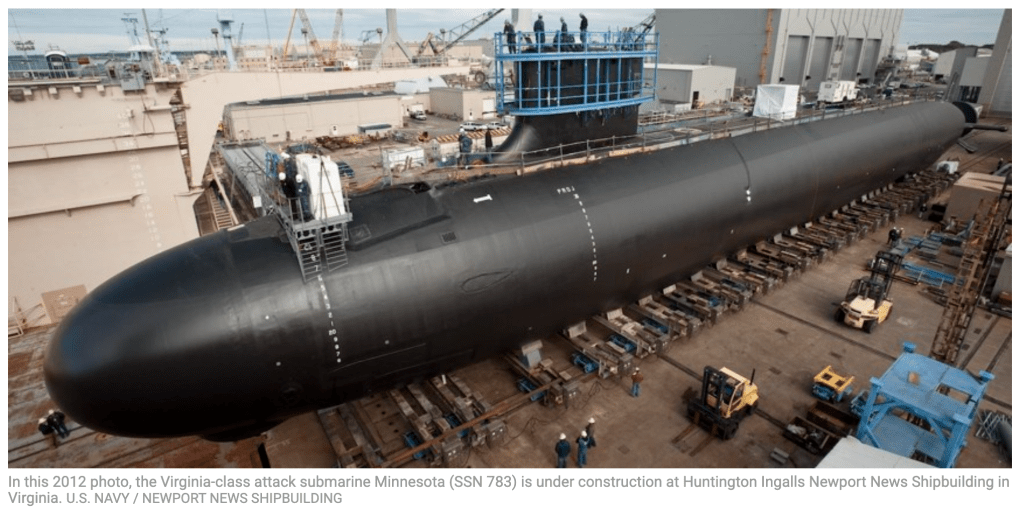
The nationâs largest shipbuilder wants to expand its manufacturing facilities this year to speed up and streamline production of nuclear submarines amid ongoing delays, ballooning costs, and labor woes.
The goal is to improve cost and throughput by going âwhere the labor is,â said Huntington Ingalls Industriesâ CEO Christopher Kastner.Â
To perpetuate the memory of our shipmates who gave their lives while voluntarily serving in submarine warfare in the pursuit of their duties while serving their country. That their dedication, deeds and supreme sacrifice be a constant source of motivation toward greater accomplishments. To further promote and keep alive the spirit and unity that existed among submarine crewmen during World War II. To promote sociability general welfare and good fellowship among our members. To pledge loyalty and patriotism to the United States of America and itâs constitution.
1. Bowfin Pearl Harbor Base
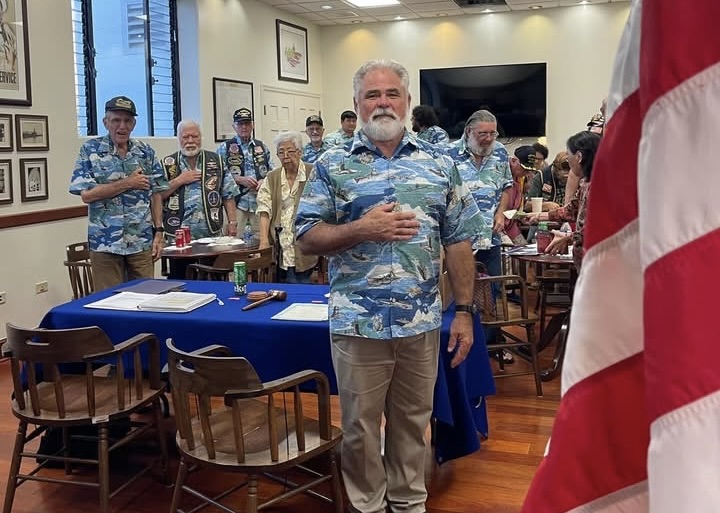
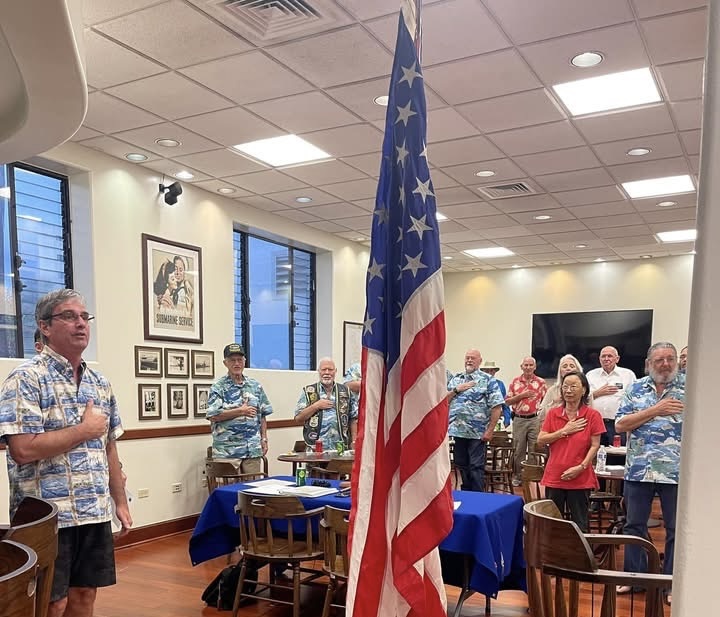
Bowfin Meeting â We conducted our January meeting at Clean Sweep Bar, Lockwood Hall. The following members attended â Base Commander Paul Jurcsak, Secretary Brett Kulbis, Treasurer Carleton Tatro, COB Gary Johnson, and members Dave Atkins, David Bilek, Rodney Boucher, Allen Clemons, Dan Del Monte, Frank Diaz, Nelson Greer, Ben McGowan, Crichton Roberts, Pat Suenaga, Wade Thode, Ken Voorhees, and Joe Winzenried.
Welcomed Guests â Dolores Brown, Miya Bilek, Judy McGowan, Edie Clemons, Wesley and William Thode. We also welcomed new Associate Member Thomas Schmidt.
Binnacle List – Please keep all our members and their families in your good thoughts and prayers.
HauĘťoli LÄ HÄnau! Bowfin Birthdays for the month ofJanuary.
1996 – USSV of WWII Hawaii Chapter begin conducting monthly meetings at Clean Sweep Lounge, Lockwood Hall, Naval Submarine Base Pearl Harbor. 1972 – Submarine Memorial Pearl Harbor plaque inscription approved. 1920 – Lieutenant Chester W. Nimitz accepts property for Naval Submarine Base Pearl Harbor. 1919 – Submarines R-15 to R-20 arrive early in 1919 to establish the Submarine Base at Pearl Harbor.
On December 29, 2024 the Hawai’i production of “Shikata Ga Nai (It Cannot Be Helped)” premiered at the Moanalua High School Performing Arts Center.
Movie production was started just before the beginning of the COVID pandemic in 2019 and thus took five years to produce. It was supposed to premier in 2022, but due to all the COVID restrictions caused delay until now.
Storyline: It is 1999, and Tatsuo “Tats” Kaneshiro is a veteran of WWII living out his autumn days in the quiet seclusion of his suburban home in Hawaii. A member of the famed 442 RCT, the all Nisei (second generation Japanese American) infantry regiment that became the most decorated war unit in American history, Tats spends his time tending to his garden, watching television, and occasionally entertaining company like an old army buddy he plays chess with. His single parent daughter, Lynn, who has moved back home after her divorce, and attention deficit grandson, Ryan, live with him. But the peace that seemingly hovers over his daily existence masks his internal struggle. For though the war has been over for 50 years, Tats relives it every day due to a haunting secret about his time in battle that he has kept to himself. Inspired by the true life tendencies of many 442 veterans who have never told their families of their war experiences, “Shikata Ga Nai” tells of the battles that these now declining heroes have faced on their own without no one else knowing. Watch trailer HERE.
Bowfin Submarine Veteran Pat Suenaga volunteered to help for this movie premiere and provided the pictures below.
The Story of the Nautilus and the Nuns â New Years 1943 by Mister Mac
Eighty-two years ago this week, the submarine Nautilus shifted from her incredible role as a hunter killer to perform a mission of mercy. This is the story about the rescue of twenty nine refugees including four American nuns who became stranded behind Japanese enemy lines during World War II.
The Nautilus was originally named and designated V-6 (SF-9), but was redesignated and given hull classification symbol SC-2 on 11 February 1925. Her keel was laid on 10 May 1927 by the Mare Island Naval Shipyard of Vallejo, California. She was launched on 15 March 1930 sponsored by Miss Joan Keesling, and commissioned on 1 July 1930.
She was being refit in Mare Island during the Pearl Harbor attack but was ready by the time the Battle of Midway occurred. Her exploits included a daring raid on Makin Island landing a party of Marine Raiders. But this mission was certainly nothing the men had been prepared for.
The Nuns
Two of the Sisters were teachers, and two were nurses. They had arrived in the Solomon Islands in December 1940. These young women were new to missionary life, confronting an unknown culture for the first time, and did not speak the languages spoken on the various islands. Also, they had to learn how to get around the jungle. One year after they arrived, the Japanese attacked Pearl Harbor.
The Japanese quickly occupied many of the islands in the South Pacific. The nuns had been deeply involved in a village on the island of Buka. They had no idea that the Japanese wanted Buka for an airfield.
Sister Hedda Jager was the nun in charge of journaling their experiences. No matter what kind of day she was having, she always managed to record the dayâs happenings.
As the Japanese get closer and closer, Sister Hedda records how their lives morphed from working as missionaries to being filled with sheer terror. They made it to Bougainville where they learned how other missionaries in the Solomons had been tortured and executed.There were Marist missionary priests on the island and, knowing what the fate of the nuns would be if captured, they managed to hide the Sisters for months in the jungle. On New Yearâs Eve 1942, the priests managed to get the Sisters and 25 others to the beach in Teop Harbor. It was then they all learned that a submarine would be their means of rescue.
A Number of Ladies
The next day, and for several days thereafter, the United States submarine Nautilus patrolled the coast of Bougainville. Lieut. Comdr. William H. Brockman Jr. was looking for a fat target but received instead a message from Adm. Bull Halseyâs headquarters ordering him to proceed to Teop Bay on the northeast coast of Bougainville to evacuate some civilian personnel.
âHow many women can you take care of?â Lieut. Phil Eckert, the communications officer, asked Ensign Davis, the commissary officer.
âAny number, Sir,â Ensign Davis said.
Davis, Eckert and Bill Brockman were in for a surprise. Waiting at a mountain village named Tsipatavai, or soon to arrive there, were 14 missionary nuns, four other women, three young girls, two priests, five planters and the Austrian manager of a plantationâ29 refugees. They had been rounded up by the missionary priest, Father Albert Lebel of Brunswick, Me., with the aid of Jack Read, the coast watcher on northern Bougainville. (Readâs laconic messages, â40 bombers heading yours,â were a legend in the South Pacific).
Bishop Thomas Wade had put Father Lebel in charge of evacuating the nuns after four missionaries were executed on Guadalcanal, and in November Father Lebel had set out to rescue two priests and three nuns whom the Japanese had under guard at a mission on the northern tip of Bougainville. He led a party of natives 30 miles through the jungle to Readâs station, then across the island to the mission, where they discovered that the sentries had taken the night off. Sister Claire and Sister Remy were unable to walk so natives carried them on cane chairs lashed to poles. Sister Henrietta followed on foot. They fled through the night, arriving at Tsipatavai the next day.
There they were joined by four middleâaged Sisters of St. Joseph who had been on Buka since 1940âSister Mary Isabelle Aubin of Newport, Vt.; Sister Mary Celestine Belanger of Lowell, Mass.; Sister Mary Heda Jaeger of Saskatchewan, and Sister Mary Irene Alton of Hunting- ton Beach, Calif. From Soveli, 90 miles to the south, Father Richard OâSullivan brought four Maris? Sisters.
Read kept trying to arrange an evacuation but the answer was always the same: no planes or ships available. Finally he asked permission for Father Lebel to appeal directly to Halsey but they were still awaiting an answer on the day before Christmas when the Japanese raided Tinputz a few miles away. The three nuns there escaped to Tsipatavai. Father Allotte and Brother Gregor hid in the bush.
New Yearâs Eve Party
Father Lebel interrupted midnight mass to say the refugees must run for the hills at once. With Sister Henrietta carrying a lantern they headed into the mountains, crossing great gorges, climbing all night. On Christmas Day word came that the Japanese had departed but they stayed in camp another night, singing carols under the stars.
It was Dec. 26 when Father Lebel got to send his message to Halsey: âUrgently request immediate evacuation of American women from Bougainville. Fear repetition of crimes on Guadalcanal. Teop and Tinputz harbors safe and convenient. Eternally gratefully.â For a touch of clout, he signed Bishop Wadeâs name. Two days later Read received word that a submarine would probably be sent. On Dec. 31 he was advised it would âprobablyâ come that night. From Tsipatavai the refugees started for Teop. They were to light signal fires on the beach at 10 P.M.
There was no sign of a submarine. Not at 10 oâclock, not at 11 that New Yearâs Eve. Shortly after midnight, voices came faintly over the water. The launch from the Nautilus had capsized on the reef. She was righted and bailed, and the first load of 21 refugees was ferried to the Nautilus at 3 A.M.
On New Yearâs Day 1943, in the early morning darkness, the submarine Nautilus pulled to within 100 feet of the beach and the terrified passengers were safely taken on board and brought to safety.
Sister Hedda wrote in her journal: âYou cannot put into words the feeling that one has for those of oneâs own country, especially when one is miles from home and running away from the Japanese.â
âReal sugar!â said Sister Hedda when she saw coffee and sandwiches prepared by Ensign Davis. âReal salt!â It was 4:41 when the launch returned with its second load, 5:37 when Nautilus submerged and crept out of the bay.
After months of taro and paupau, the passengers had a New Yearâs Day dinner of soup, fried chicken and vegetables, including buttered asparagus, peach pie and fruit cake. The typewritten menu had a message: âHappy New Year to All Hands and Guests.â
That night when the sub came up for air, Bill Brockman received a message: âCongratulations, Nautilus. You were just ahead of the sheriff. Jap destroyer entered Teop harbor shortly after you left.â
There is more to the story which you can read HERE.
Carter received his first assignment with the battleship Wyoming, stationed at Norfolk, Virginia, where he served until the vessel was decommissioned in 1947. He then served on the battleship Mississippi as a training and education officer.
Following a six-month course at the U.S. Navy Submarine School in New London, Connecticut, Carter served aboard the Balao-class submarine Pomfret, based in Pearl Harbor, Hawaii, and later as an engineering officer with the K-1 submarine.
Jimmy Carter in the main control room of USS K-1 (SSK-1) between June and October 1952. (Naval History and Heritage Command)
Celebrating the 82nd Anniversary of the USS Bowfin
This December marks the 82nd anniversary of the USS Bowfin (SS-287), a milestone that honors the pivotal role of American submariners in helping turn the tide of the War In The Pacific during World War II. Launched on December 7, 1942, one year after the attack on Pearl Harbor, the USS Bowfin (SS-287), she was appropriately dubbed as the “Pearl Harbor Avenger.”
On behalf of the Bowfin Pearl Harbor Base Submarine Veterans, we want to wish you and your family Mele Kalikimaka!
As we gather together with our families, our friends, and our neighbors to celebrate the birth of Jesus Christ. Christmas, more than any other day of the year, allows us to take a step back from the busyness of our everyday lives to thank God for the blessings he has bestowed upon us, our state, and our nation.
Regardless of what else is going on in our lives, we all can be thankful for his ultimate gift, the gift of his Son, which expresses the true meaning of Christmas and a love that knows no bounds; a love that we are called to emulate.
So, while we are celebrating with our family and friends this Christmas season, I would also encourage each of us to remember those who are struggling with problems we may never know. We must do our part to spread his love, and his blessings to our family, our friends, and our neighbors, who need it now.
It’s also a time for us to be especially grateful for the men and women in the U.S. Submarine Force and all our Armed Forces who are away from their families protecting us so that we may enjoy this holiday season. I encourage everyone to find time to take a special moment to say a prayer or just say “thank you” to those who are deployed during this holiday season.
May the Christmas season fill your home with joy, your heart with love and your life with laughter. Wishing you Mele Kalikimaka and we look forward to seeing you in 2025.
Mahalo, Paul Jurcsak Base Commander
T’was The Night Before Christmas at 400′ (A submariners Christmas poem)
T’was the night before Christmas, and what no-one could see, The men with the dolphins were under the sea. Most of the crew was flat on their backs, Snoring and dreaming all snug in their racks.
Those men on watch were making their rounds, Some manning the planes or listening for sounds. Back in maneuvering or down in the room, They all hoped the oncoming watch would come soon.
I’d finished some PM’s whose time was now due, And hoped for some sleep, even an hour or two. Against better judgment I took a short stroll, And found myself wandering into control.
The Nav had the Conn, the COW was in place, The COB had the Dive and a scowl on his face. The helm and the planes were relaxed but aware, The QM and ET were discussing a dare.
To comply with the orders the Nav told the Dive, To bring the boat up with minimum rise. The orders were given and soon they were there, At periscope depth with a scope in the air.
The QM confirmed our position with care, The broadcast was copied, we brought in some air. The Nav on the scope let out a small cry, He shook his head twice and rubbed at his eyes.
He looked once again to find what it was, That interrupted his sweep and caused him to pause. Try as he might there was nothing to see, So down went the scope and us to the deep.
I asked what it was that caused his dismay, He sheepishly said, “I’m embarrassed to say.” It could have been Northern Lights or a cloud, Or a meteorite he wondered aloud.
But to tell you the truth I guess I must say, Whatever it was it looked like a sleigh. And though it passed quickly and never was clear, I almost believe it was pulled by reindeer.
We laughed and teased him and I got up to go, When our moment was broken by “Conn, Radio.” They told us a message was just coming in, We looked at the depth gauge and started to grin.
“Radio, Conn, I feel safe to say, Your attempt at a joke is too long delayed. If it had been sooner it might have been neat, But I doubt we’re receiving at four-hundred feet.”
“Conn, Radio, you can come down and see, We’re not playing games to any degree.” I headed aft with nothing better to do, Surprised by the fact it was still coming through.
It stopped and was sent to control to be read, The Nav read it slowly and scratched at his head. Then again he began but this time aloud, To those that now waited, a curious crowd.
“To you Denizens of the Deep and men of the sea, Who risk your life daily so others stay free. I rarely have seen you on this, my big night, For far too often you are hidden from sight.
But purely by luck I saw you tonight, As your scope coaxed the plankton to glow in the night. And lucky for me I’ve finally won, The chance to say thanks for all you have done.
I know that you miss your families at home, And sometimes you feel as if you’re alone. But trust what I say and I’ll do what’s right, I’ll take something special to your families tonight.
Along with the gifts I’ll take to your kin, I’ll visit their dreams and leave word within. They’ll hear of your love, and how you miss them, I’ll tell them that soon you’ll be home again.
It might not be much I know that is true, To thank you for all the things that you do. But I’ll do what I can, while you do what’s right, Merry Christmas to all, and to all a goodnight.”
The USS Virginia returned to Naval Submarine Base New London, Conn., on Friday after a six-month deployment to the U.S. European Command area of operations.
Excited families and loved ones waited in anticipation on the pier. Santa was also seen waving from the ship as it was guided back into port by tugboats.
An Australian naval officer recently became the first of his countryman to earn the U.S. Navy Submarine Warfare Device, often referred to as âdolphins.â
The Australian lieutenant commander, identified only by his first name, James, received the award during a Dec. 12 ceremony at Yokosuka Naval Base, Japan, according to a Navy news release Tuesday. It did not list the officerâs last name, citing Australian navy guidelines.
âIt is always an honor to pin dolphins on a Sailorâs uniform and welcome them into an elite community of undersea warfighters,â Rear Adm. Chris Cavanaugh, commander of Submarine Group 7, said in the release.
Midshipman Blake Horvath shines as Navy dominates in a 31-13 victory over Cadet Bryson Daily and No. 19 Army
This was an Army-Navy game unlike any before it. The teams had combined for 19 victories this season before their annual clash, a record for the rivalry.
Of course, only one of them would be responsible for No. 20 â the biggest win of them all.
Blake Horvath outplayed Bryson Daily at quarterback, accounting for 311 yards and four touchdowns to help Navy beat No. 19 Army 31-13 on Saturday. Horvath threw for 107 yards and two touchdowns and ran for 204 yards and two TDs.