63rd Annual Thresher Memorial

Bowfin News | April 2026
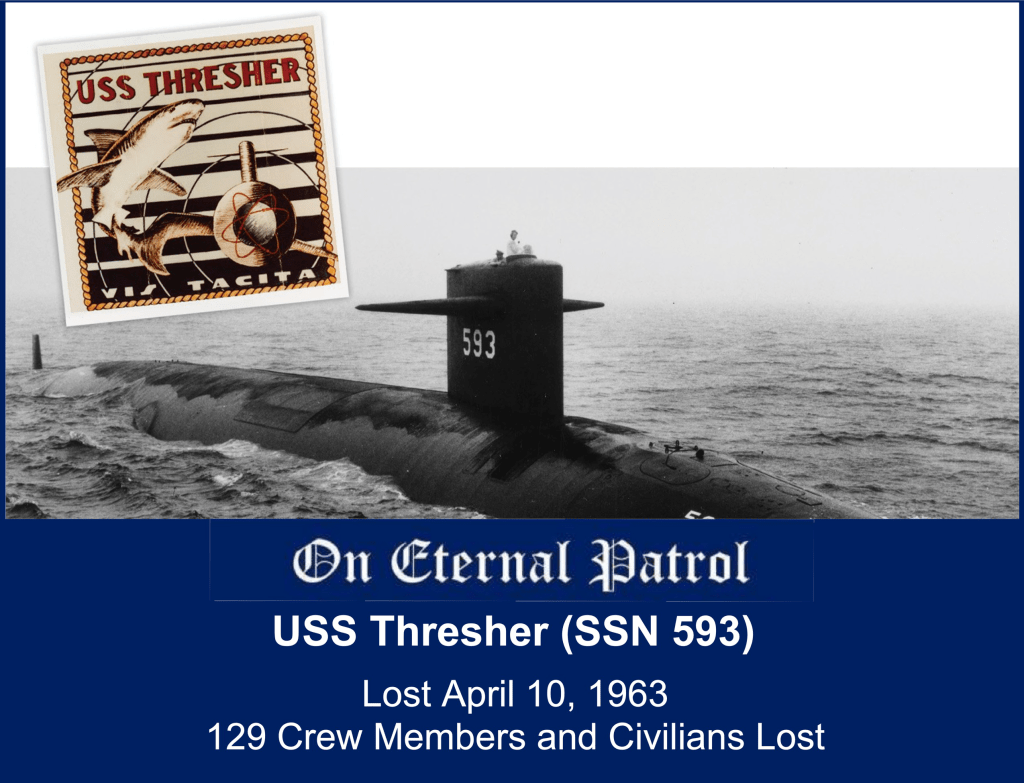
USS Thresher (SSN 593) was laid down on 28 May 1958 by the Portsmouth (N.H.) Naval Shipyard; launched on 9 July 1960; sponsored by Mrs. Frederick B. Warder; and commissioned on 3 August 1961, Commander Dean W. Axene in command.

Following trials the nuclear attack submarine took part in Nuclear submarine Exercise (NUSUBEX) 3-61 off the northeastern coast of the United States from 18 to 24 September.
 
On 18 October; the submarine headed south along the east coast. After calling at San Juan, Puerto Rico, she conducted further trials and test-fired her torpedo system before returning to Portsmouth on 29 November. The ship remained in port through the end of the year and spent the first two months of 1962 evaluating her sonar system and her Submarine Rocket (SUBROC) system. In March, the submarine participated in NUSUBEX 2-62, an exercise designed to improve the tactical capabilities of nuclear submarines, and in anti-submarine warfare training with Task Group ALPHA.
 
Off Charleston, the ship undertook operations observed by the Naval Antisubmarine Warfare Council, before she returned briefly to New England waters from whence she proceeded to Florida for SUBROC tests. However, while mooring at Port Canaveral, the submarine was accidentally struck by a tug which damaged one of her ballast tanks. After repairs at Groton, CT, by the Electric Boat Company, the ship returned south for more tests and trials off Key West. Thresher then returned northward and remained in dockyard hands through the early spring of 1963.

In company with SKYLARK (ASR 20), Thresher put to sea on 10 April 1963 for deep-diving exercises. In addition to her 16 officers and 96 enlisted men, the submarine carried 17 civilian technicians to observe her performance during the deep-diving tests.
 
Fifteen minutes after reaching her assigned test depth, the submarine communicated with SKYLARK by underwater telephone, apprising the submarine rescue ship of difficulties. Garbled transmissions indicated that – far below the surface – things were going wrong. Suddenly, listeners in SKYLARK heard a noise “like air rushing into an air tank” – then, silence.
 
Efforts to reestablish contact with Thresher failed, and a search group was formed in an attempt to locate the submarine. Rescue ship RECOVERY (ARS 43) subsequently recovered bits of debris, including gloves and bits of internal insulation. Photographs taken by bathyseaph TRIESTE proved that the submarine had broken up, taking all hands on board to their deaths in 1,400 fathoms of water, some 220 miles east of Boston.

THRESHER was officially declared lost in April 1963.
 
Submarine Safety (SUBSAFE) – After the Thresher incident, a court of inquiry and the Joint Congressional Committee on Atomic Energy hearings concluded that a flooding casualty in the engine room, resulting from a piping failure in one of the sea-water systems, was the most probable cause. On 3 June 1963, the SUBSAFE program was established within the Bureau of Ships to develop the Submarine Safety Certification Criterion, outlining the minimum actions required to provide a satisfactory level of confidence in the integrity of submarine systems and the adequacy of certain depth-control capabilities. The first effort to apply additional rigor in design, manufacturing, operation, and maintenance to a subset of critical systems within the nuclear submarine, the program’s goal was to provide maximum reasonable assurance of hull integrity to preclude flooding, and the operability and integrity of critical systems and components to control and recover from a flooding casualty, should one occur. The Bureau of Ships issued a certification criterion addressing design, material, fabrication, testing, and record keeping on 20 December 1963.
 
Since the inception of the SUBSAFE Program in 1963, only one submarine has been lost.  USS Scorpion (SSN 589) was lost in May 1968 with 99 officers and men aboard. She was not a SUBSAFE certified submarine and the evidence indicates that she was lost for reasons that would not have been mitigated by the SUBSAFE Program. We have never lost a SUBSAFE certified submarine.
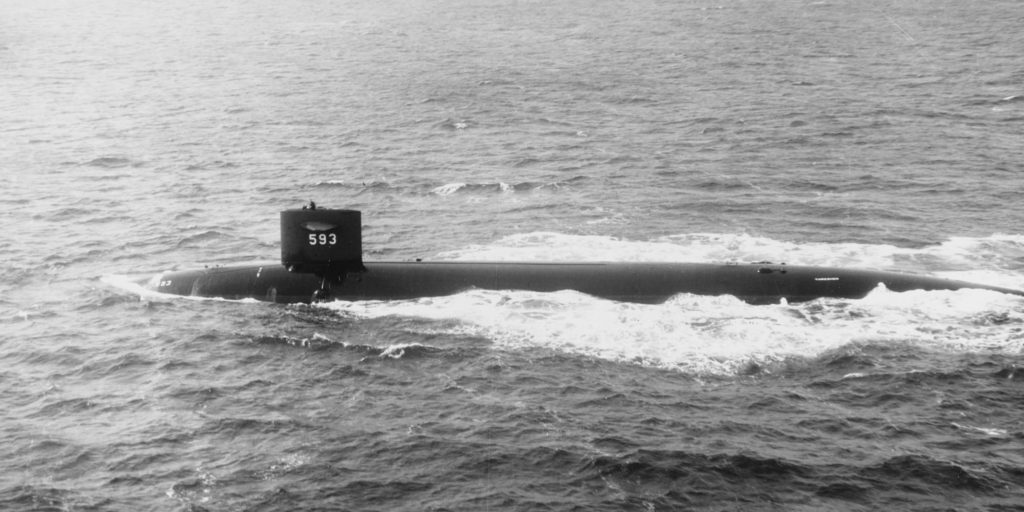
April 2023 Proceedings – Was the Thresher Ready for Sea?

Honoring a Hometown Hero: Pat Suenaga Leads 2026 Vietnam Veterans Day Commemoration at Punchbowl

Bowfin Pearl Harbor Base | April 6, 2026

Patrick “Pat” Suenaga’s leadership and life story were at the heart of the 2026 Vietnam Veterans Day commemoration at the National Memorial Cemetery of the Pacific, where veterans, military leaders and families gathered to honor all who served during the Vietnam War era.

A day of remembrance at Punchbowl

On March 27, 2026, hundreds assembled on the grassy slopes of Punchbowl for a solemn ceremony marking National Vietnam War Veterans Day. The extinct volcanic crater, long a sacred place of rest for more than 53,000 American service members, provided a serene backdrop as color guards, wreath bearers and rifle teams moved with precise, unhurried dignity. The message echoed throughout the morning was simple but powerful: after decades of indifference or hostility that many Vietnam veterans faced on returning home, the nation now says, “Welcome Home.”

Pat’s journey to service

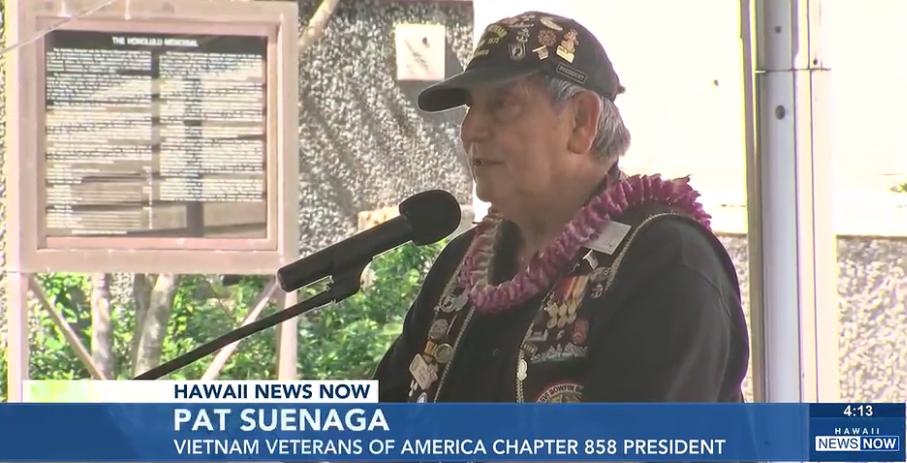
At this year’s commemoration, that message was personified by CPO Pat Suenaga, U.S. Navy (Ret.), president of Vietnam Veterans of America Chapter 858 on Oahu and a familiar advocate for veterans across Hawaiʻi. A Honolulu native and graduate of St. Louis School, Suenaga first joined the Hawaiʻi Army National Guard while still in high school in 1972 before a Navy recruiter persuaded him to enter the U.S. Navy’s Nuclear Power Program later that year. He went on to serve aboard multiple ships and submarines in the Pacific at the end of the Vietnam War, part of the final generation of sailors who deployed to the region before the last U.S. combat troops departed South Vietnam in 1973. After being medically retired, Suenaga built a second career in engineering in Los Angeles and then in downtown Honolulu, but he never stepped away from the military community that shaped his life.

A voice for Hawaii’s Vietnam veterans

Today, Pat is a central figure in nearly every major veterans organization on Oahu: he leads VVA Chapter 858, commands Disabled American Veterans Chapter 1, and serves as treasurer for the U.S. Submarine Veterans Bowfin Base at Pearl Harbor. Those roles positioned him to help organize and host the 2026 Punchbowl ceremony, continuing a tradition in which Chapter 858 partners with U.S. Pacific Fleet and other commands to ensure the observance remains both deeply local and nationally significant. At the commemoration, Pat offered opening remarks that wove together his own experience as a young Yonsei—fourth‑generation Japanese American whose family has lived in Hawaiʻi for more than a century—with the broader story of Hawaiʻi residents who fought in Vietnam from plantations, inner‑city neighborhoods and rural islands across the state. His presence underscored how deeply the legacy of the war runs through Hawaii’s communities, from Kalihi, where he grew up and still lives, to the neighbor islands that sent sons and daughters to Southeast Asia.

Ceremony highlights and distinguished guests

The program reflected the joint‑service nature of modern Hawaii’s military, with participation from the U.S. Pacific Fleet Band, joint color guards, rifle teams and wreath‑laying parties representing a wide range of veterans organizations. Rear Admiral (Ret.) Alma Grocki served as master of ceremonies, guiding attendees through a schedule that included a prayer, national and state anthems, an invocation, remarks by Pat, and keynote addresses from Brig. Gen. Phillip Mallory, Deputy Adjutant General of the State of Hawaiʻi, and Maj. Gen. Christopher Faurot, Mobilization Assistant to the Commander, U.S. Indo‑Pacific Command. As wreaths were placed and a rifle volley cracked across the crater, taps rang out over the cemetery, drawing the crowd into a moment of shared silence for the more than 58,000 Americans who died in the conflict and the millions who served during the war era. For many families, including Gold Star relatives and aging veterans who once slipped home in uniform to protests instead of parades, the ceremony was both a recognition long delayed and a chance to remember fallen comrades in the company of those who understand their grief.

Pat’s enduring legacy

Beyond the pageantry, the 2026 Vietnam Veterans Day commemoration highlighted the quiet, steady work Pat has carried out for decades: connecting veterans with health care, encouraging younger generations to understand the cost of war, and keeping Hawaii’s unique military history at the forefront of public memory. Whether coordinating parades in Waikīkī, representing submarine veterans, or standing at Punchbowl to say “Welcome Home” on behalf of a grateful community, he embodies the determination of Vietnam veterans not to be defined only by trauma, but by service to one another and to the state they call home. In honoring Pat’s story, this year’s ceremony affirmed that the legacy of Vietnam is still being written—by veterans who continue to serve, by their families, and by communities like Honolulu that gather year after year on the rim of an ancient crater to remember.

Watch: Hawai’i News Now – War Veterans

2026 Vietnam Veterans Day Commemoration Ceremony Photos

The Parade

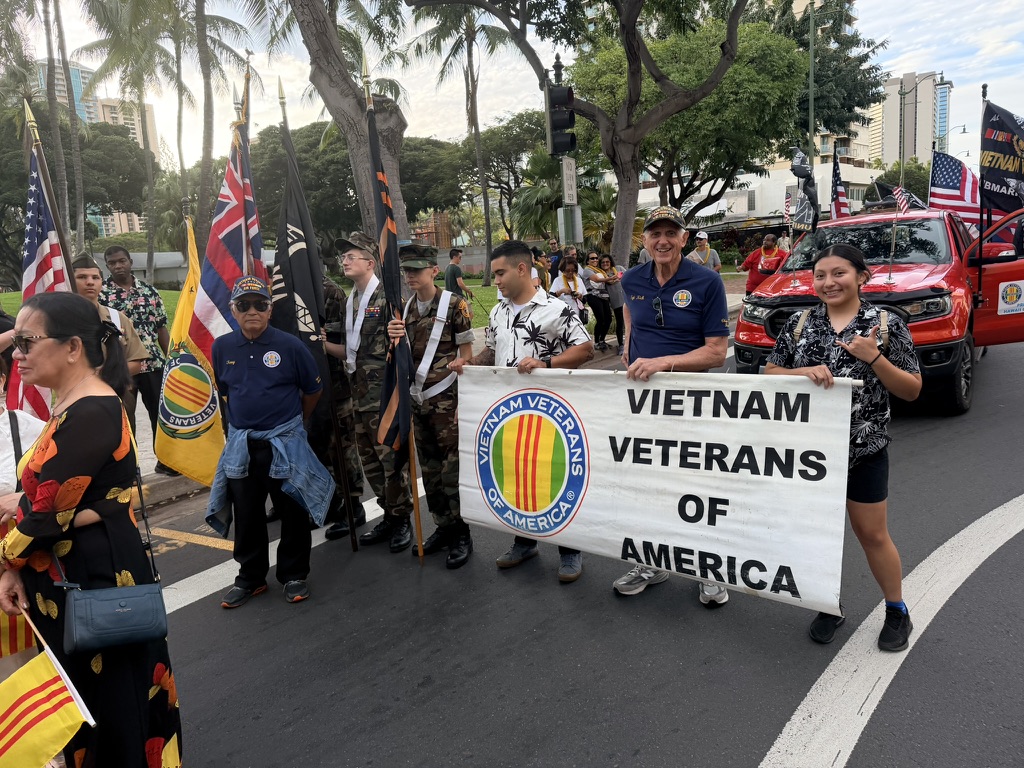
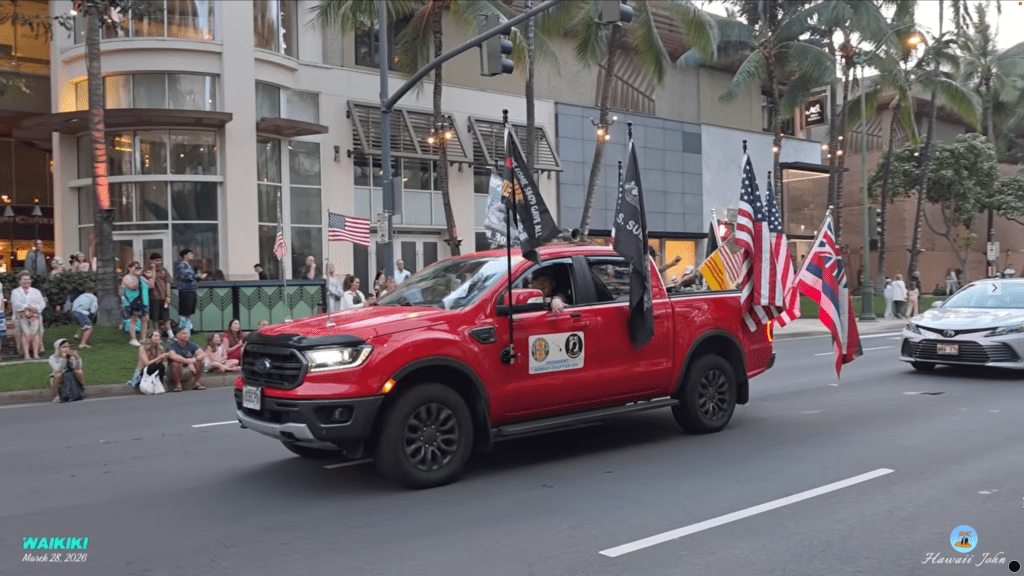
During the Vietnam Veterans Day parade on March 28, 2026, Pat did more than ride along—he turned his decorated truck into a moving tribute to those who served. Covered in unit insignias, flags, and remembrance emblems, the truck became a natural focal point as fellow Vietnam veterans walked proudly ahead of it, holding their banner high. Pat’s steady presence behind the wheel symbolized the support and solidarity he has offered his comrades for decades, while the veterans leading the way showed that their service and sacrifice continue to march at the front of the community’s memory.

2026 Vietnam Veterans Day Parade Photos

Navy Celebrates 133 Years of the Chief Petty Officer

The history of the U.S. Navy Chief Petty Officer (CPO) is a story of leadership, tradition, and evolution within the Navy’s structure. Below is an overview of its key milestones:

Establishment of the Rank

  • The rank of Chief Petty Officer was officially established on April 1, 1893, marking a pivotal moment in the Navy’s history. This date is celebrated annually as the “Navy Chief’s birthday.”
  • The creation of the rank addressed a leadership gap between officers and enlisted sailors, providing a senior enlisted rank to bridge this divide and enhance career advancement opportunities for enlisted personnel.
  • Initially, the rank included nine specialties, such as boatswain’s mate, gunner’s mate, and machinist. Over time, it expanded to encompass other roles like electrician and radioman.

Role and Responsibilities

  • CPOs were tasked with providing leadership, training junior sailors, and ensuring discipline and operational readiness aboard ships. They became known as the “backbone” of the Navy.
  • Chiefs are expected to be technical experts in their fields and uphold Navy traditions while mentoring both junior and senior personnel.

Evolution of the Rank

  • In 1958, two additional pay grades were introduced: Senior Chief Petty Officer (E-8) and Master Chief Petty Officer (E-9), further formalizing the enlisted leadership structure.
  • The first Master Chief Petty Officer of the Navy (MCPON), Delbert D. Black, was appointed in 1967, serving as a senior enlisted advisor to Navy leadership.

Historical Contributions

  • During World Wars I and II, CPOs played critical roles in training recruits, maintaining equipment, and leading combat operations. They were instrumental in submarine campaigns and major invasions like Normandy.
  • Roberta L. Hazard became the first female Chief Petty Officer in 1972, breaking barriers for women in the Navy.

Traditions and Legacy

  • CPOs are considered “caretakers” of Navy history and traditions. Over the decades, Chiefs have been entrusted with preserving Navy heritage and instilling the core values—Honor, Courage, and Commitment—in generations of Sailors, shaping today’s Navy.
  • The Career Compensation Act of 1949 standardized pay for all CPOs and eliminated distinctions between temporary (“acting”) and permanent appointments by 1965.

The rank of Chief Petty Officer remains a cornerstone of U.S. Navy leadership, symbolizing professionalism, expertise, and dedication to service.

Tolling of the Boats Lost in April

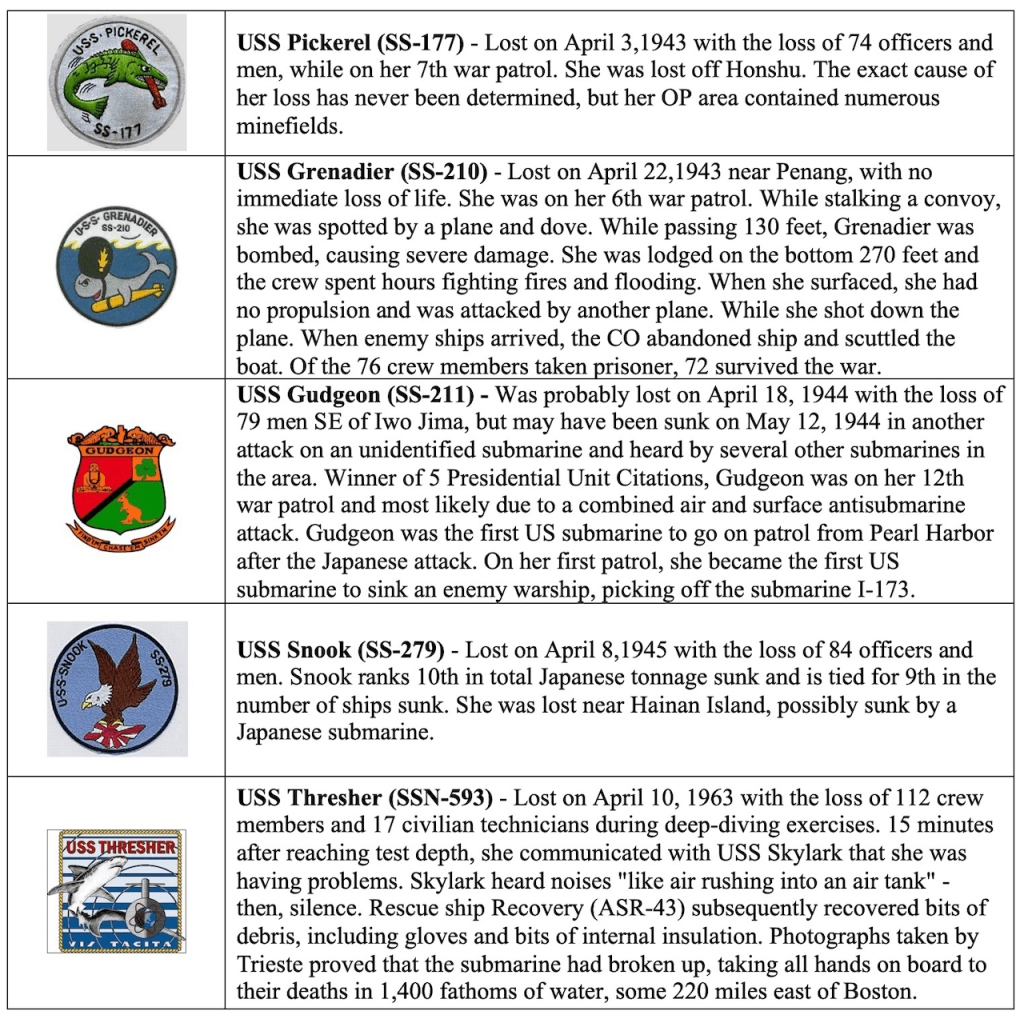
USS Thresher (SSN 593)

On 10 April 1963, while engaged in a deep test dive, the nuclear submarine USS THRESHER (SSN 593) was lost at sea with all persons aboard. Based on the findings of a Court of Inquiry and the subsequent Joint Congressional Committee on Atomic Energy hearings into the loss of the THRESHER, it was concluded that a flooding casualty in the engine room, resulting from a piping failure in one of the salt water systems, was the most probable cause for the loss.

A THRESHER Design Appraisal Board determined that, although the basic design of this submarine class was sound, measures should be taken to improve the level of confidence in the material condition of the hull integrity boundary and in the ability of submarines to control and recover from flooding casualties. Thus the genesis of the Level I/SUBSAFE Program. The program establishes control for procurement, inspection, certification, test, identification, documentation, record control, storage, issue, turn-in, recall and disposal. Level I/SUBSAFE Stock Program materials are intensively managed and controlled. They require certification with traceable objective quality evidence. Items include submarine hull pressure boundary fittings, high pressure air and gas components, high pressure/temperature steam system components and selected safety related equipment on surface ships and submarines.

Pacific Fleet Submarine Museum Monthly E-Newsletter – March 2026

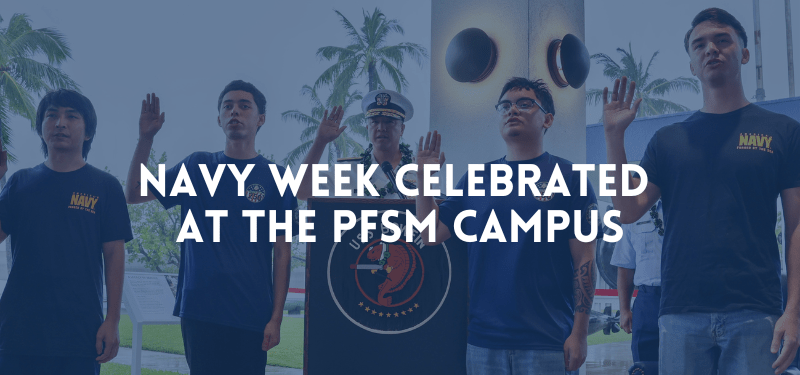
As part of Navy Week this month in Hawai’i (March 9-15), the Navy partnered with the local community to engage residents through a weeklong series of performances, educational events, and community service projects. The Pacific Fleet Submarine Museum was honored in hosting Navy Week events that recognized the past and present service of the U.S. Navy while welcoming the next generation of sailors.

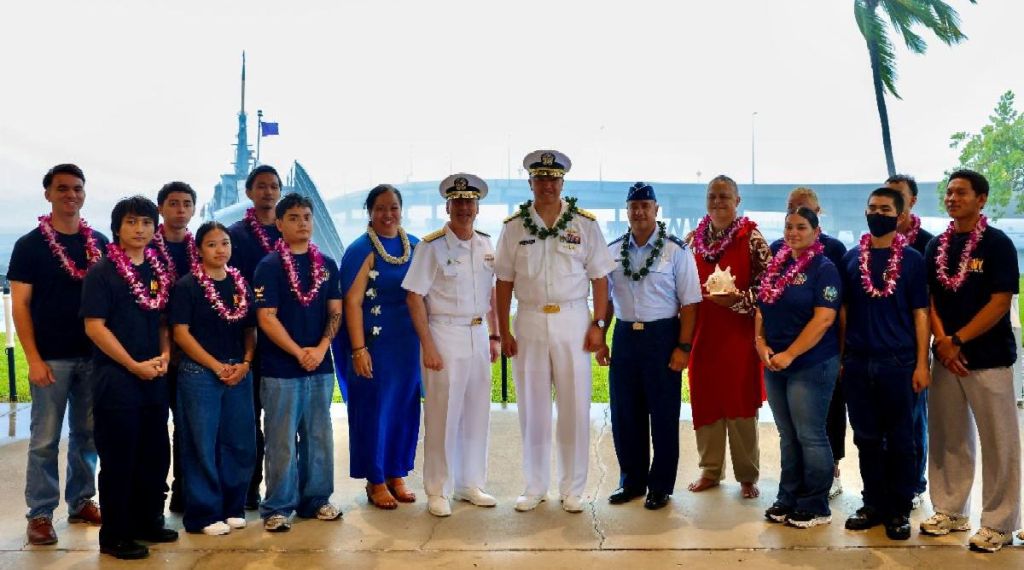
Despite challenging weather, a March 13 enlistment and proclamation ceremony moved forward on our museum campus, underscoring the resilience and commitment that define naval service.

During the ceremony, U.S. Navy Rear Admiral Ryan Mahelona, deputy commander of the Navy’s 10th fleet, administered the Oath of Enlistment to 11 new sailors. It marked the beginning of their service in the U.S. Navy, with two of the enlistees continuing their leadership path by attending officer training.

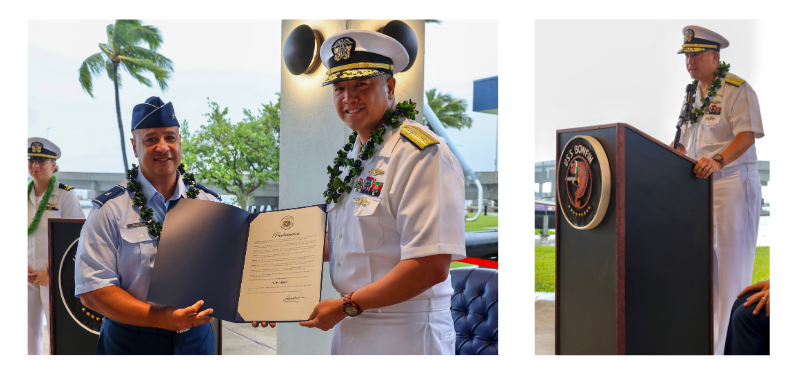
The event also included the presentation of a state proclamation on behalf of Hawaiʻi Governor Josh Green by Brig. Gen. Phillip L. Mallory, Deputy Adjutant General of the Hawaii Department of Defense to Rear Admiral Mahelona, a Hawaii-born resident and only the third Native Hawaiian to attain the rank of admiral.

Mahalo to all who attended the event and a salute to our sailors who uphold the U.S. Navy standard of “Always ready, always answering the call.”

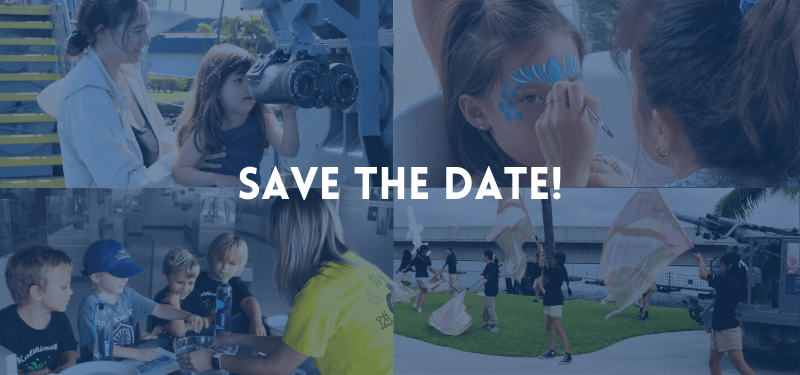
Mark your calendars! Pacific Fleet Submarine Museum is proud to host our annual Kama’aina Sunday event on April 12! Admission to Kama’aina Sunday, between 9 a.m. and 3 p.m., is FREE for Hawai’i residents and active-duty military with valid ID. Guests will have access to our award-winning museum and the historic submarine, USS Bowfin, moored at Pearl Harbor.

Space is limited for this popular event, so reserve your tickets today.

What’s Inside

Honoring Women’s History Month

Congratulations Brook

Collections Spotlight

Read full Newsletter HERE.

🌴 Tradewinds March 2026 🌴

Volume 80

To perpetuate the memory of our shipmates who gave their lives while voluntarily serving in submarine warfare in the pursuit of their duties while serving their country. That their dedication, deeds and supreme sacrifice be a constant source of motivation toward greater accomplishments. To further promote and keep alive the spirit and unity that existed among submarine crewmen during World War II. To promote sociability general welfare and good fellowship among our members. To pledge loyalty and patriotism to the United States of America and it’s constitution.

1. Bowfin Pearl Harbor Base

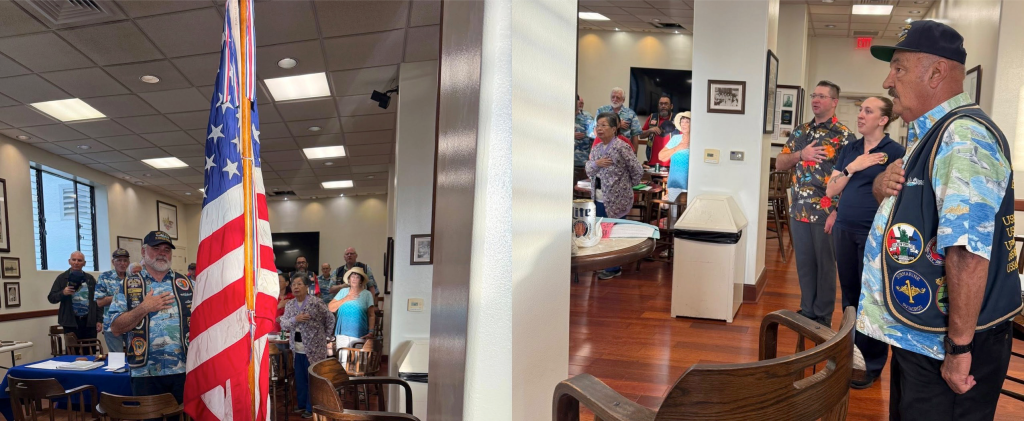
Bowfin Meeting – We conducted our March meeting at Clean Sweep Bar, Lockwood Hall. The following members attended – Base Commander Paul Jurcsak, Vice Commander Tim Sparks, Secretary Brett Kulbis, Treasurer Pat Suenaga, COB Gary Johnson, and members Dave Atkins, Jim Bazemore, Hap Belisle, David Bilek, Dan Del Monte, Nelson Greer, Ben McGowan, Ace Parker, Crichton Roberts, Tom Schmidt, Thom Sousa, Wade Thode, and Joe Winzenried.

Welcomed Guests – ETVCS(SS) Philip Moyle, CS1(SS) Taylor Easter, Miya Bilek, Judy McGowan, Nancy Kries, Johanna Vacerro, Wesley and William Thode.

Binnacle List – Please keep all our members and their families in your good thoughts and prayers.

Hauʻoli Lā Hānau! Bowfin Birthdays for the month of March.

Patrol Reports

🙏🏻Tolling of the Boats Lost in March🙏🏻
🎂Bowfin Birthdays for the Month of March🎂
Pacific Fleet Submarine Museum Monthly E-Newsletter February 2026
🇺🇸102nd Anniversary of the Submarine Warfare Pin🇺🇸

Bowfin Holland Club Members

This Month in Base History

1982 – Relief Crew ONE accepted as an integral unit of this chapter.

1944 – Bowfin sighted a convoy of four ships screened by a couple of escorts. Bowfin fired six bow tubes, but four of the torpedoes exploded prematurely.

Base Officers & Staff

Commander Paul T. Jurcsak
Vice Commander Tim Sparks
Secretary Brett Kulbis
Treasurer Pat Suenaga
Chief of the Boat Gary G. Johnson
Storekeeper George F. Barlett

2. U.S. Submarine Veterans Inc.

News and Bulletins
American Submariner

USSVI Officers & Staff

USSVI National Commander Jon D. Jaques
USSVI Western Region Director Peter T. Juhos
USSVI Western District 6 Commander Dave Vanderveen
USSVI Office Manager Charles F. Murray

3. Information of Interest

VA News Releases
Defense News – Early Bird

4. Still On Patrol

Tolling of the bells for boats lost in the month of March.

5. Important Links

Bowfin Base Pearl Harbor
Plan of the Day
Bowfin Pearl Harbor Base Photo Album
USSVI Bowfin Base Facebook (Like Us, Follow Us and Share with your shipmates)
Past Bowfin Base Eblasts
Friends of the Submarine Memorial Chapel Facebook (Like Us, Follow Us and Share with your shipmates)
USS Bowfin Submarine Museum & Park
American Submariner Magazine
Pearl Harbor Dolphin Store (Your one stop shop for submarine merchandise.)

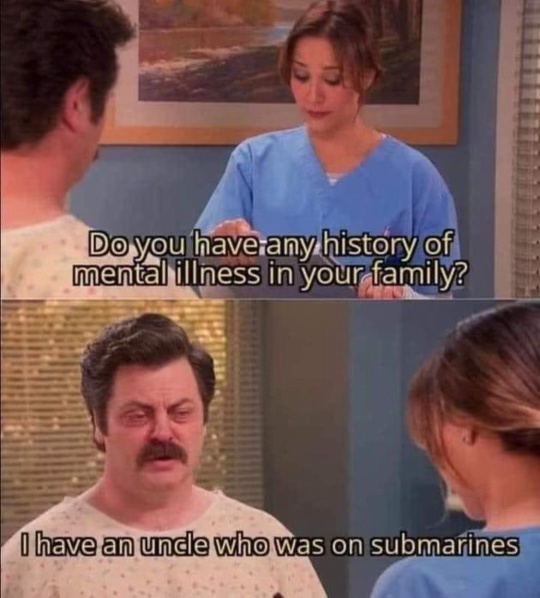
6. Submarine Humor

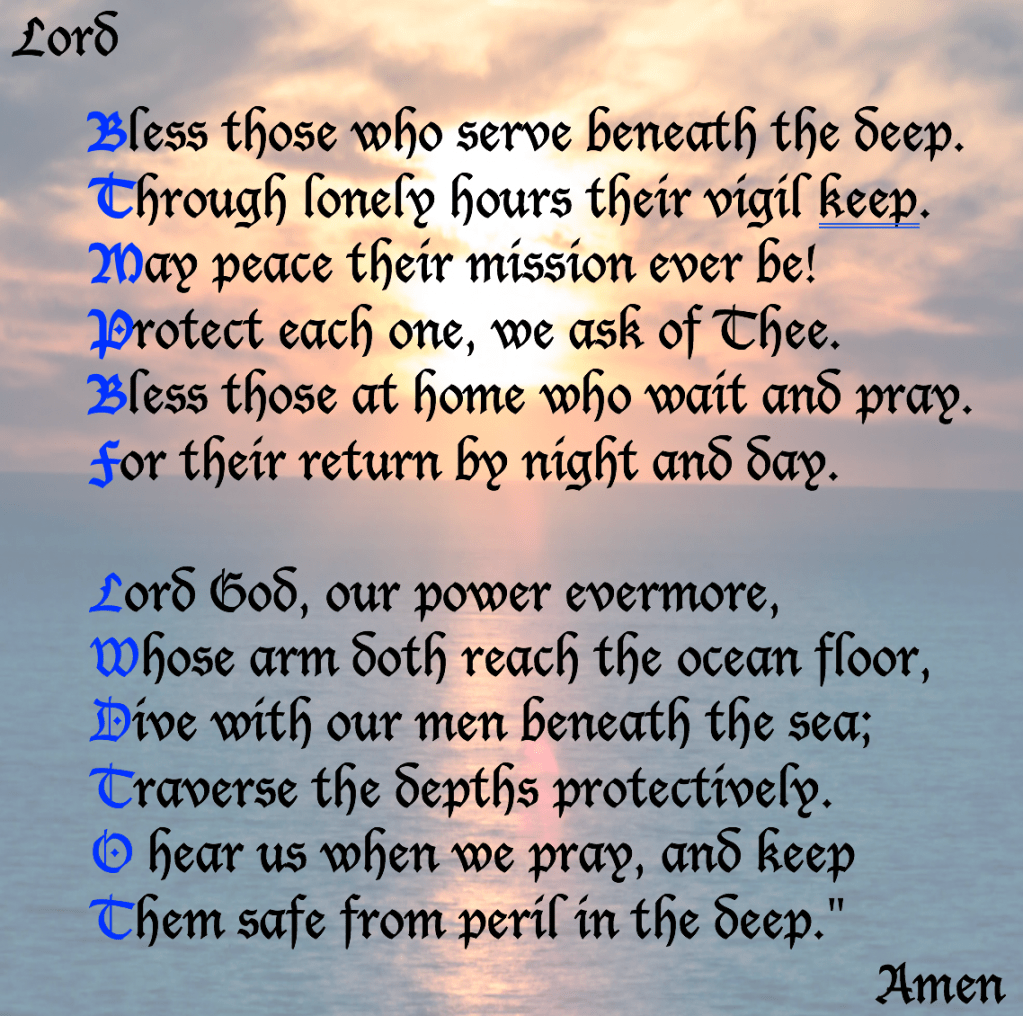
7. Submariners Prayer

Our mailing address is:
USSVI Bowfin Base Pearl Harbor
94-219 Wehena Place
Waipahu, Hawaii 96797

U.S. Submarine Sinks Iranian Ship

Military Times | March 4, 2026

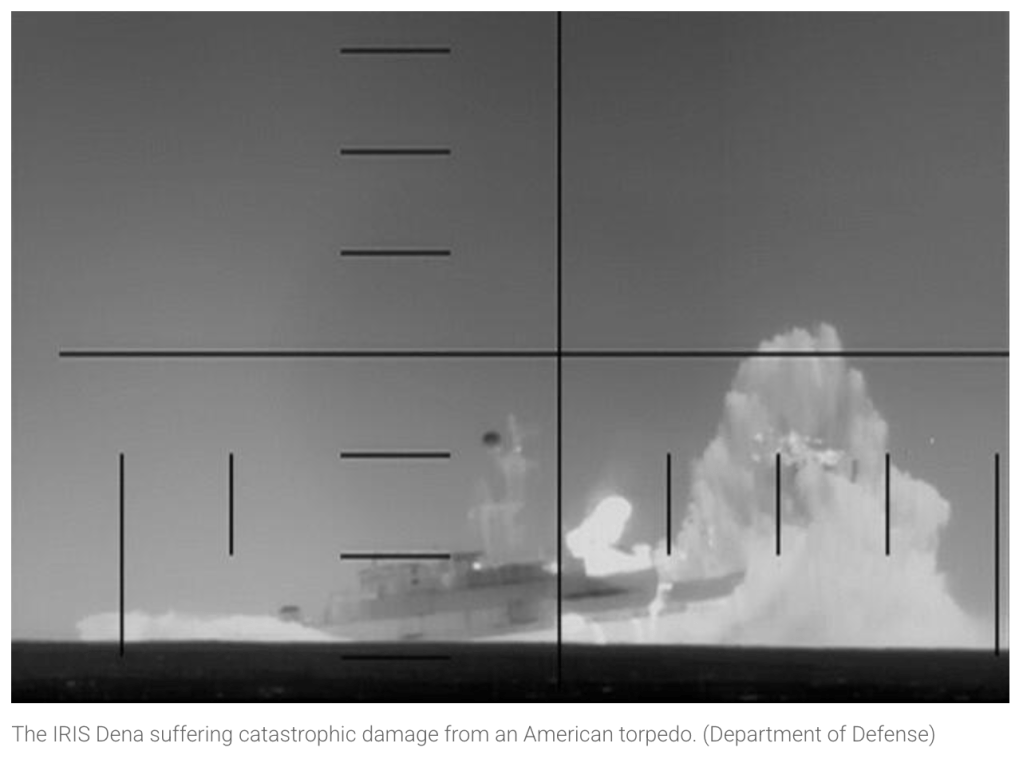
A United States Navy submarine sank an Iranian ship with a single torpedo as the frigate was transiting the Indian Ocean, marking the first such kill by a U.S. submarine since World War II.

Secretary of War Pete Hegseth confirmed the strike during a Pentagon press briefing on Operation Epic Fury alongside Chairman of the Joint Chiefs of Staff Gen. Dan Caine.

“Yesterday, in the Indian Ocean… an American submarine sunk an Iranian warship that thought it was safe in international waters. Instead, it was sunk by a torpedo. Quiet death. The first sinking of an enemy ship by a torpedo since World War II.” – SECWAR Hegseth

Read Full Story

102 Years of Pride: The Submarine Warfare Insignia – Approved for Wear 24 March 1924

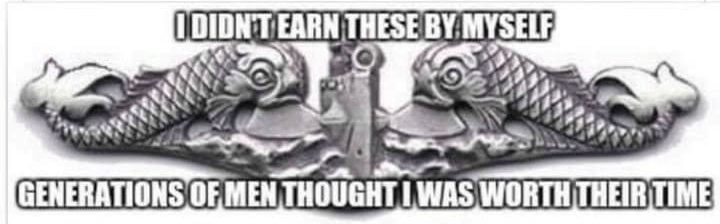
This March marks the 102nd anniversary of a proud milestone in our Silent Service: the approval for wear of the Submarine Warfare Insignia, forever known to every qualified submariner as the “Dolphins”.

On 24 March 1924, Acting Secretary of the Navy Theodore Roosevelt, Jr., gave final approval to the design that would identify those who had earned the right to serve beneath the waves. What began as a suggestion in June 1923 from Captain Ernest J. King (later Fleet Admiral and Chief of Naval Operations during World War II) became our enduring symbol of qualification, sacrifice, and brotherhood.

The design – a bow view of a surfaced O-class submarine flanked by two dolphins (actually the powerful dolphinfish, or mahi-mahi) resting on the bow planes – was crafted by the Philadelphia firm Bailey, Banks & Biddle. It was no accident that dolphins were chosen; these swift, intelligent creatures of the deep have long symbolized the sea and the unbreakable bond of those who dare to challenge it.

From that day forward, every officer and enlisted man who qualified in submarines wore the Dolphins with honor – gold for officers, silver for enlisted – on the left breast, a visible mark that they had mastered the most demanding duty in the Navy. Enlisted versions first appeared embroidered on sleeves before transitioning to the metal pin we know today.

Whether gold or silver, the Dolphins still mark the same truth they did in 1924: only those who have qualified know the true weight of the watch, the depth of the commitment, and the unbreakable bond of the Silent Service.

To all who wear them – past, present, and future – fair winds and following seas. May we continue to honor those who earned them first and those who still earn them today.

With Perpetual Remembrance and Eternal Vigilance!