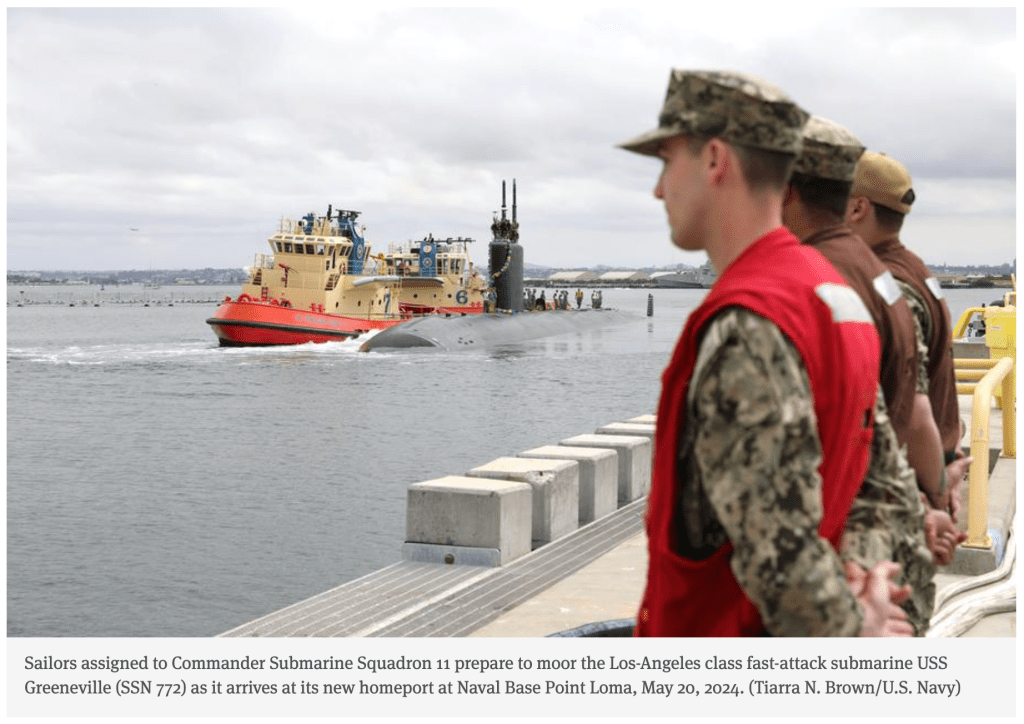
The USS Greeneville on Monday was added to the stable of Los Angeles-class, fast-attack submarines that are homeported in San Diego Bay as part of Submarine Squadron 11.
Naval Base Point Loma now has five of the nuclear-powered submarines, which are regularly sent on deployment to the Indo-Pacific, sometimes to help protect carrier strike groups based in San Diego.
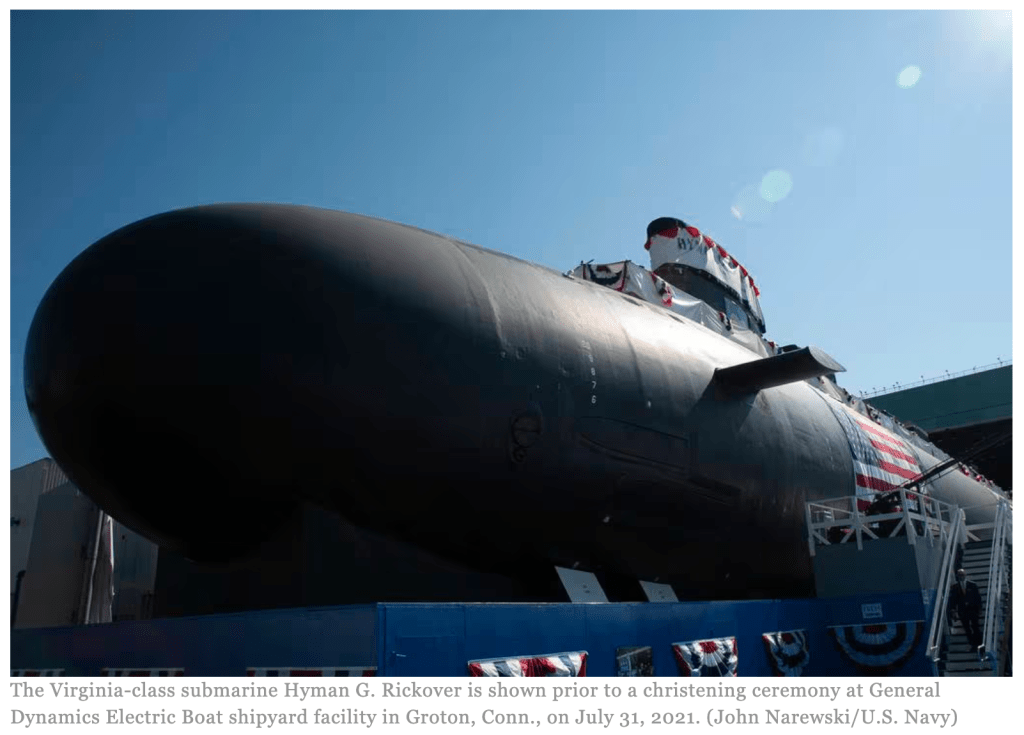
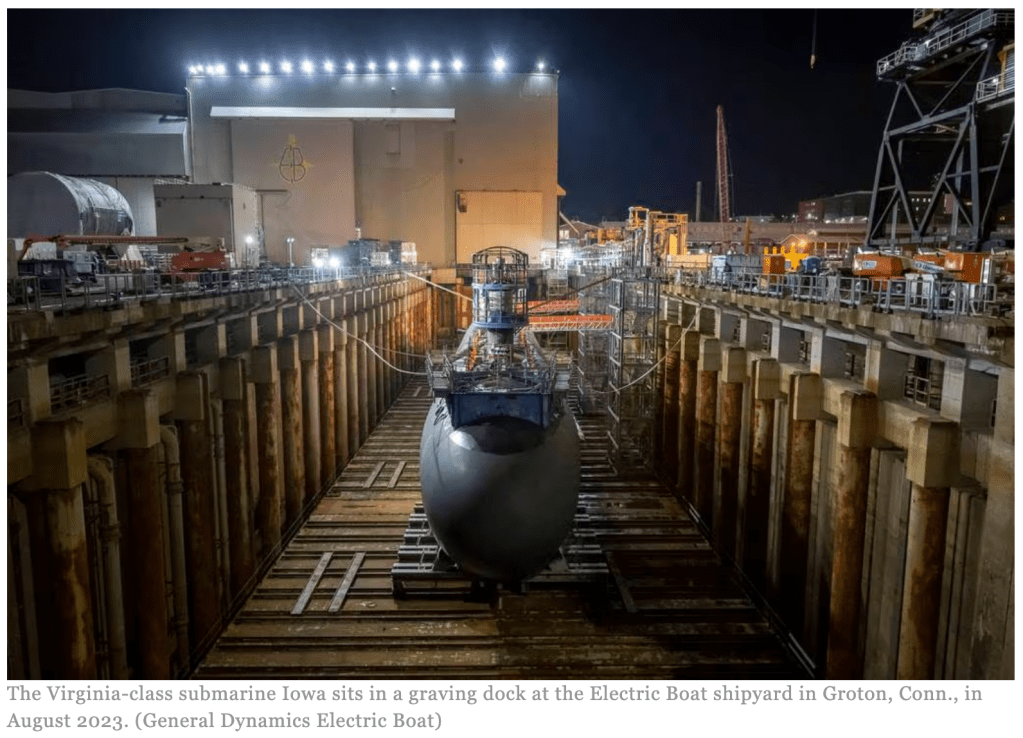
The House Armed Services Committee will try to partially fund a second Virginia-class submarine in fiscal 2025 to mitigate harm to the industrial base it says will come from the Navy’s one-boat request.
The service has bought Virginia-class attack submarines at a rate of two per year since 2011. It has also pitched this continuous and predictable construction pace as key to getting back to on-time deliveries and increasing industrial base output to support the AUKUS agreement between Australia, the U.K. and the U.S.
The fleet size has remained stagnant for at least a decade, even as demand for these stealthy forces increased. Attack submarines would be pivotal in a conflict against China. They’re also in high demand within the European theater in order to counter Russia’s sophisticated submarine fleet. And they’ve even made history in the Middle East, with the Virginia-class sub John Warner becoming the first in its class to fire Tomahawk missiles in combat during a 2018 strike on Syrian chemical weapons facilities.
The situation will worsen before it improves, according to the Navy’s long-range shipbuilding and fleet inventory plan, which shows the force dipping to 47 later this decade before hovering in the mid-50s for many years. The fleet isn’t projected to hit 66 until 2054, well beyond the “decade of concern” — when military officials say the threat of conflict with China will peak.
Submarine Veteran Rodney Boucher (R) and VA Chief of Center for Development & Civic Engagement Scheon U. Safotu pointing to the Bowfin Aloha Shirt ad in the American Submariner magazine.
On May 1st, at the newly opened Daniel Akaka VA Clinic in Kapolei, HI held a Veteran Service Organizations Information Fair. The event was sponsored by the VA.
Bowfin Base Subvet & Red Cross volunteer, Rodney Boucher talked to approximately 50 Veterans & dependents. Of which five were qualified Submariners.
Big mahalo to Rodney for representing Bowfin Pearl Harbor Base Submarine Veterans.
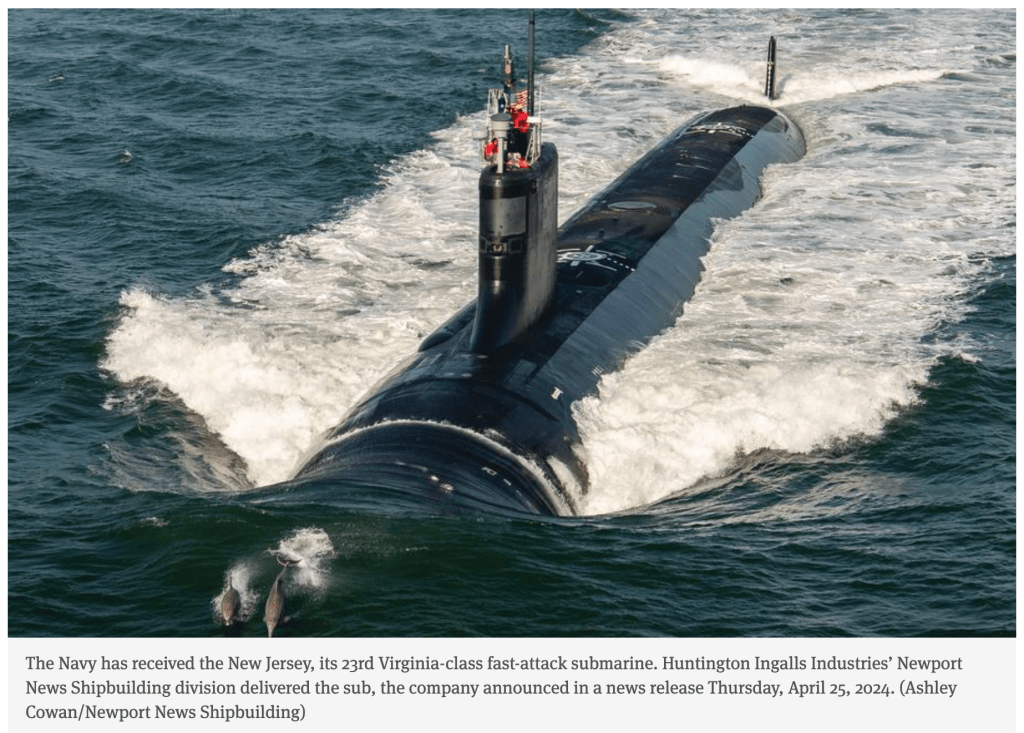
The Navy has received the USS New Jersey (SSN 796), its 23rd Virginia-class fast-attack submarine from Huntington Ingalls Industries’ Newport News Shipbuilding division on Thursday April 25th.
New Jersey is the 11th Virginia-class submarine delivered by NNS, and the 23rd built as part of the teaming agreement with General Dynamics Electric Boat.
A House panel has made clear it wants the Navy to buy two attack submarines in fiscal 2025 in order to keep the submarine-industrial base on a path of recovery, despite the service requesting just one.
In a fiscal year when the defense budget is capped at 1% growth above the previous one, the Navy elected to ask for six ships in its FY25 budget, including one Virginia-class attack submarine. That submarine program is supposed to be on a cadence of two per year or greater to support the needs of both the U.S. and Australian navies. The latter is acquiring submarines as part of the trilateral AUKUS agreement also involving the U.S. and the U.K.
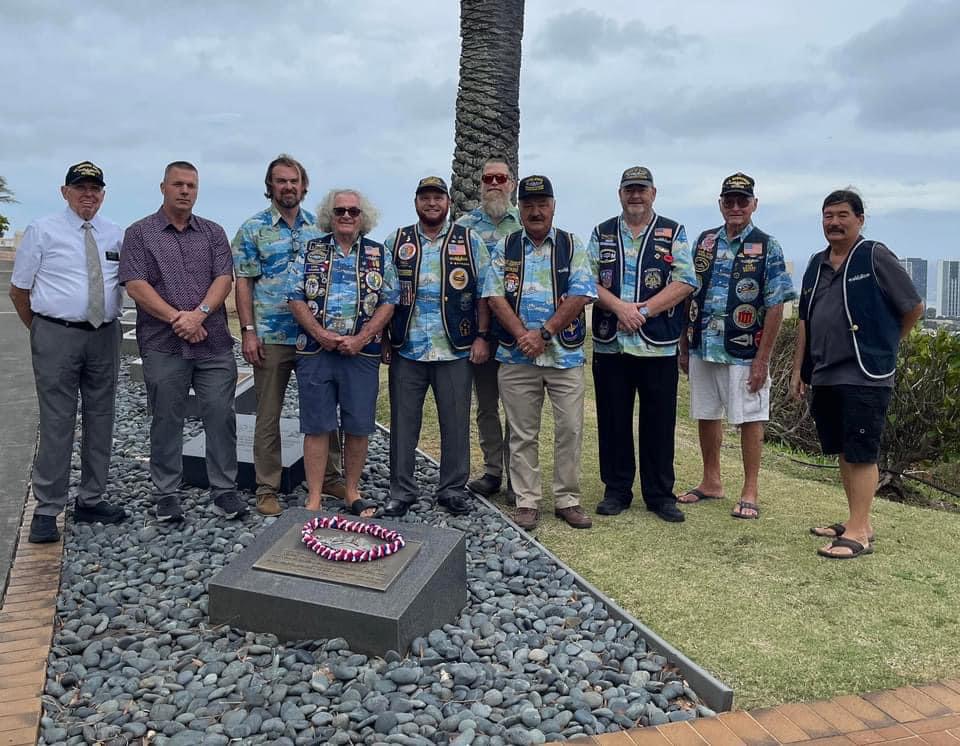
USSVI Bowfin Pearl Harbor Base Veterans conducted their annual re-dedication of the Submarine Veterans Memorial on the Memorial Walk-Way at the National Memorial Cemetery of the Pacific.
“The Submarine Veteran plaque was dedicated and placed here on April 18, 2000 and we conduct a small re-dedication ceremony every year on the anniversary of the U.S. Submarine Force,” said Base Commander Paul Jurcsak.
That’s the question Secretary Carlos Del Toro asked in February, as it emerged that labor shortages were delaying construction on the lead frigate of the Navy’s new Constellation class. But that wasn’t the only program behind schedule, and so Del Toro ordered up a 45-day review of all of his service’s shipbuilding efforts. When the Navy revealed its findings in early April, the study showedevery major program was a year and a half to three years behind schedule.
What comes next isn’t yet clear. “We don’t have detailed plans of action, milestones, initiatives—we are identifying and deeply looking into where we are now in a ‘get real, get better’ approach,” Nickolas Guertin, the Navy’s chief buyer, told reporters at the Pentagon. “We found that we have issues that need to be resolved…But we don’t have all those things completely nailed down yet.”
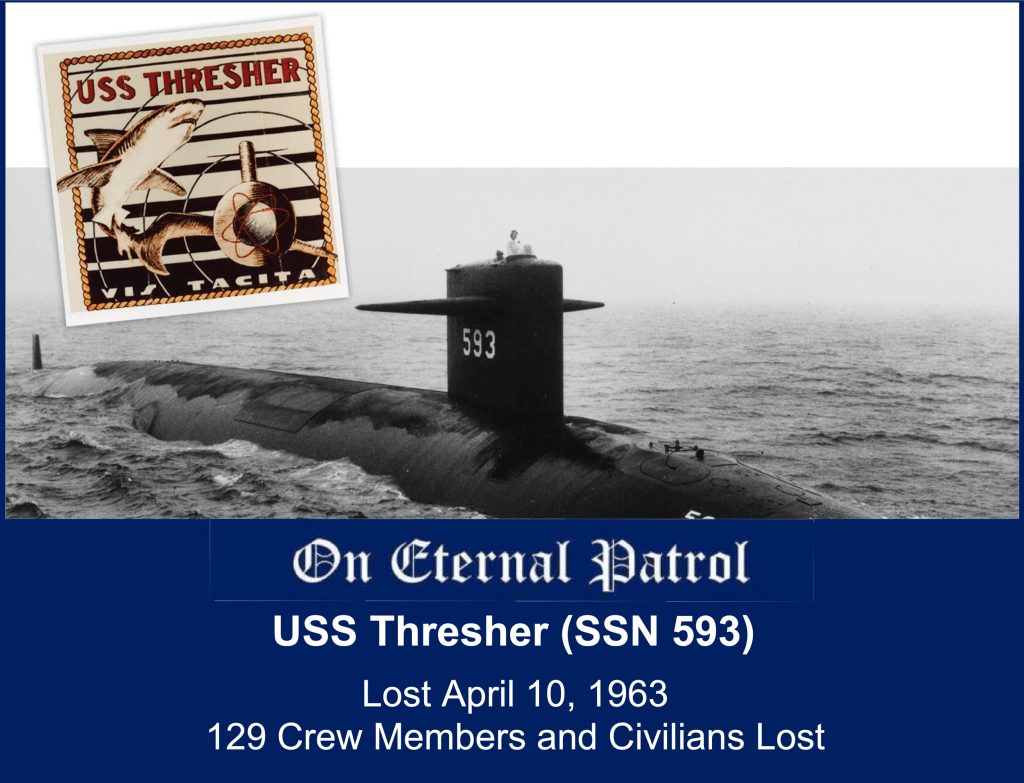
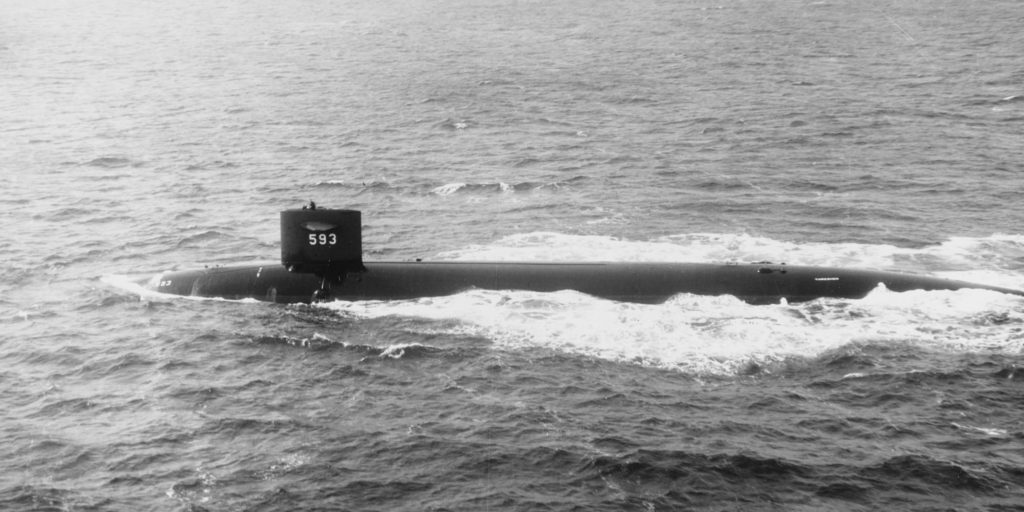
USS Thresher (SSN 593) was laid down on 28 May 1958 by the Portsmouth (N.H.) Naval Shipyard; launched on 9 July 1960; sponsored by Mrs. Frederick B. Warder; and commissioned on 3 August 1961, Commander Dean W. Axene in command.
Following trials the nuclear attack submarine took part in Nuclear submarine Exercise (NUSUBEX) 3-61 off the northeastern coast of the United States from 18 to 24 September.
On 18 October; the submarine headed south along the east coast. After calling at San Juan, Puerto Rico, she conducted further trials and test-fired her torpedo system before returning to Portsmouth on 29 November. The ship remained in port through the end of the year and spent the first two months of 1962 evaluating her sonar system and her Submarine Rocket (SUBROC) system. In March, the submarine participated in NUSUBEX 2-62, an exercise designed to improve the tactical capabilities of nuclear submarines, and in anti-submarine warfare training with Task Group ALPHA.
Off Charleston, the ship undertook operations observed by the Naval Antisubmarine Warfare Council, before she returned briefly to New England waters from whence she proceeded to Florida for SUBROC tests. However, while mooring at Port Canaveral, the submarine was accidentally struck by a tug which damaged one of her ballast tanks. After repairs at Groton, CT, by the Electric Boat Company, the ship returned south for more tests and trials off Key West. Thresher then returned northward and remained in dockyard hands through the early spring of 1963.
In company with SKYLARK (ASR 20), Thresher put to sea on 10 April 1963 for deep-diving exercises. In addition to her 16 officers and 96 enlisted men, the submarine carried 17 civilian technicians to observe her performance during the deep-diving tests.
Fifteen minutes after reaching her assigned test depth, the submarine communicated with SKYLARK by underwater telephone, apprising the submarine rescue ship of difficulties. Garbled transmissions indicated that – far below the surface – things were going wrong. Suddenly, listeners in SKYLARK heard a noise “like air rushing into an air tank” – then, silence.
Efforts to reestablish contact with Thresher failed, and a search group was formed in an attempt to locate the submarine. Rescue ship RECOVERY (ARS 43) subsequently recovered bits of debris, including gloves and bits of internal insulation. Photographs taken by bathyseaph TRIESTE proved that the submarine had broken up, taking all hands on board to their deaths in 1,400 fathoms of water, some 220 miles east of Boston.
THRESHER was officially declared lost in April 1963.
Submarine Safety (SUBSAFE) – After the Thresher incident, a court of inquiry and the Joint Congressional Committee on Atomic Energy hearings concluded that a flooding casualty in the engine room, resulting from a piping failure in one of the sea-water systems, was the most probable cause. On 3 June 1963, the SUBSAFE program was established within the Bureau of Ships to develop the Submarine Safety Certification Criterion, outlining the minimum actions required to provide a satisfactory level of confidence in the integrity of submarine systems and the adequacy of certain depth-control capabilities. The first effort to apply additional rigor in design, manufacturing, operation, and maintenance to a subset of critical systems within the nuclear submarine, the program’s goal was to provide maximum reasonable assurance of hull integrity to preclude flooding, and the operability and integrity of critical systems and components to control and recover from a flooding casualty, should one occur. The Bureau of Ships issued a certification criterion addressing design, material, fabrication, testing, and record keeping on 20 December 1963.
Since the inception of the SUBSAFE Program in 1963, only one submarine has been lost. USS Scorpion (SSN 589) was lost in May 1968 with 99 officers and men aboard. She was not a SUBSAFE certified submarine and the evidence indicates that she was lost for reasons that would not have been mitigated by the SUBSAFE Program. We have never lost a SUBSAFE certified submarine.
Behind many of our artifacts at the Pacific Fleet Submarine Museum is a fascinating backstory. Some of the museum items on display were donated by World War II U.S. submariners and their families (including those of the Bowfin crew).
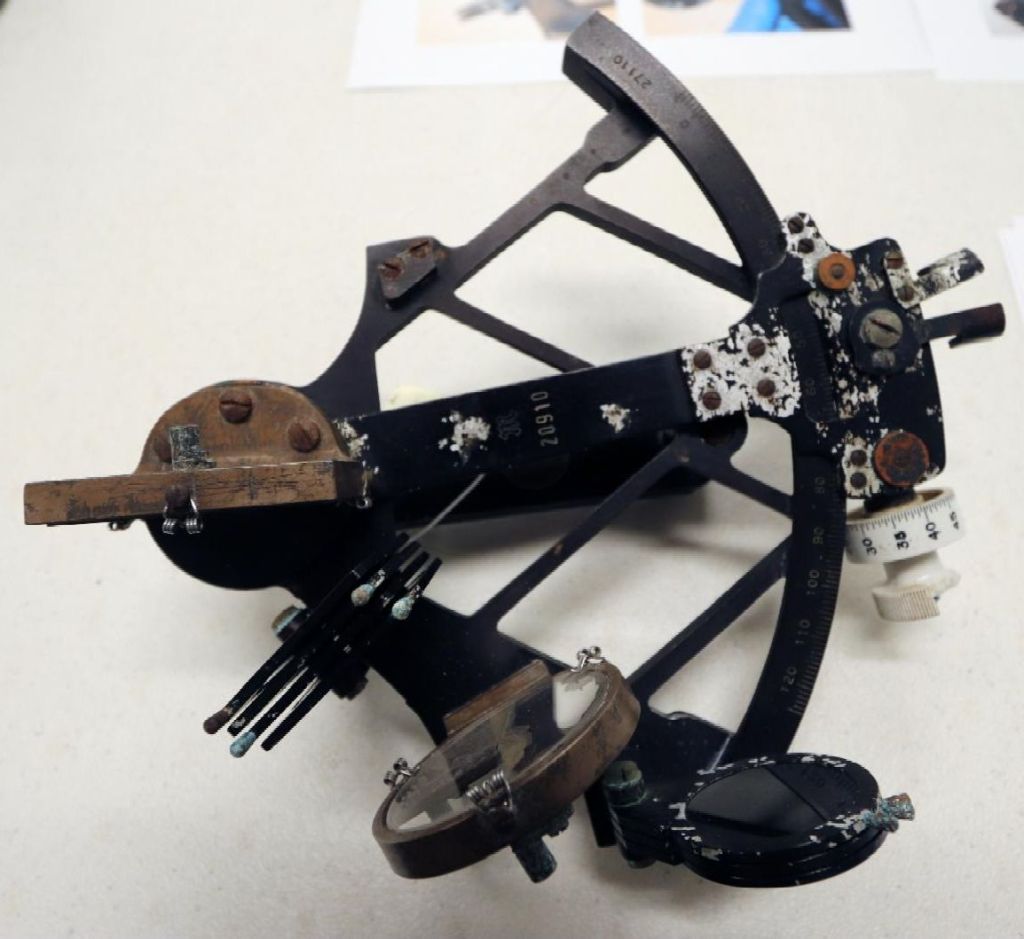
Two pieces of World War II history on exhibit are a sextant and binoculars. Interestingly, they were not used aboard a “friendly” American vessel, but a captured German submarine that made an incredible journey across the Atlantic Ocean from Argentina to the United States.
With the war wrapping up in September 1945, military officials ordered a captured German U-977 submarine be brought back to America to inspect the vessel’s technology (German U-boats were known for their superior design) and showcase the boat to the American public.
A U.S. Navy crew led by U.S Navy Chief Urbaniak was tasked with navigating the captured U-977 to Boston, Massachusetts from Argentina, where the Germans had relinquished control of the boat at the end of World War II.
While the submarine no longer faced the perilous prospect of combat during its trip, the American crew still had the daunting and dangerous task of navigating U-977 – deemed in poor working condition – across the vast Atlantic. The crew spent weeks cleaning, repairing, and learning to operate the unfamiliar German vessel, with U.S. Navy Lieutenant Commander Cooper playing a pivotal role in preparing the vessel for its voyage.
Their dedication was tested further when the vessel’s engines failed at sea, forcing them to make repairs on the open ocean.
Despite the challenges, the crew persevered and finally arrived in Boston in November 1945. The U-977 then went on a “Victory Tour” along the U.S. East Coast, showcasing the captured German technology and raising financial support for the war effort. In November 1946, the sub was sailed to the Portsmouth Naval Shipyard, where it was sunk by the U.S. Navy off the coast of Massachusetts.
Today, the U-977’ssextant and binoculars on display stands as a reminder of its extraordinary voyage to America following the war. These artifacts bring history to life, offering a tangible connection to the past and serving as reminder of the American crew’s resilience and adaptability.






 Bowfin Pearl Harbor Base