Defense News | November 12, 2023
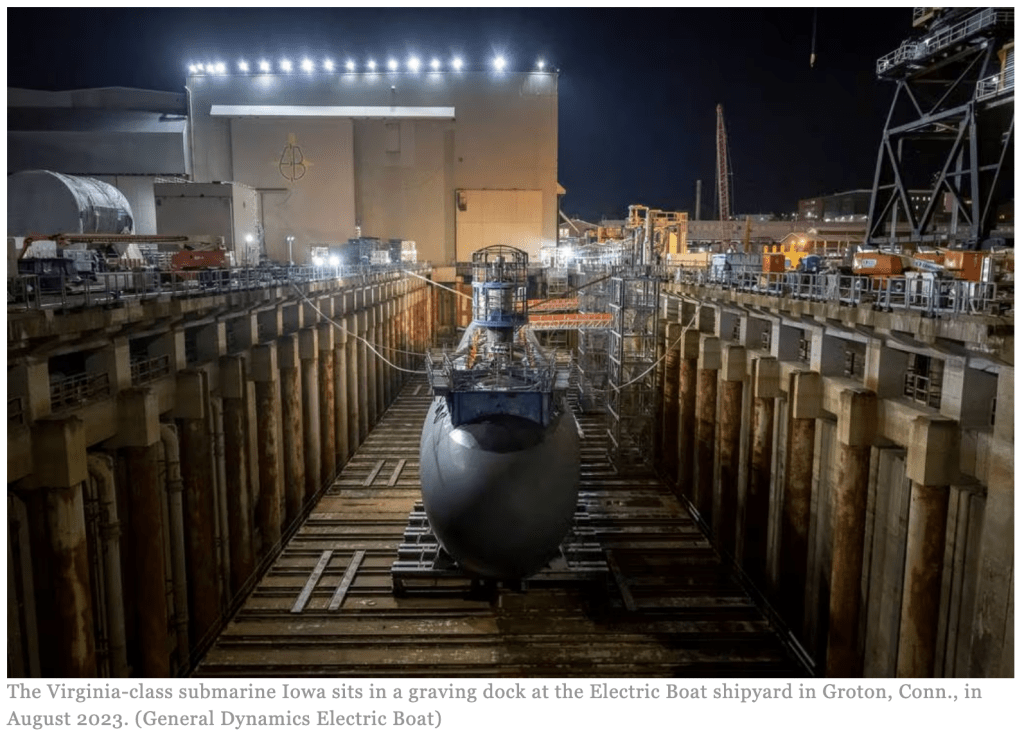
The U.S. Navy and the submarine sector hope in 2024 they can begin reliably delivering two attack submarines annually, following work disruptions that threw off plans to do so this year.
Read Full Story HERE.

Defense News | November 12, 2023
The U.S. Navy and the submarine sector hope in 2024 they can begin reliably delivering two attack submarines annually, following work disruptions that threw off plans to do so this year.
Read Full Story HERE.
USSVI News | November 9, 2023
Shipmates,
In November of 1919, President Woodrow Wilson proclaimed November 11 as the first commemoration of Armistice Day. In 1954, Congress passed a bill that President Eisenhower signed proclaiming November 11 as Veterans Day.
On behalf of the entire Board of Directors, I would like to take this time to wish you all a Happy Veteran’s Day and thank you for your service to our country.
Let us take a moment in silent meditation to honor all of our veterans and those currently serving, especially those deployed and/or on patrol in harm’s way throughout the world.
Respectively,
Bill Andrea
National Commander
Defense News | November 8, 2023

The U.S. Navy is experimenting with launching and recovering medium unmanned underwater vehicles from submarines, even as a formal acquisition effort is ongoing.
Read full story HERE.
Defense News | November 7, 2023
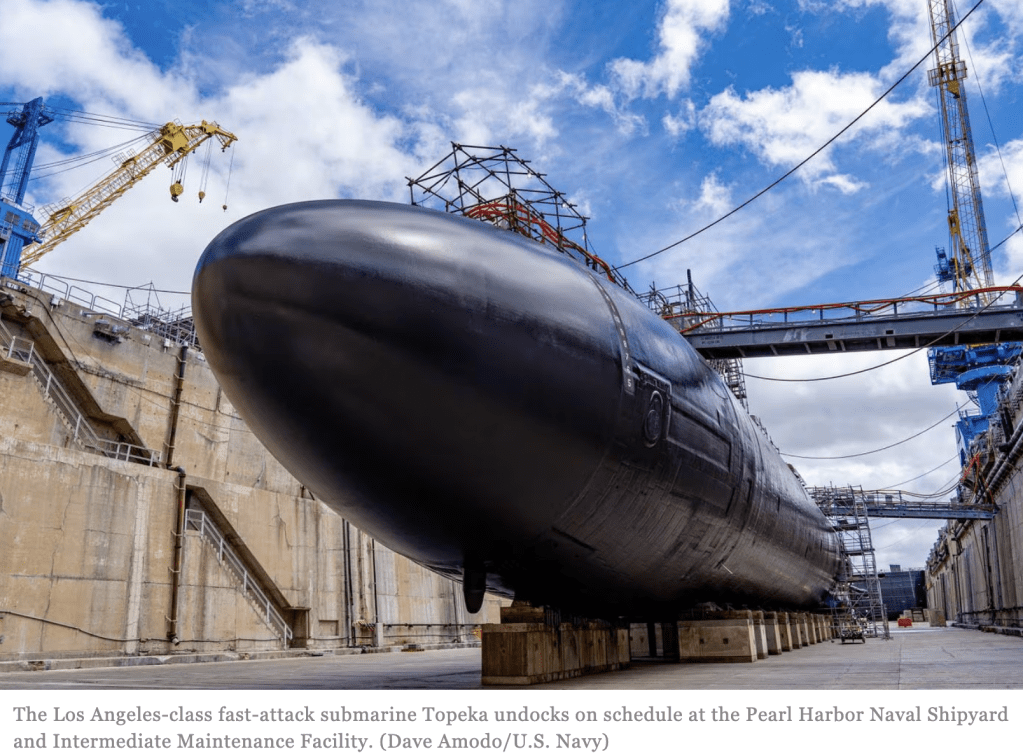
Vice Adm. William Houston, the head of Naval Submarine Forces, who is also in charge of fixing submarine maintenance delays says, “it will take four years to get the attack sub fleet back to its proper state of readiness.”
In May, sixty percent of the 50-boat fleet was available for operations, instead of the 80% goal set by the Navy. While the operational availability rate has since risen to 66%, VADM Houston said, “there’s much to do to reach the 80% goal by late fiscal 2027 or early fiscal 2028.”
Read full story HERE.
Stars & Stripes | November 5, 2023

The military has removed 62, 466, 890 gallons of fuel from the Navy’s underground Red Hill Bulk Fuel Storage Facility as of 2 p.m. Friday, according to a news release.
Read: https://www.stripes.com/branches/navy/2023-11-04/hawaii-removal-62-million-gallons-fuel-red-hill-11940618.html?utm_campaign=dfn-ebb&utm_medium=email&utm_source=sailthru&SToverlay=2002c2d9-c344-4bbb-8610-e5794efcfa7d
CNN | November 5, 2023
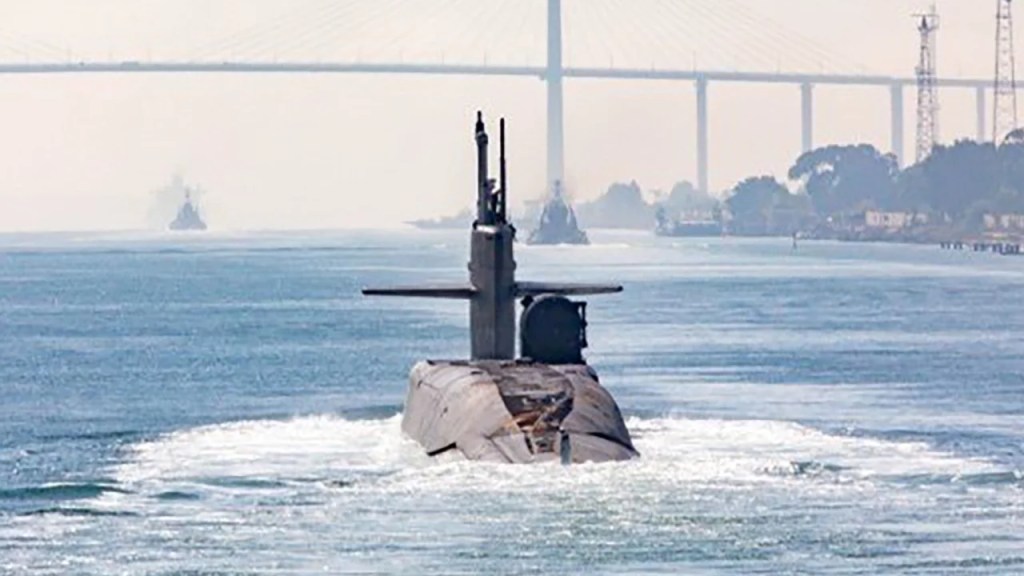
US Central Command said on social media Sunday that an Ohio-class submarine was entering its area of responsibility. A picture posted with the announcement appeared to show the sub in the Suez Canal northeast of Cairo.
Read: https://www.cnn.com/2023/11/05/politics/us-missile-submarine-middle-east/index.html?utm_campaign=dfn-ebb&utm_medium=email&utm_source=sailthru&SToverlay=2002c2d9-c344-4bbb-8610-e5794efcfa7d
Defense News | November 1, 2023
The Chairman and Board Members of the United States Submarine Veterans Charitable Foundation (USSVCF) Academic Scholarship Program announce that the 2024-2025 Academic Year Application Period and application website is open.
The USSVCF Scholarship Procedure, and all requirements, is provided for distribution to all USSVI members and to their eligible children, grandchildren and legal dependents. Sponsors, parents, and applicants should read the procedure prior to registration of the applicant to ensure a smooth, accurate and successfully completed application.
To access the application portal, go to www.ussvcf.org click on “More” tab scroll down and click on “Scholarship Application”.
Specific questions should be submitted to the Scholarship Chairman by email or phone.
Applications must be completed on or before 19 May 2024. Awards will be announced in July, 2024 for the 2024-25 Academic Year.
Dr. Alan Fickett, Chairman, USSVCF Scholarship Program
scholarship@ussvcf.org
407-256-3638
Ken Earls
President
USSV Charitable Foundation
kenearls.ss@gmail.com
www.ussvcf.org
928-308-4488

John Philip Cromwell was born in Henry, Illinois, on 11 September 1901. Appointed to the U.S. Naval Academy in 1920, he graduated in June 1924 and served initially in the battleship USS MARYLAND (BB-46).
In 1926, he attended submarine school and was assigned to USS S-24 (SS-129) during 1927-29. Lieutenant Cromwell commanded USS S-20 (SS-125) in 1936-37, then served on the staff of Commander Submarine Division 4. He was promoted to the rank of Lieutenant Commander in 1939 and spent two years in Washington, D.C. with the Bureau of Engineering and Bureau of Ships. In May 1941, he became Engineer Officer for the Pacific Fleet Submarine Force. During 1942-43, he commanded Submarine Divisions 203, 44 and 43.
Following promotion to Captain, he went to sea on the USS SCULPIN (SS-191) as prospective commander of a mid-Pacific submarine wolf pack. While attacking a Japanese convoy on 19 November 1943, SCULPIN was forced to the surface, fatally damaged in a gun battle and abandoned by her surviving crew members. Captain Cromwell, who knew secret details of the impending operation to capture the Gilbert Islands, deliberately remained on board as she sank. For his sacrificial heroism in preventing the enemy from obtaining this information, he was posthumously awarded the Medal of Honor.
CAPT Cromwell’s Medal of Honor citation reads:
“For conspicuous gallantry and intrepidity at the risk of his life above and beyond the call of duty as Commander of a Submarine Coordinated Attack Group with Flag in the U.S.S. SCULPIN, during the Ninth War Patrol of that vessel in enemy-controlled waters off Truk Island, November 19, 1943. Undertaking this patrol prior to the launching of our first large-scale offensive in the Pacific, Captain Cromwell, alone of the entire Task Group, possessed secret intelligence information of our submarine strategy and tactics, scheduled Fleet movements and specific attack plans. Constantly vigilant and precise in carrying out his secret orders, he moved his underseas flotilla inexorably forward despite savage opposition and established a line of submarines to southeastward of the main Japanese stronghold at Truk. Cool and undaunted as the submarine, rocked and battered by Japanese depth-charges, sustained terrific battle damage and sank to an excessive depth, he authorized the SCULPIN to surface and engage the enemy in a gun-fight, thereby providing an opportunity for the crew to abandon ship. Determined to sacrifice himself rather than risk capture and subsequent danger of revealing plans under Japanese torture or use of drugs, he stoically remained aboard the mortally wounded vessel as she plunged to her death. Preserving the security of his mission at the cost of his own life, he had served his country as he had served the Navy, with deep integrity and an uncompromising devotion to duty. His great moral courage in the face of certain death adds new luster to the traditions of the United States Naval Service. He gallantly gave his life for his country.”
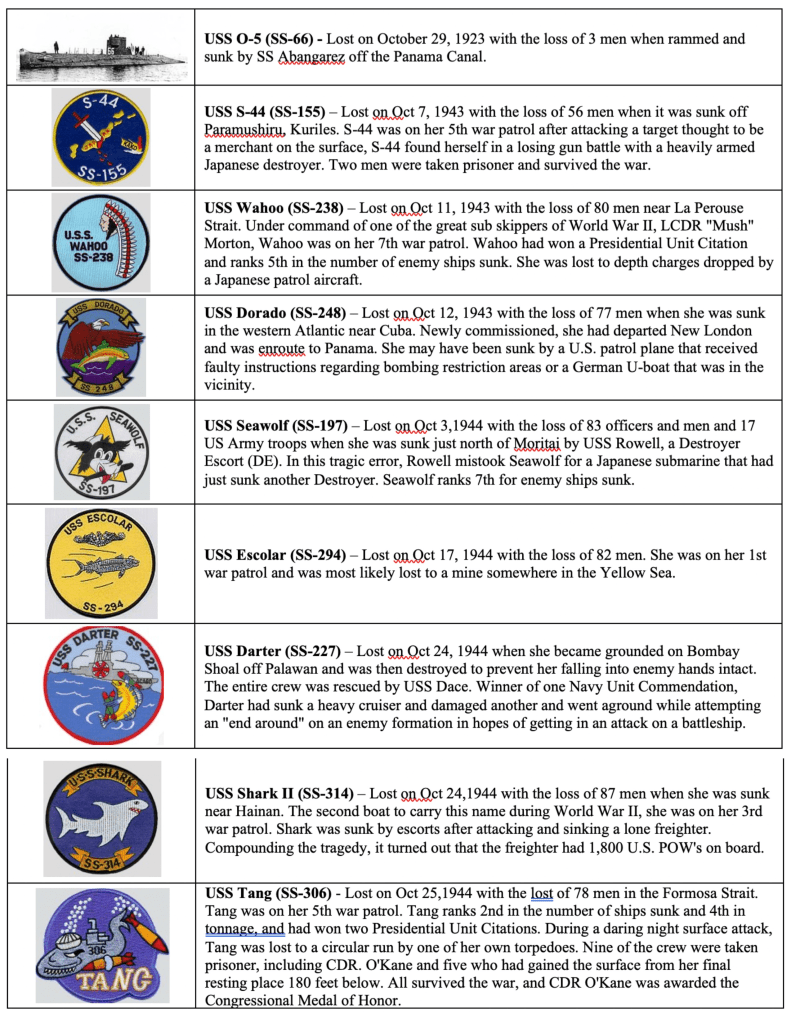
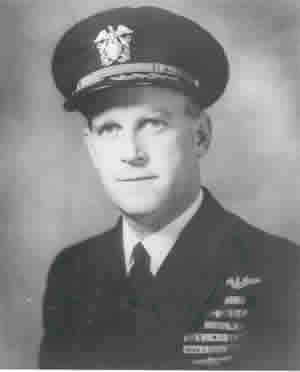
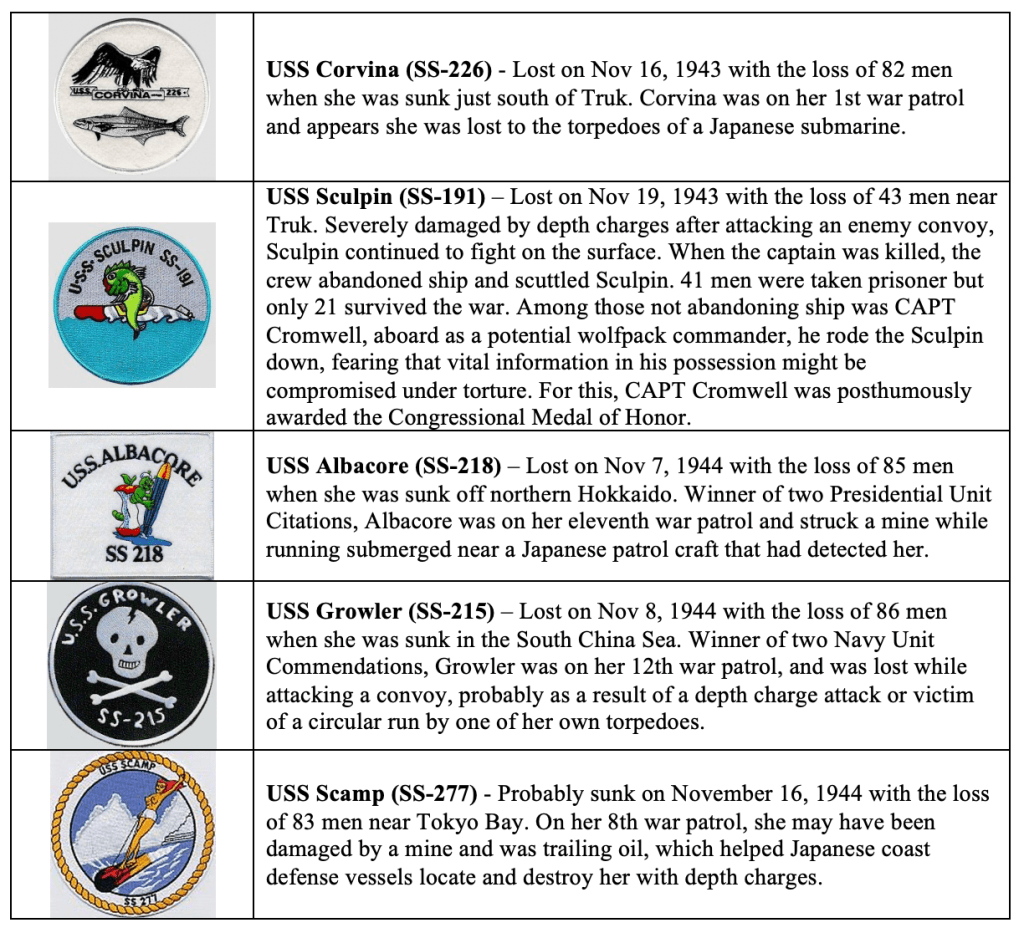
Richard O ‘Kane was the commanding officer of the USS TANG during World War II. O’Kane claimed eight ships at the time but post-war analysis increased this to ten ships. On one attack she had targeted two large ships with three torpedoes each and assumed three hits in each. Japanese records actually reported two hits in each with the third of each spread hitting smaller ships in the next column. This surpassed the next highest patrol which was for the USS WAHOO, with O ‘Kane as XO, in the same area the year before.
He was captured by the Japanese when his boat was sunk in the Formosa Strait by its own flawed torpedo (running in a circle) during a surface night attack on October 24–25, 1944 wherein he lost all but eight of his crew, and was secretly (i.e. illegally) held prisoner until the war’s end some ten months later. Following his release, Commander O’Kane received the Medal of Honor for his “conspicuous gallantry and intrepidity” during his submarine’s final operations against Japanese shipping.
CDR O’Kane’s Medal of Honor citation reads in part:
“…For conspicuous gallantry and intrepidity at the risk of his own life above and beyond the call of duty as commanding officer of the U.S.S. TANG operating against 2 enemy Japanese convoys on 23 and 24 October 1944, during her fifth and last war patrol. Boldly maneuvering on the surface into the midst of a heavily escorted convoy, CDR. O’Kane stood in the fusillade of bullets and shells from all directions to launch smashing hits on 3 tankers, he swung his ship to fire at a freighter and, in a split-second decision, shot out of the path of an onrushing transport, missing it by inches. Boxed in by blazing tankers, a freighter, transport, and several destroyers, he blasted 2 of the targets with his remaining torpedoes and, with pyrotechnics bursting on all sides, cleared the area. Twenty-four hours later, he again made contact with a heavily escorted convoy steaming to support the Leyte campaign with reinforcements and supplies and with crated planes piled high on each unit. In defiance of the enemy’s relentless fire, he closed the concentration of ship and in quick succession sent 2 torpedoes each into the first and second transports and an adjacent tanker, finding his mark with each torpedo in a series of violent explosions at less than l,000-yard range. With ships bearing down from all sides, he charged the enemy at high speed, exploding the tanker in a burst of flame, smashing the transport dead in the water, and blasting the destroyer with a mighty roar which rocked the TANG from stem to stern. Expending his last 2 torpedoes into the remnants of a once powerful convoy before his own ship went down, CDR O’Kane, aided by his gallant command, achieved an illustrious record of heroism in combat, enhancing the finest traditions of the U.S. Naval Service.”
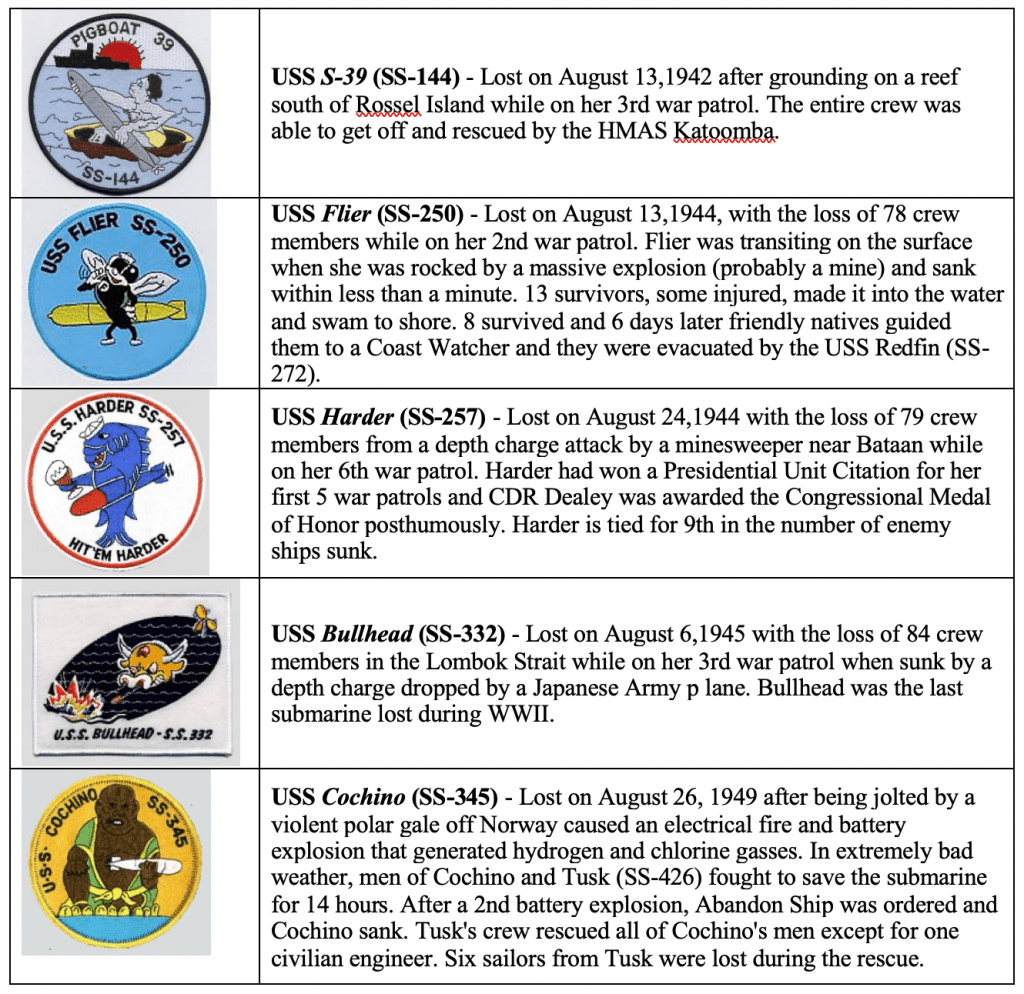
Samuel Dealey was born on September 13, 1906 in Dallas, Texas, where he attended Oak Cliff High School. He graduated from the Naval Academy in June 1930. Dealey had duty on the battleship USS NEVADA (BB-36) before training as a submarine sailor. In command of S-20 at the outbreak of World War II, he assumed command of USS HARDER (SS-257) upon her commissioning on December 2, 1942. Commander Dealey guided his submarine deep into enemy waters, wreaking destruction on Japanese shipping. On HARDER’S fifth war patrol, Commander Dealey pressed home a series of bold and daring attacks, both surfaced and submerged, which sank three enemy destroyers and damaged two others. For his exceptional gallantry in these actions, Commander Dealey received the Medal of Honor. He was lost with his submarine during its sixth war patrol, when HARDERwas sunk August 24, 1944 by a depth charge attack off Luzon, Philippines. His Medal of Honor citation reads:
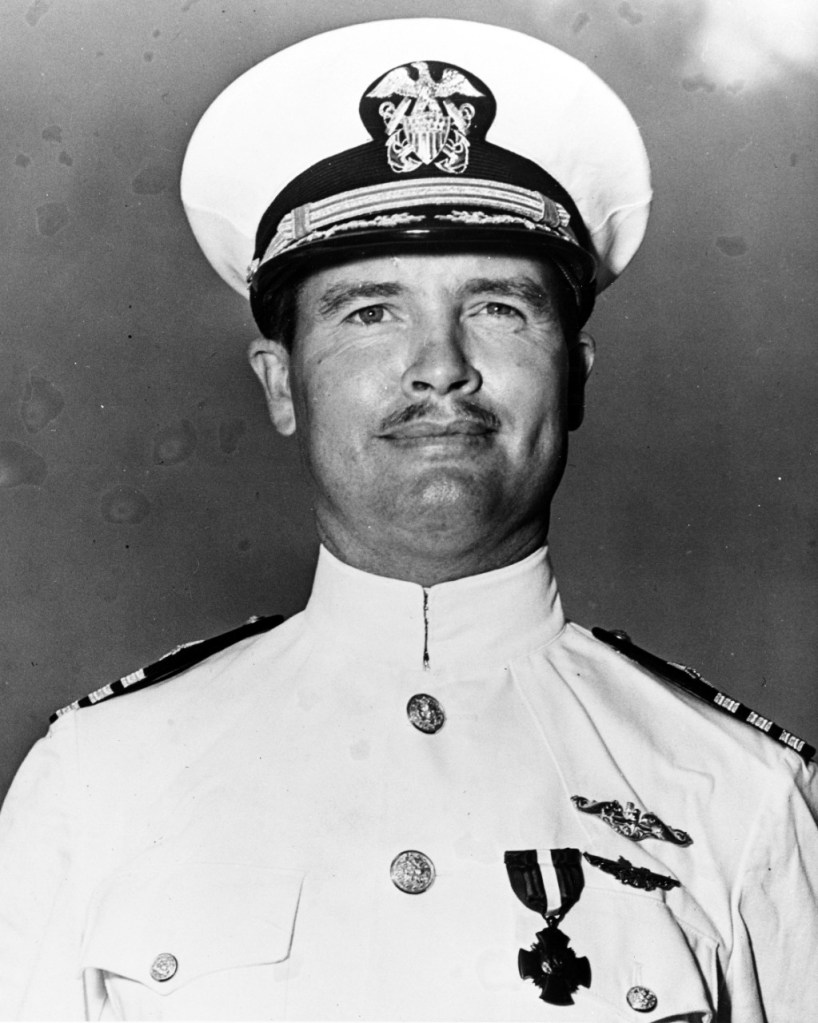
“For conspicuous gallantry and intrepidity at the risk of his life above and beyond the call of duty as Commanding Officer of the USS HARDER during her 5th War Patrol in Japanese-controlled waters. Floodlighted by a bright moon and disclosed to an enemy destroyer escort which bore down with intent to attack, CDR Dealey quickly dove to periscope depth and waited for the pursuer to close range, then opened fire, sending the target and all aboard down in flames with his third torpedo. Plunging deep to avoid fierce depth charges, he again surfaced and, within 9 minutes after sighting another destroyer, had sent the enemy down tail first with a hit directly amid ship. Evading detection, he penetrated the confined waters off Tawi Tawi with the Japanese Fleet base 6 miles away and scored death blows on 2 patrolling destroyers in quick succession. With his ship heeled over by concussion from the first exploding target and the second vessel nose-diving in a blinding detonation, he cleared the area at high speed. Sighted by a large hostile fleet force on the following day, he swung his bow toward the lead destroyer for another “down-the-throat” shot, fired 3 bow tubes and promptly crash-dived to be terrifically rocked seconds later by the exploding ship as the HARDER passed beneath. This remarkable record of 5 vital Japanese destroyers sunk in 5 short-range torpedo attacks attests the valiant fighting spirit of CDR Dealey and his indomitable command.”
Quartermaster First Class Richard Breckenridge received the Navy Cross for heroic actions on 14 August 1942. His citation reads in part…
”For extraordinary heroism and devotion to duty in action against the enemy while serving on board the USS CUTTLEFISH (SS-171), during the THIRD War Patrol of that submarine in enemy controlled waters on 27 August 1942. On that date the CUTTLEFISH was underway in enemy controlled waters when the approach of Japanese naval units forced her to crash dive. The wheel of the locks for the hatch leading from the deck to the conning tower became jammed, however, and the hatch would not close sufficiently to keep out the seas. Quartermaster Second Class Breckenridge refused to leave his station and go below until he succeeded in securing the hatch. By his action, Quartermaster Second Class Breckenridge, risking drowning, saved the conning tower instruments from damage from the seas and enabled the submarine to continue on patrol during which 29,500 tons of Japanese shipping were sunk. The conduct of Quartermaster Second Class Breckenridge throughout this action reflects great credit upon himself, and was in keeping with the highest traditions of the United States Naval Service.”

 Bowfin Pearl Harbor Base