The Periscope is a monthly publication of the Los Angeles-Pasadena Base of USSVI.
What’s Inside General Meeting Minutes Tolling the Boats Russian Sub Fleet Explained U.S. Nuke Boat Visits Ally Brit Astute-Class Boat Dex Armstrong Chapter News Calendar Events E-Board Meeting Minutes More Funds for Columbia
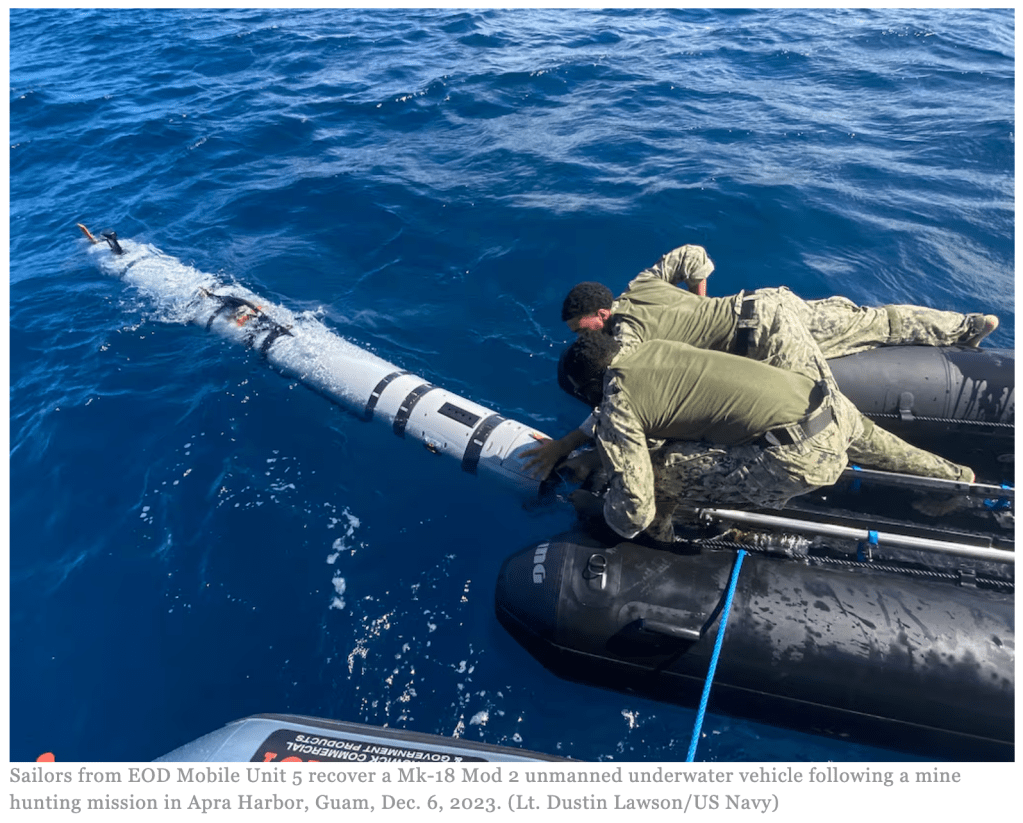
As pressure rises on the U.S. Navy to boost its shipbuilding capacity, the Pentagon has released a call for a new type of undersea vessel called the Combat Autonomous Maritime Platform, or CAMP, an unmanned system built “to maximize operational effectiveness in contested environments,” according to the solicitation released by the Defense Innovation Unit.
This new class of remotely operated vessel aims to take the Navy’s capacity for undersea warfare to the next level — maneuvering in GPS-denied environments at a range greater than 1,000 nautical miles and diving to more than 200 meters underwater during missions, one of which would include dropping “various payloads to the sea floor.”
The Convention of States (COS) movement has long relied on grassroots leadership and the dedication of citizen volunteers to advance its mission of restoring self-governance through an Article V convention. In a significant development for both COS and the veteran community, Navy Veteran and long time COS Hawai’i leader Brett Kulbis has assumed the duties of National Veterans Coalition Director—a role that promises to elevate the voices and concerns of America’s veterans within the movement. He relieved Air Force Veteran Rodney Huckleberry.
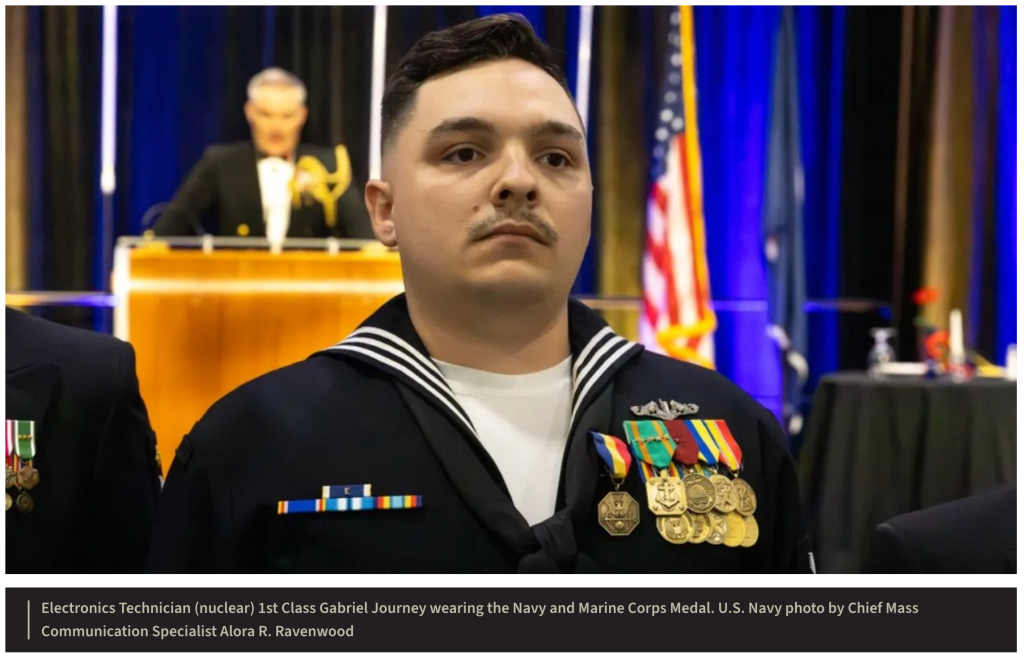
Last fall, Gabriel Journey was on his way to the airport on an afternoon in Norfolk, Virginia, when he saw an apartment building catch fire.
Journey, an Electronics Technician (nuclear) aboard the U.S. Navy fast-attack submarine the USS Albany, pulled over and rushed to help. After hearing that people were still in the building, he flagged down a passing police officer and then went to help evacuate others. Leaping into action, he got others to help lift him up onto a ledge to reach a higher apartment. With only limited space to stand, he was able to get to a woman and her son, helping them out of the window and lowering them to the people on the ground. It saved their lives as the fire spread through the building.
For his heroism, Petty Officer 1st Class Gabriel Journey was awarded the Navy and Marine Corps Medal on April 11.
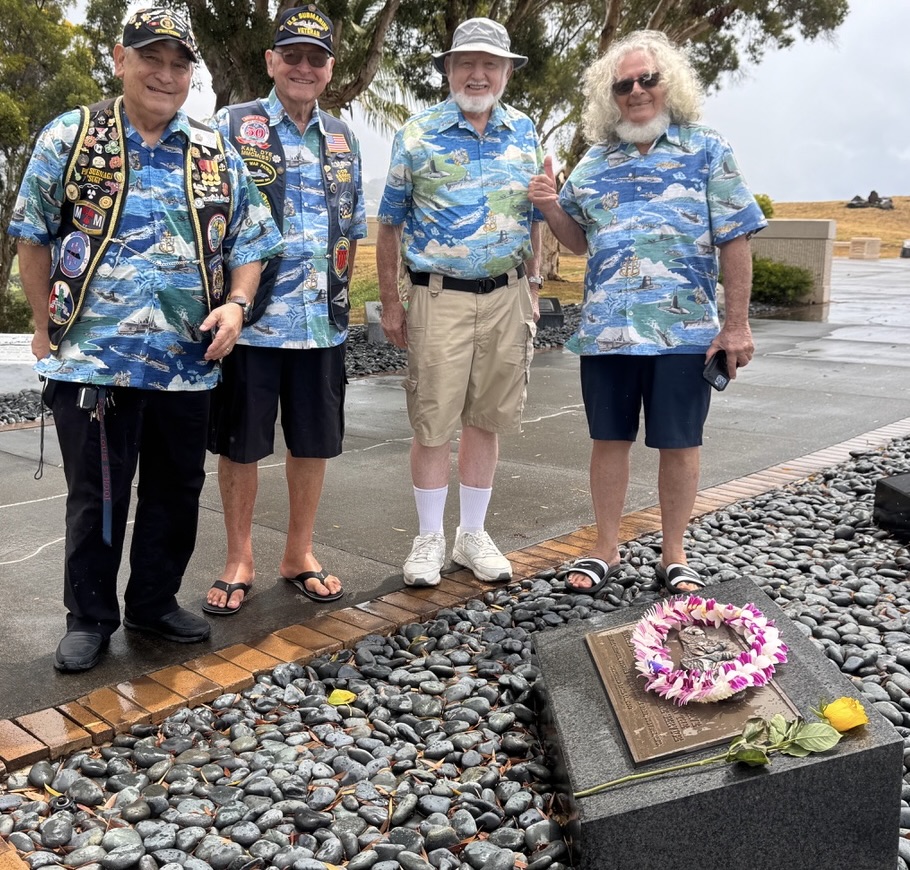
L-R: Pat Suenaga, Karl Dye, Jay Dunn, and Dan Del Monte
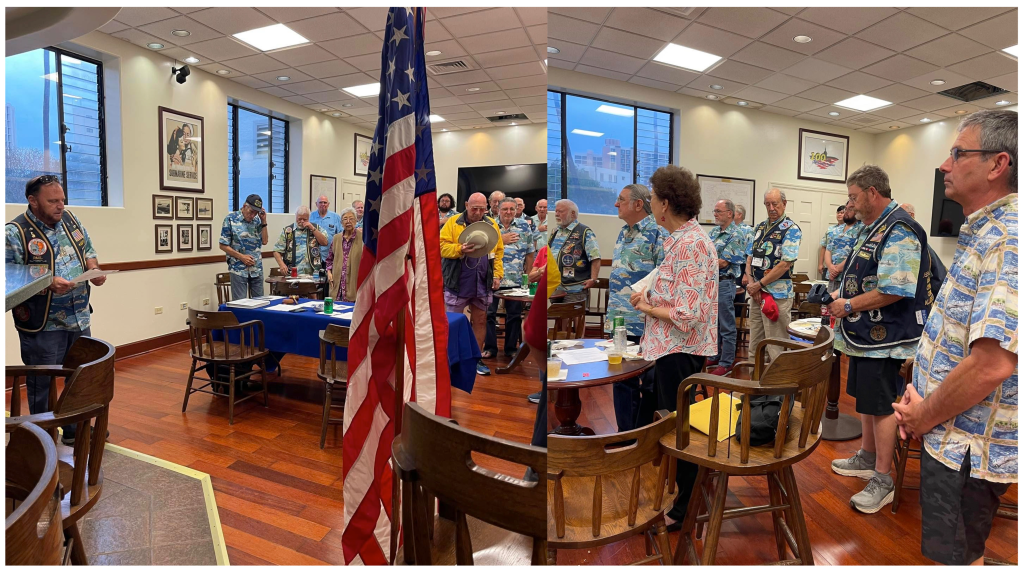
USSVI Bowfin Pearl Harbor Base Veterans conducted their annual re-dedication of the Submarine Veterans Memorial on the Memorial Walk-Way at the National Memorial Cemetery of the Pacific.
“The Submarine Veteran plaque was dedicated and placed here on April 18, 2000 and we conduct a small re-dedication ceremony every year on the anniversary of the U.S. Submarine Force,” said Base Commander Paul Jurcsak.
To perpetuate the memory of our shipmates who gave their lives while voluntarily serving in submarine warfare in the pursuit of their duties while serving their country. That their dedication, deeds and supreme sacrifice be a constant source of motivation toward greater accomplishments. To further promote and keep alive the spirit and unity that existed among submarine crewmen during World War II. To promote sociability general welfare and good fellowship among our members. To pledge loyalty and patriotism to the United States of America and it’s constitution.
1. Bowfin Pearl Harbor Base
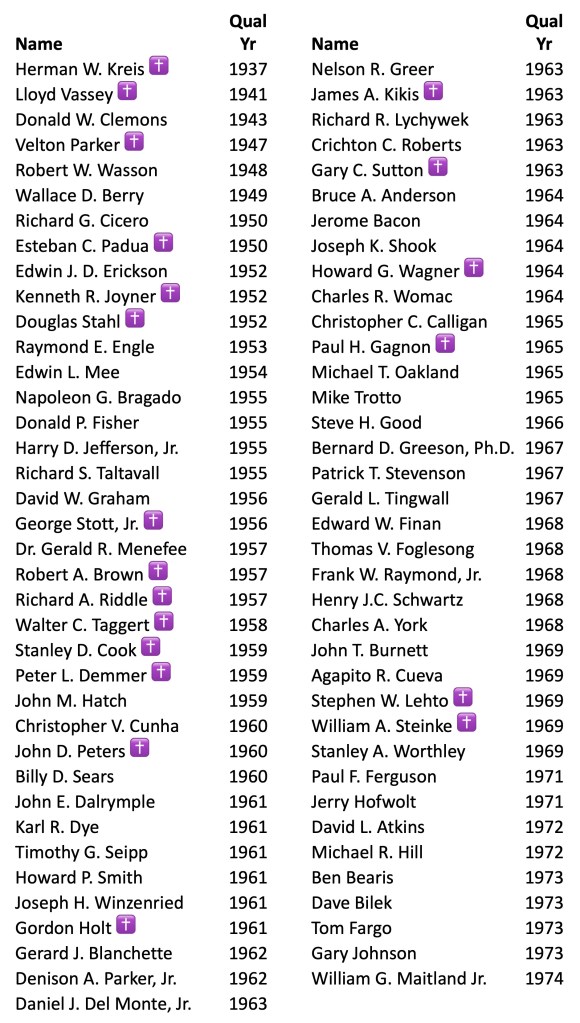
Bowfin Meeting – We conducted our April meeting at Clean Sweep Bar, Lockwood Hall. The following members attended – Dave Atkins, George Barlett, David Bilek, Rodney Boucher, Allen Clemons, Dan Del Monte, Karl Dye, Gary Grisham, Bill Hicks, Gary Johnson, Paul Jurcsak, Brett Kulbis, Ace Parker, Crichton Roberts, Thom Sousa, Pat Suenaga, Carl Tatro, Wade Thode, and Ken Voorhees.
Welcomed Guests – Dolores Brown, Miya Bilek, Tom Schmidt, Wade & William Thode.
Binnacle List – Please keep all our members and their families in your good thoughts and prayers.
Hauʻoli Lā Hānau! Bowfin Birthdays for the month ofApril.
On April 18, 2025, the Ernie Pyle Legacy Foundation will host the Ernie Pyle 80th Anniversary Memorial in Honolulu at the National Memorial Cemetery of the Pacific. This ceremony is to commemorate the death of World War II Scripps-Howard feature columnist and war correspondent Ernie Pyle, who was killed in 1945.
This tradition was established in 1949, the year Ernie Pyle was interred at the Punchbowl National Cemetery in Honolulu. At the time, a eulogy was written and read by Buck Buchwach, the editor of the Honolulu Advertiser. This carried on every 5 years until the 1990s. In 2015, the Ernie Pyle LegacyFoundation renewed the ceremony, to continue every 5 years. In lieu of a 2020 event due to the pandemic, the VFW and American Legion held a belated ceremony in 2021.
Now in 2025, April 18th, known as Ernie Pyle Remembrance Day, is here. The ceremony to honorErnie will be held at 10am at the National Cemetery of the Pacific. The Memorial Address will be given by Suzanne Vares-Lum, the Director at Daniel K. Inouye Asia-Pacific Center for Security Studies.Other notable speakers include Jason Seal, the VFW Senior Vice Commander and CR Drumheller, theCommander of the American Legion Post 17.
Following the ceremony, the Ernie Pyle Legacy Foundation will be hosting a luncheon at 12pm at the Oahu Veterans Center. Members of the community and guests of the ceremony are invited to attend to continue the conversation about Ernie, and his positive impact on our world today.
In honor of Ernie Pyle Remembrance Day, we are also honoring all veterans, whom Ernie respected so dearly. We also want to recognize all journalists following in the footsteps of Ernie Pyle in their human interest storytelling, which is now more prevalent than ever.
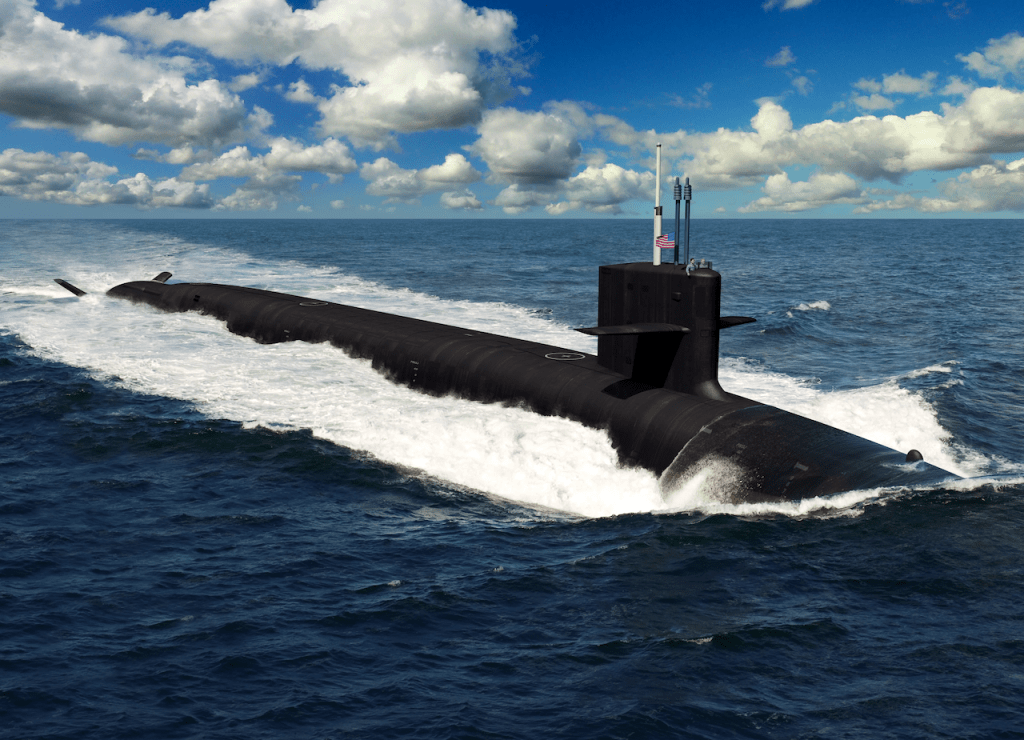
The lead ship in the Columbia class of nuclear submarines is facing delivery delays of up to 18 months, and “critical path challenges” continue to jeopardize carrier delivery schedules, Navy officials told Congress on Tuesday.
Likewise, nuclear aircraft carriers are facing delays as production on future Ford-class hulls are taking longer than anticipated, the officials told the Senate Armed Services seapower subcommittee.
For the Columbia-class submarines, set to replace the Ohio-class boats in the U.S. nuclear triad, lead ship District of Columbia (SSBN-826), is now set to deliver in 2029, which is 12 to 18 months behind schedule, said Rear Adm. Todd Weeks, program executive officer for strategic submarines. The next ships in the class, Wisconsin (SSBN-827) and Groton (SSBN-828), are set to follow roughly on schedule in 2032 and 2034, he said.
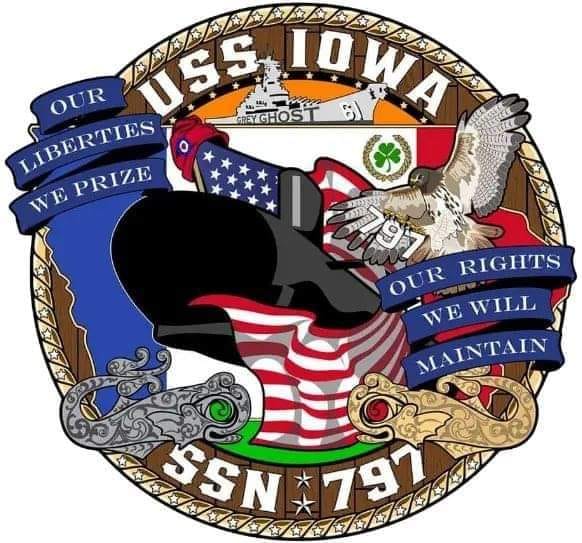
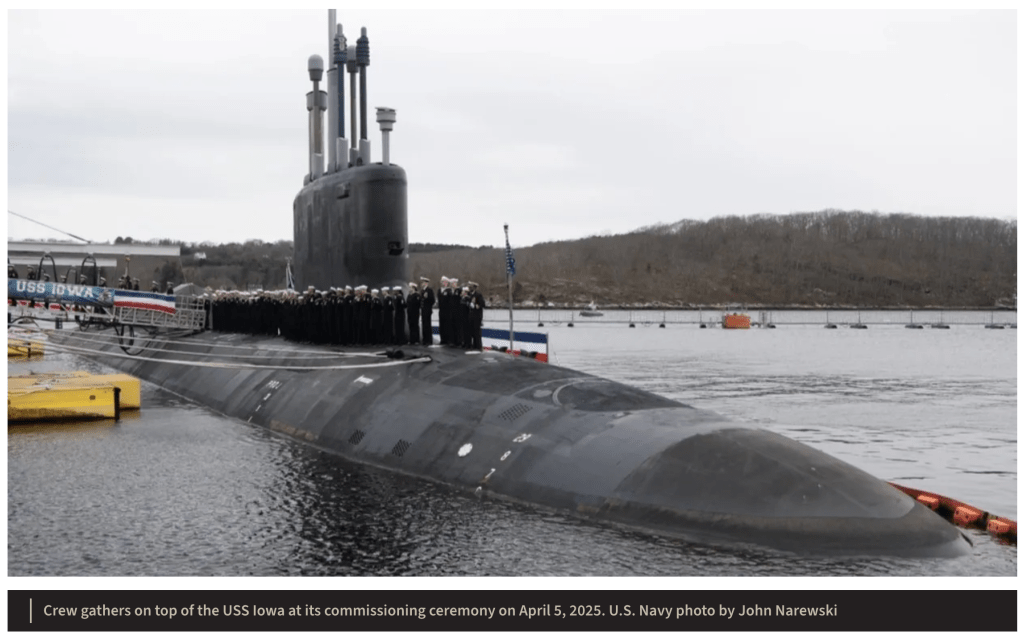
Iowa is equipped with Tomahawk cruise missiles and a nuclear reactor plant that eliminates the need for refueling, according to a Navy release. And as a Virginia-class, the boat was built with flexible design features, including an expansive lock-in/lock-out chamber for special operations divers and a reconfigurable torpedo room. The submarine can also deliver unmanned undersea vehicles.
“Make no mistake, naval warfare is evolving. Where battleships once ruled the seas, it is the silent strength of submarines that provides our Navy with an unmatched strategic advantage,” Navy Secretary John Phelan said at the commissioning ceremony. “This is not just a milestone for USS Iowa, but a critical step forward in strengthening our Navy and ensuring America’s global maritime dominance.”
The U.S. Navy welcomed a new USS Iowa into its service this weekend. The new nuclear submarine, SSN-797, was commissioned on Saturday, April 5, not in Iowa, but at the Naval Submarine Base New London in Groton, Connecticut.
The commissioning ceremony — with cold and dreary weather, as many speakers noted — included its captain, Cmdr. Gregory Coy, and Secretary of the Navy John Phelan, among others. Saturday’s event was Phelan’s first commissioning as secretary. Despite the poor weather, the speakers were cheerful and praised the crews that built the submarine and the submariners that will crew it.





 Bowfin Pearl Harbor Base