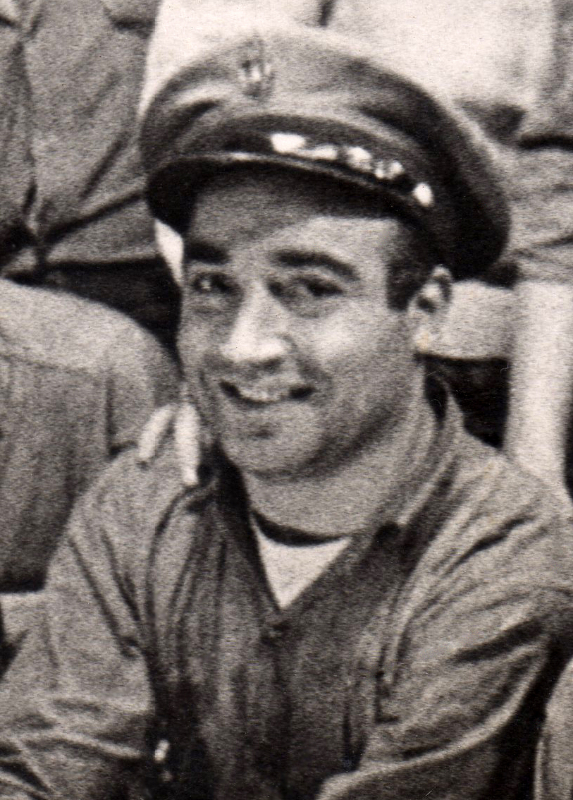
Recently as I was strolling around the USS Bowfin Museum grounds at Pearl Harbor, I ran across a plaque listing the 300 plus crew members who served on her during the course of World War II. I barely glanced at it as I passed, but a name leaped out at me. Eugene Gaito. He was our Chief Engineman on the USS Tiru (SS-416), aboard from January 25, 1966 to October 15, 1967. I had known he served during WW II, but not on which boats. He was part of the commissioning crew of the USS Bowfin (SS-287) and made all nine war patrols between August 1943 and July 1945, one of six crew-members to do so.
That ’66-’67 WestPac trip we made with him on Tiru was memorable, to say the least. Gaito was a great chief, knew his stuff, and gave us young, wild Machinist Mates and Enginemen plenty of slack if we did our jobs, and a royal chewing if he thought we didn’t. He could make us laugh, too. On St. Patrick’s Day 1967 he dyed his white beard green! He was called “Green Gene” for awhile after that.
Gaito was a golfer. While underway he would practice his putting in the Forward Engine Room. Some of the balls would drop down through the hatch in front of the distilling units. Us young squids would have to go down to the lower level and retrieve them. The ones we couldn’t find floating in the bilge would absorb oil and get as big as softballs. A couple of times during Pearl Harbor local operations COMSUBPAC Admiral Fluckey sent a helicopter to pick him up so they could go golfing. ‘Alligator’ Gaito must have been really good at that game.
About a month ago I was cleaning off my bookshelf and found something I had not read, “Bowfin” by Edwin P. Hoyt. I ran across Gaito’s name on page 182. While in the midst of reading the book I watched the History Channel documentary “USS Bowfin – Pearl Harbor Avenger”. About halfway through this guy pops up on my TV screen. It was him, same round face, same curly hair (but black, not white as I remember). What a thrill it was to see him again, though a twenty some years younger version then the picture stored in my memory.
After so many intrusions in such a short time I felt he was saying to me, “Remind the world that I existed, served my country, lived loved laughed, and then died, as all men do.” Or maybe something like that. So here it is, going out to some who remember him, and to others who I think may find something of interest in these few stories of his life and exploits. And to a couple of golfers.
He enlisted in the U.S. Navy as a Motor Machinist Mate on March 7, 1940. Besides Bowfin and Tiru, he rode the USS Bonita (SS-165) from September 27, 1940 to November 26, 1942, USS Queenfish (SS-393) in ’47, USS Sea Dog (SS-401) in ’48, USS Caiman (SS-323) from ’52 to ’56, and was Chief Of The Boat on the USS Cusk (SS-348) between ’60 and ’62.
He lived in Ewa Beach, Hawaii, and died on December 31, 1991, a day short of his 76th birthday. Born January 1, 1916 in New York. Survivors listed in his obituary included a sister, five grandchildren, and eight great grandchildren.
He is buried in Punchbowl National Cemetery, Section CT 1-B, Row 300, site 321. The next time I go to Punchbowl I’ll pay him a visit and say hello.
I am sending this out today, January 1st 2019, because it has been 103 years since his birth. Happy Birthday, shipmate.
Nelson Greer
(Thank you to my USS Tiru shipmates Les Hampton and David McCune for some stories, and to Charles Hinman, Director Of Education Pacific Fleet Submarine Museum, for some hard to find information and the photo of Gene.)
Vietnam Veterans of America, Oahu Chapter 858 and Commander U.S. Pacific Fleet will host The National Vietnam War Veterans Day Ceremony at the National Memorial Cemetery of the Pacific (Punchbowl), 2177 Puowaina Dr. Honolulu, Hawaii 96813.
Tuesday March 29, 2022 at 10:00am
Attire: Military/VSO/ Casual Hawaiian.
Registration begins at 9:00am with assistance from Punahou JROTC.
Before the ceremony memorabilia will be given to all Vietnam Veterans.
Please provide us with the following information for seating arrangements and presentations (Name, Rank/Title, Organization, Number of persons in your party and will you be presenting a wreath.)
OUR MISSION We help create remembrances that reflect the unique values, character and traditions of the families we serve.That is our passion, that is our purpose, that is our promise. Guaranteed.
From all of us to each of you, we wish you a Hauʻoli Lā Hānau!
John C. Brandes James F. Caldwell Jr. Raymond E. Engle Christopher C. Gaines Paul T. Jurcsak Roderick Riessen Michael Rodriguez Jeffrey M. Snider Timothy Sparks Richard S. Taltavall Robert W. Wasson
2022 is an Election Year. The Following National Officer Positions and Requirements for Office Are Available: SECOND CALL FOR NOMINATIONS.
National Commander: Nominees for National Commander must have completed at least two years as a voting member of the Board of Directors by the time they take office as National Commander.
National Senior Vice Commander: Nominees for Senior Vice-Commander must have completed at least two years as a Member of the Board of Directors and must certify that they have or will develop a working familiarity of the USSVI bookkeeping software (QuickBooks).
National Junior Vice Commander: Nominees for Junior Vice-Commander must have completed at least two years as a Member of the Board of Directors.
National Treasurer: Must be a Regular member in good standing and Nominees for National Treasurer must have some experience in bookkeeping, certify that they have, or will develop a working knowledge of the USSVI approved bookkeeping software (QuickBooks), use the USSVI approved software as part of his/her duties as National Treasurer, and cannot change to another software package without the Board of Director’s approval.
National Secretary: Must be a Regular member in good standing.
Regional Director: Must be a member in good standing of a Base within the Region. The Nominee must be currently serving or has served as a Regional Director, District Commander or Base Officer.
Note: All nominations must be sent to the Nominations Committee Chairman on or before March 1st, 2022. The nomination is accompanied by a letter from the Nominee indicating his willingness to accept the nomination and willingness to serve if elected. The Nomination Letter includes details of the nominee’s qualifications in less than one hundred (100) words.
The 2022 Nominations Committee Chairman is IPNC John E. Markiewicz, e-mail is markiewiczjohn4@gmail.com.
Shipmates, The USSVI Western Region Roundup which is scheduled for April 25 – 29 2022 at the Silver Legacy Resort and Casino, in Reno, Nevada has added two new events. A Submarine Movie Night and a Western Line Dancing Instruction session. Our online Registration and Payment system makes short work of the process. Register Online Today.
We are also looking for Bases and individuals to help us by Sponsoring the event. For a $50 Sponsor Fee we feature your Base logo on our website and print it on the Swag Bags. Become a Sponsor.
As always, the goal of the Roundup is to provide a way for all Submariners to gather for their mutual benefit and enjoyment. We look forward to seeing you there.
Registration for this year’s National Convention in Buffalo at the Hyatt Regency Buffalo, Two Fountain Plaza, Buffalo, New York, 14202 is NOW OPEN! We have a group rate of $119.00 per night per room. The cut-off date for the Room Block is July 31, 2022. Reservations made after this date may be made at the Convention rate based on room availability.
This year’s registration will be a little different than in the past. You may go directly to the National Convention website, ussviconvention.org/2022/ and click on the convention registration button, instead of going to a pdf as in the past, you will go to a new page that will allow you to complete your reservation online and pay by credit card, PayPal or check.
The “landing page” will give you information concerning the convention and Covid and identification protocols for entry into Canada. Please be sure to read this information.
There are two simple pages to enter information on. On the first page is the events/dinners/tours you want to go to and the number that will attend. On the second page you will fill out all of your personal information, emergency contact and select entrée for the awards banquet and size for your souvenir T-shirt if you selected that option.
You will then have the option of paying with a credit card now or by mailing in a check.
You will be able to immediately print out your itinerary and it will also be sent directly to your email.
Damn, we had fun. Some of it sure didn’t seem much like fun at the time, but looking back through the mists of time, it was all fun.
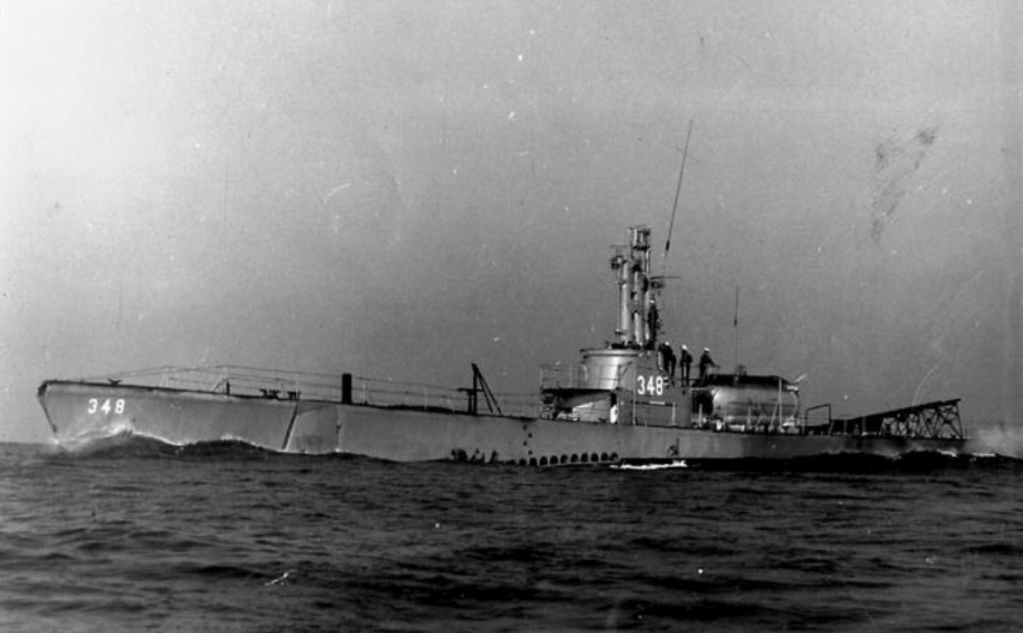
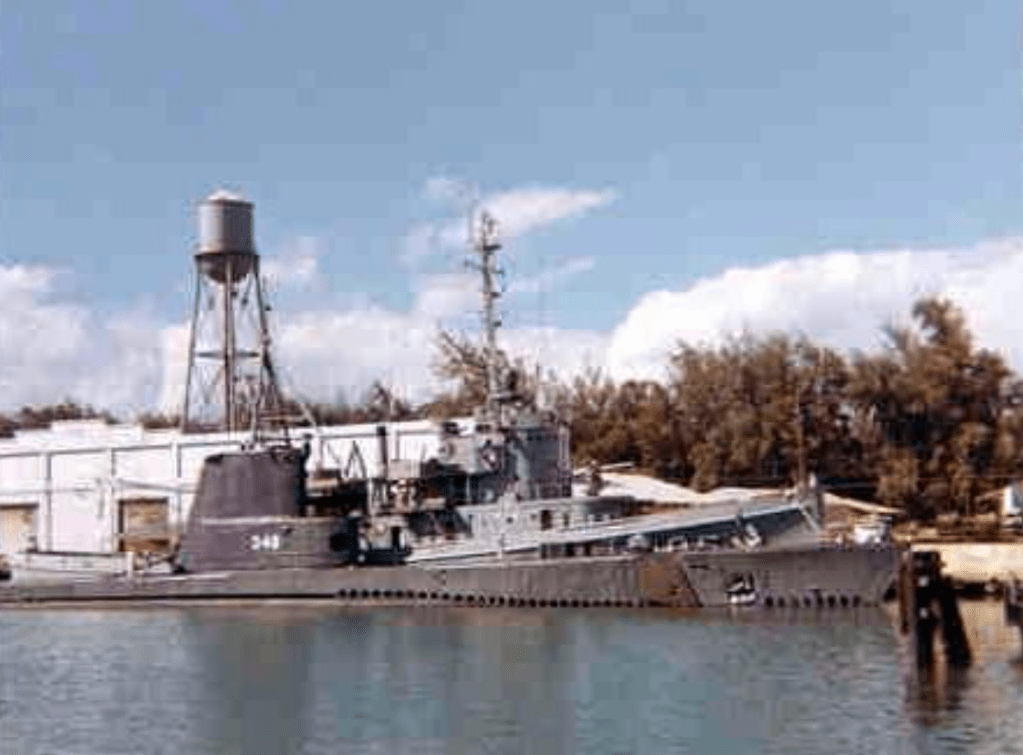
It was summertime, 1965, and the USS Cusk (SS 348) took on a full load of food and fuel, left Pearl Harbor in our wake, and headed for adventure in the Western Pacific. I don’t recollect us doing any Northern Runs that WESTPAC trip. We left the Russians to them new-fangled nukes and the more modern diesel boats. The glory days of the Cusk were the late 40’s, when she was the first submarine in the world to fire a guided missile. Later she got the Guppy II treatment with snorkel, new sail, and updated electronics, but basically, she was a WWII boat, fast on the surface and slow underwater. So, some guy at the top decided to let us patrol the Viet Nam area.
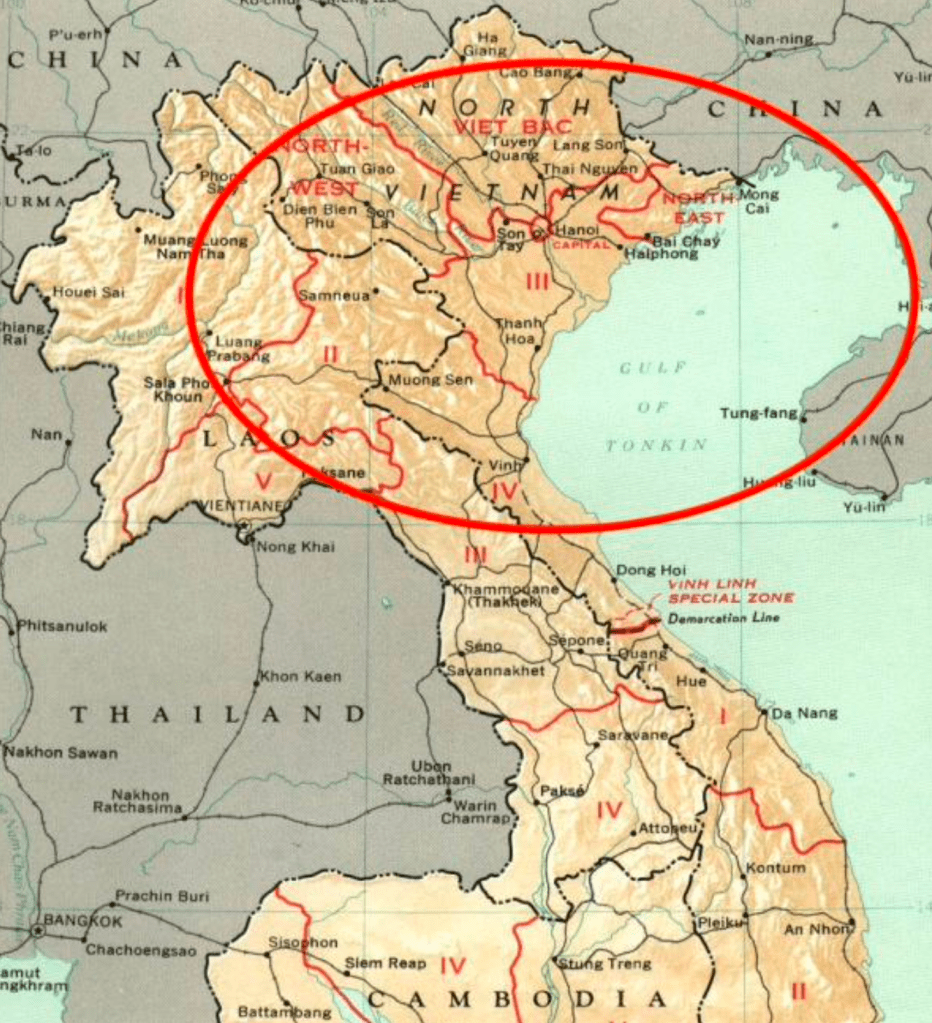
We made 2 or 3 patrols down south, so for brevity I’ll lump everything I remember into one tale. We were assigned lifeguard duty, with a 100 mile grid to patrol. If any airdales decided to ditch in our area on the way back to their carriers, our job was to rescue them. We cruised on one engine at about two knots, submerging once a day just to prove we were still a submarine. Nothing happened to any flyboys in our area, but plenty of irritating stuff happened to us.
You could always tell the Electricians on the boats by their dungarees. They got way too close to battery acid, and their clothes looked like they were headed to a swiss cheese convention. On the Cusk, the whole crew looked like that. Those old boats had a ‘closed cell’ ventilation system, where the Exhaust Blower took a suction directly from our 252 battery cells. This caused battery acid to get into the steel ventilation piping and we know who always wins that battle. The piping runs along the overhead from the Forward Battery compartment, through the Control Room and After Battery compartment, and ends at the Exhaust Blower in the Forward Engine room. The crew worked ate and slept underneath this piping. I remember tasting and then tossing out food when battery acid dripped in my plate. We could never tell if acid dripped in the bug juice, we drank cause the mess cooks mixed it so strong we probably could have used it in the batteries.
The worst acid leak was on the Exhaust Blower itself. And directly underneath was the perfect spot for the throttleman to stand while operating our two distilling units. So, when making water that we weren’t allowed to shower with, we would have acid dripping on us. We had to amuse ourselves at sea somehow so Lonnie Moo Johnson and myself decided to have a “whose dungarees will rot off first” contest. I don’t remember the prize; I suppose it was an ice cold San Miguel beer in Olongapo or something just as useful. After 10 days we compared what was left of our uniforms and Lonnie Moo won. He must have cheated and rolled on the deck to get some extra acid, because I know I stood under that blower 8 hours a day for all 10 days.
Now, the Supply Blower is right next to the Exhaust Blower and there may have been some acid carryover to it. The pipe coming out of the blower splits into a Y shape and forces fresh engine room air through two smaller pipes into the forward part of the boat. Well, right at that Y the piping rotted out and the fellers up forward weren’t getting enough fresh air. We looked at our coffee cans and other types of sheet metal and couldn’t come up with anything to repair it with. Then some genius said, “Dungaree pants”. Somebody had a new pair without any acid holes, we replaced the sheet metal piping with the bell bottom trousers, secured it with that there newly invented duct tape, and they held up until we got into Subic Bay for an upkeep.
Cruising off the coast of Vietnam in the fall was HOT, HOT, HOT! The Cusk had two 12 ton air conditioning units in the After Engine room. Not really good enough to cool the boat very well, but when they both broke down, son-of-a-bitch, it went from just HOT to absolutely miserable. We tried to cool the boat by opening all the watertight doors, closing the main induction, drawing air through the boat from the conning tower hatch to the engines. That helped everybody except the electricians cause the humid Tonkin Gulf air shorted out everything between the conning tower and the engine room. So, we opened the main induction and went back to being miserable again. During the day we were allowed to sit inside the superstructure above the forward torpedo room where we could scoop up cool salt water and pour it over ourselves, which gave us some temporary relief. No one wore shirts except the cooks and mess cooks, as we didn’t want none of their manly chest hairs in our chili con carne. One day I was sitting in the mess decks, and a cook, Ptomaine Greer (no relation), came out of the galley and took off his sweat soaked tee shirt. I have never seen a rash that large before or since. It looked like he was wearing a red tee shirt. I tell you; it was absolutely miserable.
We all know the Government would rather waste a dollar and do nothing than spend a dime to fix a problem. Here is a story to illustrate that truth. The General Motors 278-A diesel engine has four exhaust valves in each of its 16 cylinder heads. The valves have two grooves near the top of the stem. Two ‘keeper’ halves fit around each valve and have two ridges (called ‘lands’) on the inside that fit into the valve grooves, while the outside of the keepers fit into a tapered cup that sits on top of the valve spring. The keepers keep the valve connected to the spring. For you non engineer types, the spring holds the valve shut whilst fuel is exploding inside the cylinder.
The Cusk received a large shipment of refurbished heads prior to deploying to WESTPAC. We overhauled number Two Engine using 16 of the ‘new’ heads just before getting underway. It ran just fine in port. Departure day dawned, and we headed toward the Land of the Rising Sun. A of couple days out and suddenly, BAM, BAM, BAM, BAM shut that engine down, there is something wrong there. Pull the valve covers and, hey, here is the culprit, an exhaust valve is missing, and the only place it could be is between the piston and the head. Diesel engines have a 16 to 1 compression ratio, so there isn’t a whole lot of clearance in there.
So, we yank that head off, and there is our mangled valve laying on top of one very beat up looking piston. The bottom side of the head has matching scars from the wayward valve. We strip the head, salvaging the salvageable parts. “Hey, these valve keepers only have one land” says some sharp sighted sailor. The valve keepers need two lands so are only doing 50% of their job. We check the spare head we are about to slap on. The keepers have just one land. We check all of our recently received spare heads, same thing. No choice, we got to use the crappy keepers. Next day that engine goes BAM, BAM, BAM, BAM again, same story, different cylinder. And so, it goes for the two weeks it takes us to reach Yokosuka, Japan.
We figure we can just get some new keepers from the supply system in Yoko and the problem is on its way to being solved, right? ‘Supply’ had plenty of keepers in stock and they sent them right away. You guessed it, all of them were the new improved one land type guaranteed to drop the exhaust valve into the cylinder while the engine was running. Frantic phone calls were made, but no one cared. Don’t you know there is a war going on down south?
The joke on Jimmy boats was that if there were two coats of paint on the bulkhead outboard of the engines, you would have to chip off one coat for clearance in order to slide a head up off of its studs. Not a lot of working room out there, and hotter ‘n hell if the engine has been running. Changing an outboard head at sea was way low on our list of favorite things to do. The cool waters by the dock in Yokosuka kept the engine room at a comfortable temperature, so we formed a plan to avoid future pain. We moved the five gallon cans of coffee, flour, and sugar we had stored there and pulled all eight heads off the outboard side of that newly overhauled engine. Then we took the eight most easily accessible heads off the inboard side of the other engines, installed the good ones outboard, and replaced them with the faulty heads. Now we knew the cylinders likely to fail were easy to get to.
After a while we were champion head changers. Four hours after hearing that dreaded BAM, BAM, BAM, BAM the engine would be on the line again. If there was a puka in the piston, add two hours. Lacerated liner, add another two hours,
These heads weren’t the dinky things like on your lawn mower. They were over a foot square, and maybe 8 inches thick. They weighed 186 pounds. The circumference of my wrists grew an inch that WESTPAC trip. I could just barely lift one and carry it around. Lonnie Moo was about 5 feet tall and 6 feet wide, and he could lift one in each hand and waddle down the passageway. A point of pride was being able to cradle a head in your arms, and step through the hatch with it into the other engine room. The chief was keeping track, and said we had changed 96 heads by the time we got back to Pearl.
As for liberty, if you were there in those days, you remember what we did in Honcho 1, 2, and 3 in Yokosuka, the Wan chai District of Hong Kong, and on Olongapo’s’ Magsaysay Drive. If you weren’t there, you can only envy us.


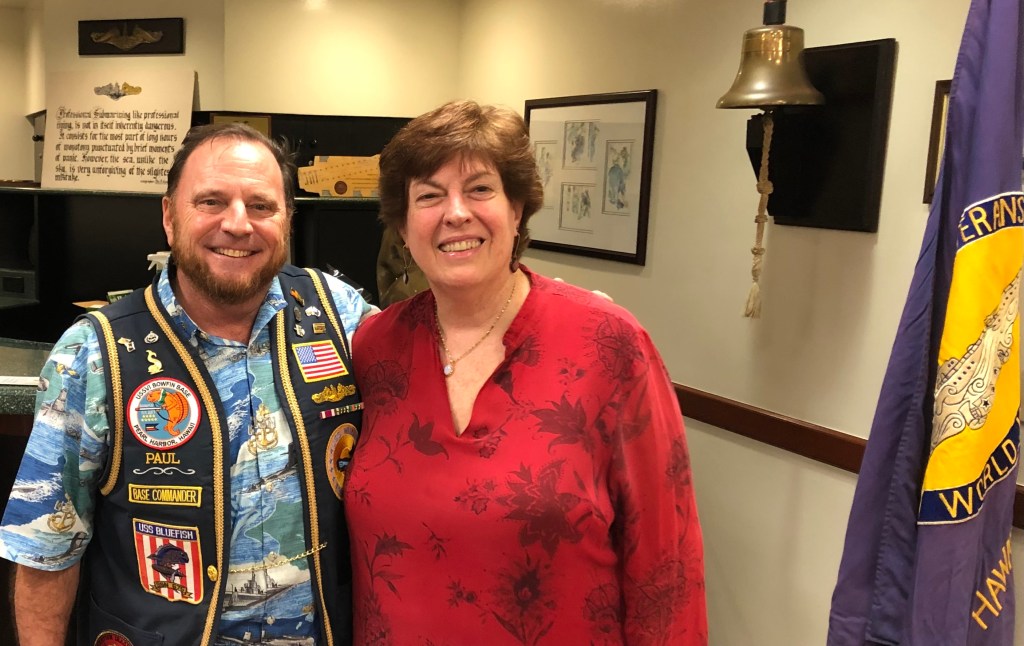



 Bowfin Pearl Harbor Base