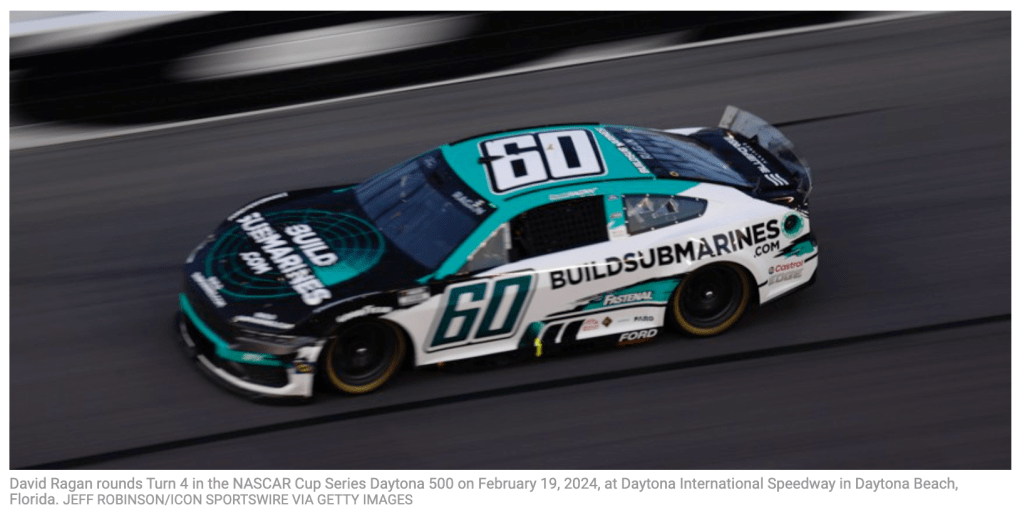
The BuildSubmarines ad blitz is part of an innovative campaign to shore up one particular aspect of the industrial base.
The U.S. Navy, along with its shipbuilders and their thousands of specialty suppliers, need more than 100,000 workers to help build attack and ballistic missile submarines over the coming decade. That’s according to BuildSubmarines.com, whose ubiquitous ads you may have seen during reality TV shows, on NASCAR hoods, at WNBA games, and amid Major League Baseball broadcasts. But what is that website and who runs it?
BuildSubmarines.com is the public face of an innovative, multi-organization effort to woo American workers to join a crucial part of the defense industrial workforce. The hub is BlueForge Alliance, a not-for-profit organization founded in November 2022 with a Navy contract and a mandate to gin up a new generation of shipbuilders.
Hurricane season in Hawaiʻi lasts from June 1 until the end of November. August and September are historically active months.
The National Weather Service predicts a slower hurricane season in Hawaiʻi with two to four tropical cyclones in the Central Pacific region.
The best time to prepare for hurricanes is BEFORE hurricane season begins. Avoid having to rush through potentially life-saving preparations by waiting until it’s too late. Get your disaster supplies while the shelves are still stocked, and get that insurance checkup early, as flood insurance requires a 30-day waiting period. Here is more:
At the Start of the Season
Enter the season prepared.
Know all evacuation routes if you live close to the coast.
Make sure your home meets building codes for withstanding hurricanes, and they have storm shutters.
Walk through your home with a camera or video camera and take inventory images of your home and your possessions. Walk the perimeter too and take photos or video of the outside.
If you Download the Allstate Mobile App – you can also utilize the Digital Locker feature to accomplish this.
Have proper tools, supplies, and a first aid kit.
Have plenty of batteries and flashlights
Always have plenty of non-perishable foods on hand.
Once the Watch is Issued
Leave low lying areas.
Protect windows with plywood boards, or storm shutters.
Secure outside objects.
Make sure you have plenty of fuel and water.
Have several days supply of food and water for each family member.
If called to evacuate, do so immediately.
Before the Storm
Be ready to put your plan and preparation into action.
Pay attention to local weather reports on radio, television, or the internet.
Have house boarded up, or have storm shutters in place.
Have plenty of food and water.
Make sure all your tools, supplies, and first aid kit available for use.
Have a secure room available.
During the Storm
Stay in Secure Room.
Stay away from windows.
Do not use the phone, or candles.
Monitor Weather and Civil Service Bulletins on either regular or NOAA radio.
Have supplies on hand.
Remain indoors when the eye moves over your area because the storm will resume shortly.
Hawaiian Electric also distributes a Disaster Preparedness Handbook. It can be accessed and downloaded here Handbook for Emergency Preparedness.
>> Letters From Home: Memorial Day and Military Spouse Appreciation Month >> Celebrating the 81st Anniversary of the Bowfin Commissioning >> Recent Field Trips to the Pacific Fleet Submarine Museum >> Memorial Day Ceremony at Pearl Harbor Submarine Base
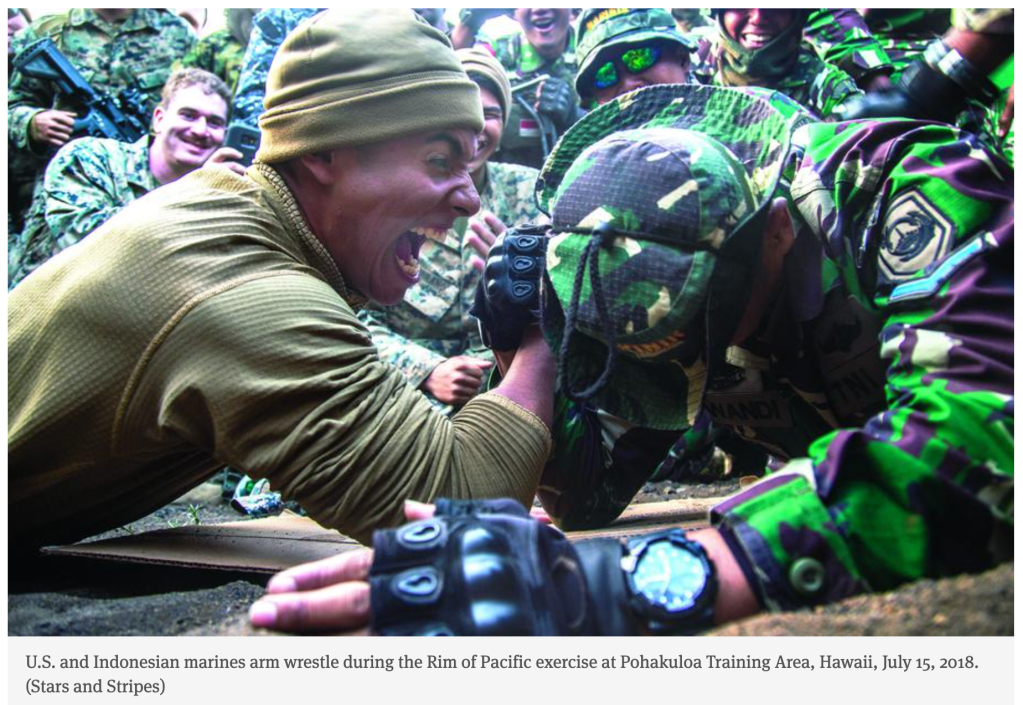
Forty ships from nearly 30 nations are slated to participate in this summer’s Rim of the Pacific exercise in and around the Hawaiian islands, the Navy said in a news release Tuesday.
The biennial RIMPAC, which the U.S. Navy touts as the largest international maritime exercise in the world, has been held 29 times since it began in 1971.
The training starts June 26 and runs through Aug. 2 and will include three submarines, 14 land-based forces, more than 150 aircraft and about 25,000 personnel, according to the Navy.
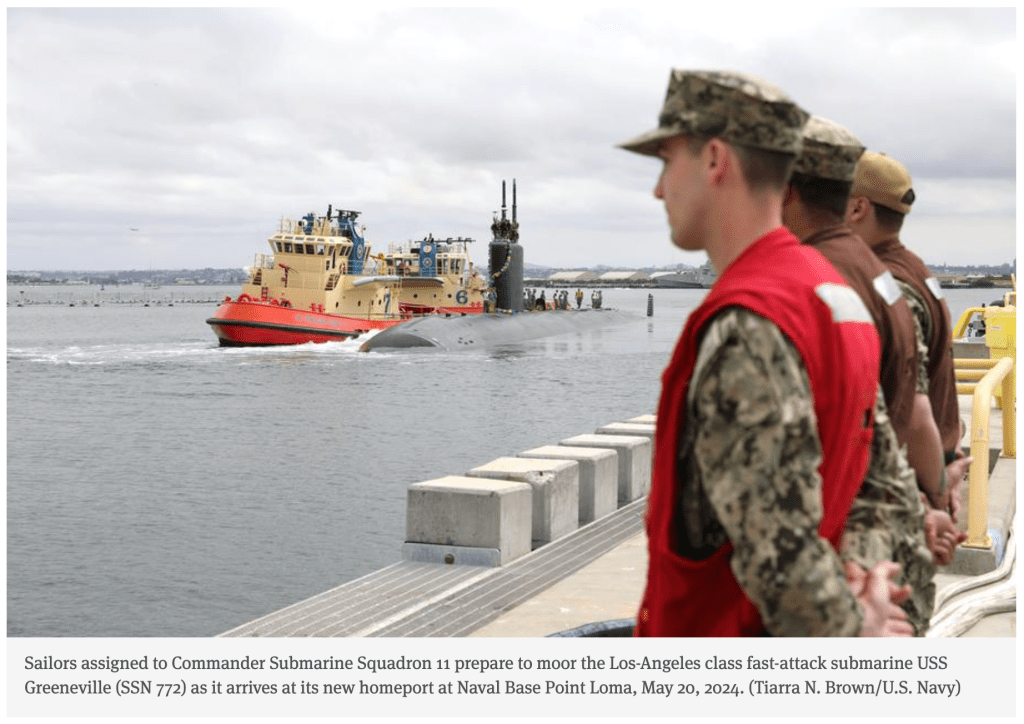
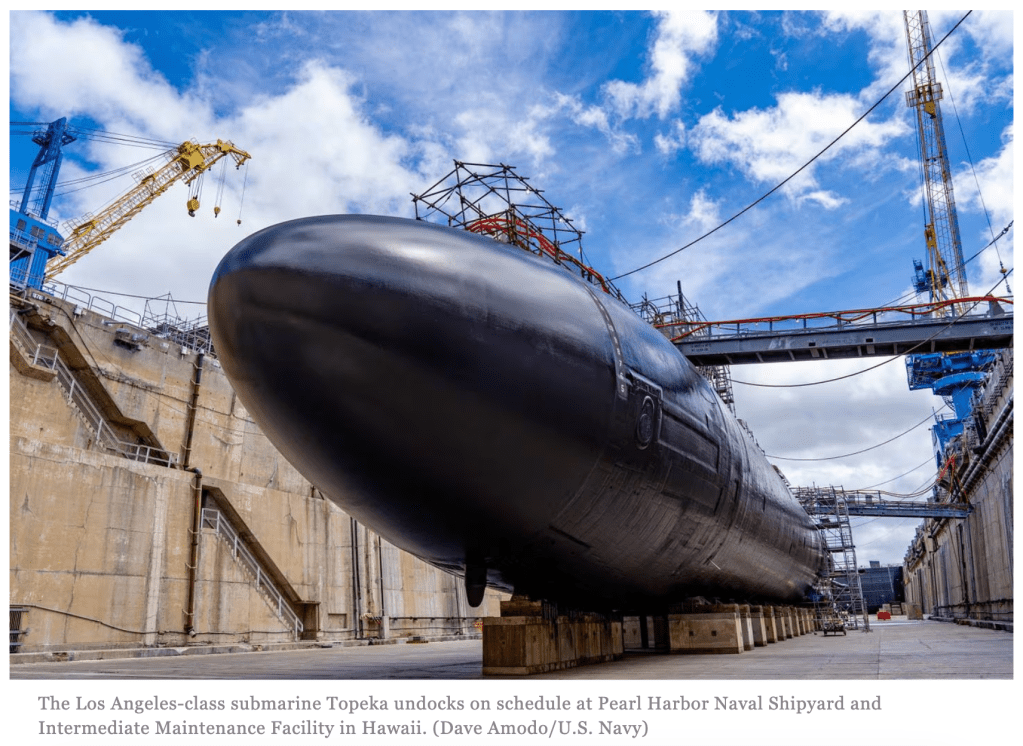
The USS Greeneville on Monday was added to the stable of Los Angeles-class, fast-attack submarines that are homeported in San Diego Bay as part of Submarine Squadron 11.
Naval Base Point Loma now has five of the nuclear-powered submarines, which are regularly sent on deployment to the Indo-Pacific, sometimes to help protect carrier strike groups based in San Diego.
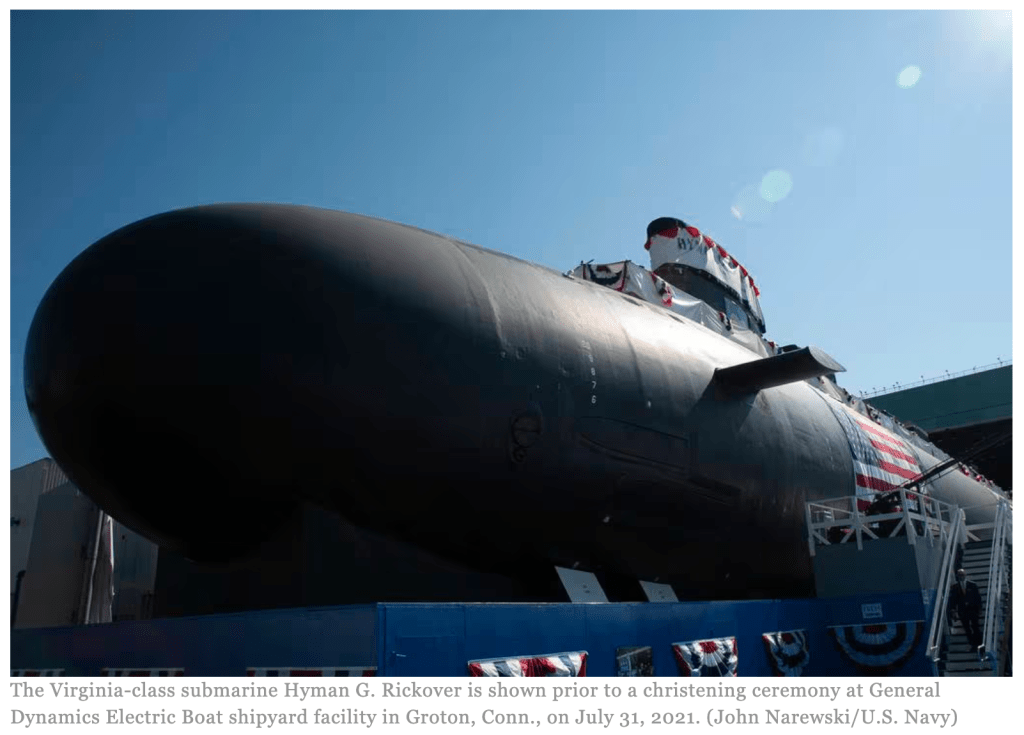
The House Armed Services Committee will try to partially fund a second Virginia-class submarine in fiscal 2025 to mitigate harm to the industrial base it says will come from the Navy’s one-boat request.
The service has bought Virginia-class attack submarines at a rate of two per year since 2011. It has also pitched this continuous and predictable construction pace as key to getting back to on-time deliveries and increasing industrial base output to support the AUKUS agreement between Australia, the U.K. and the U.S.
To perpetuate the memory of our shipmates who gave their lives while voluntarily serving in submarine warfare in the pursuit of their duties while serving their country. That their dedication, deeds and supreme sacrifice be a constant source of motivation toward greater accomplishments. To further promote and keep alive the spirit and unity that existed among submarine crewmen during World War II. To promote sociability general welfare and good fellowship among our members. To pledge loyalty and patriotism to the United States of America and it’s constitution.
1. Bowfin Pearl Harbor Base
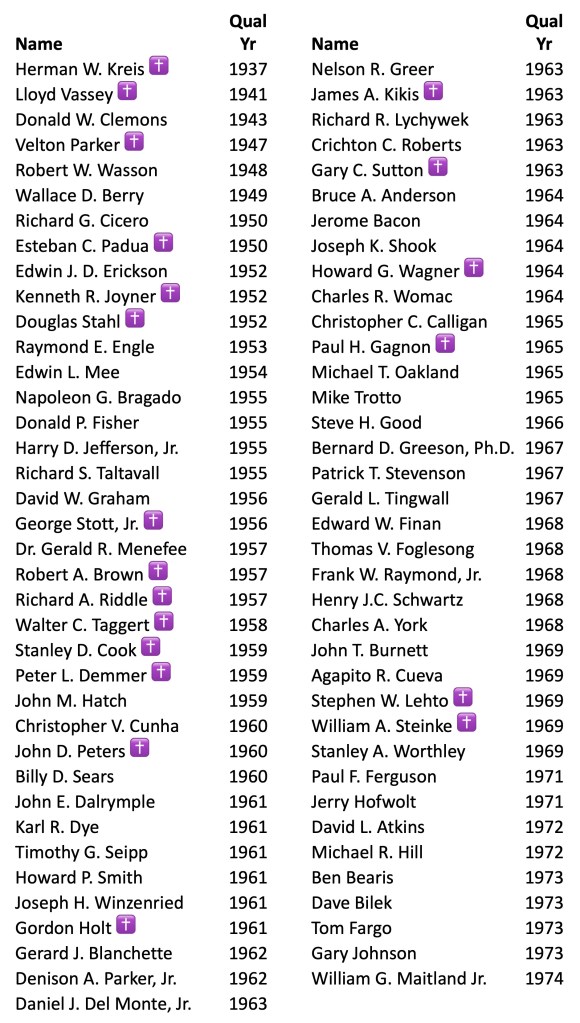
Bowfin Meeting – We conducted our May meeting at Clean Sweep Bar, Lockwood Hall. The following members attended – Dave Atkins, David Bilek, Rodney Boucher, Karl Dye, Nelson Greer, Gary Grisham, Gary Johnson, Paul Jurcsak, Brett Kulbis, Ace Parker, Crichton Roberts, Pat Suenaga, Carl Tatro, and Ken Voorhees.
Welcomed Guests – Doi Brown, Nancy Kreis, Mi-ye Bilek, and Sandra Parker.
Binnacle List – Please keep the all our members and their families in your good thoughts and prayers.
Hauʻoli Lā Hānau! Bowfin Birthdays for the month ofMay.
Save the Date
Saturday May 18 (7-9am): WWII, Korean & Vietnam Memorials clean-up event. Roy King’s WWII Memorial at the corner of South King Street and Punchbowl Street, Honolulu, HI 96813 in front of the Territorial Office Building, 465 S King Street, Honolulu HI 96813. Please bring gloves, water, trash bags, rakes, shovels, pick-up sticks (grabbers), dawn soapy solution to brush clean the WWII monument and water to rinse.
Friday May 31 (10am-12pm)
They are also looking for volunteers to help distribute the food and setup/take down. If you can volunteer, please send your name to Sign-Up! Volunteers, please show up at 8am to the Akaka Clinic Parking Lot!
Military Retirees to Join DoD Civilian Jobs Without Delay Pending legislation in both the House and the Senate (H.R. 939/S. 344) seeks to repeal the requirement that military retirees wait 180 days before entering civilian service in General Schedule (GS) positions within the Department of Defense (DoD) for GS-13 and below. The Fiscal Year 2021 Defense Authorization bill included a temporary 3-year pilot program for depots and industrial activities. The Fleet Reserve Association (FRA) welcomed this improvement but noted that more needs to be done.
The 180-day waiting period has resulted in hiring delays for DoD officials, who are already dealing with outdated hiring processes. Members of the public can express their support or concerns about this issue by visiting the following link: https://www.votervoice.net/FRA/Campaigns/101086/Respond
SCOTUS Rules Veterans Can Use Both Post-9/11 GI Bill and MGIB Benefits The U.S. Supreme Court has ruled in favor of an Army veteran, James Rudisill, who sued the Department of Veterans Affairs (VA) over his eligibility for education benefits under both the Montgomery GI Bill (MGIB) and the Post-9/11 GI Bill. In a 7-2 decision, the court sided with Rudisill, who argued that he was entitled to benefits under both programs, as he had enrolled in them during two separate stints in the Army.
Rudisill, who was wounded in a roadside bomb attack in Iraq in 2005, had exhausted his Post-9/11 GI Bill benefits but later wished to use his unused Montgomery GI Bill benefits to attend Yale Divinity School as part of his training to become an Army chaplain. When VA officials denied his claim, Rudisill sued, arguing that the VA was unfairly limiting his options. Justice Ketanji Brown Jackson, writing for the majority, called the VA’s denial “nonsensical” and reversed lower court rulings in favor of the VA.
The ruling could affect approximately 1.7 million veterans, leading to increased benefits payments by the VA, which currently pays more than $8 billion annually for education benefits. The ruling allows veterans greater flexibility in accessing education benefits under the two programs.
4.Still On Patrol
Tolling of the bells for boats lost in the month of May.
The fleet size has remained stagnant for at least a decade, even as demand for these stealthy forces increased. Attack submarines would be pivotal in a conflict against China. They’re also in high demand within the European theater in order to counter Russia’s sophisticated submarine fleet. And they’ve even made history in the Middle East, with the Virginia-class sub John Warner becoming the first in its class to fire Tomahawk missiles in combat during a 2018 strike on Syrian chemical weapons facilities.
The situation will worsen before it improves, according to the Navy’s long-range shipbuilding and fleet inventory plan, which shows the force dipping to 47 later this decade before hovering in the mid-50s for many years. The fleet isn’t projected to hit 66 until 2054, well beyond the “decade of concern” — when military officials say the threat of conflict with China will peak.
Submarine Veteran Rodney Boucher (R) and VA Chief of Center for Development & Civic Engagement Scheon U. Safotu pointing to the Bowfin Aloha Shirt ad in the American Submariner magazine.
On May 1st, at the newly opened Daniel Akaka VA Clinic in Kapolei, HI held a Veteran Service Organizations Information Fair. The event was sponsored by the VA.
Bowfin Base Subvet & Red Cross volunteer, Rodney Boucher talked to approximately 50 Veterans & dependents. Of which five were qualified Submariners.
Big mahalo to Rodney for representing Bowfin Pearl Harbor Base Submarine Veterans.
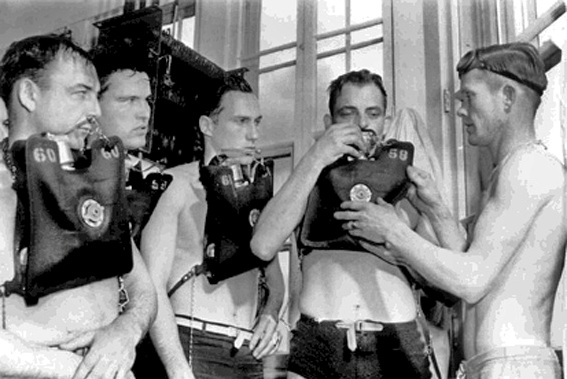
The Momsen lung was a early underwater rebreather used prior to and during World War II by American submariners as emergency escape gear.
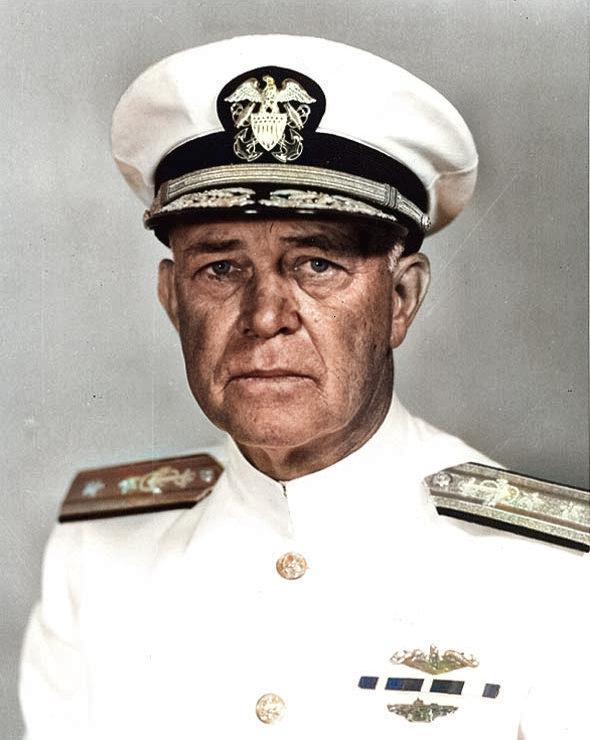
While serving with the Submarine Safety Test Unit, Charles Momsen began working on a device to help sailors surface. It was officially called the Submarine Escape Lung, it consisted of an oblong rubber bag that recycled exhaled air. The press enthusiastically received the device and dubbed it the Momsen Lung, a name that stuck.
The Lung contained a canister of soda lime, which removed poisonous carbon dioxide from exhaled air and then replenished the air with oxygen. Two tubes led from the bag to a mouthpiece: one to inhale oxygen and the other to exhale carbon dioxide. The device hung around the neck and strapped around the waist. Besides providing oxygen for the ascent, it also allowed a submariner to rise slowly to the surface, thus avoiding decompression sickness (“the bends”).
Between June 1929 and September 1932, then-Lt. Momsen developed the lung with Chief Gunner’s Mate Clarence L. Tibbals and Frank M. Hobson, a civilian employee of the Bureau of Ships. In 1929, Momsen received the Distinguished Service Medal for personally testing the device at a depth of 200 feet (61 m). The Lung saved its first lives in October 1944, when eight submariners used it to reach the surface after Tang (SS-306) sank in 180 feet (55 m) of water in the East China Sea. The Lung was eventually supplemented by the Steinke hood and free-ascent techniques.







 Bowfin Pearl Harbor Base