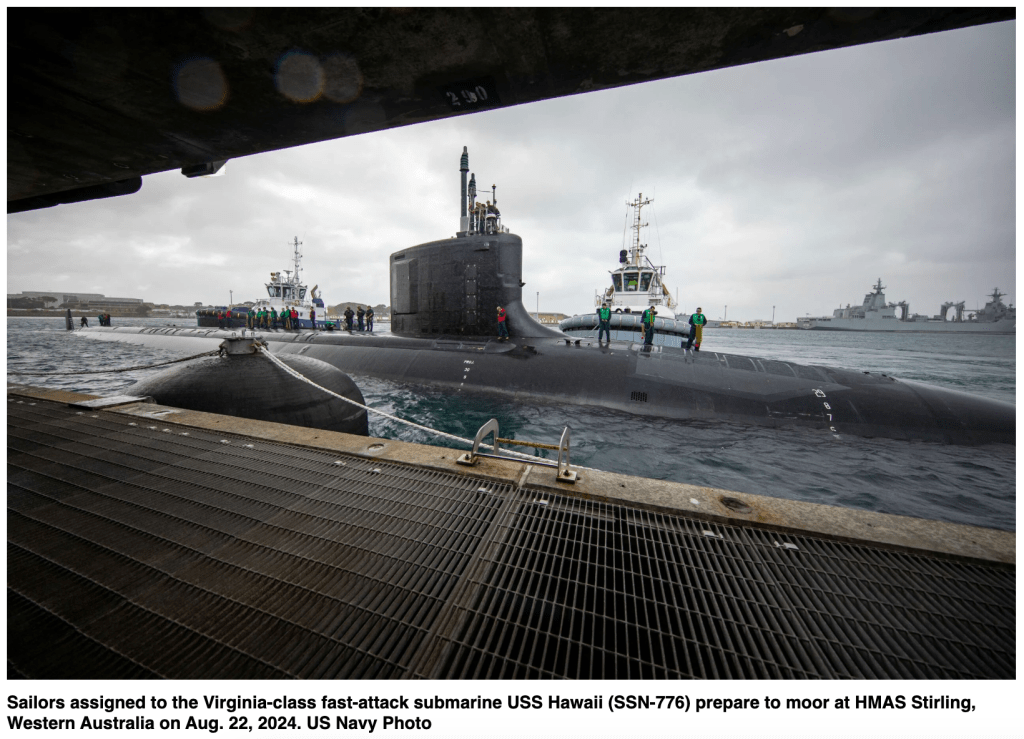
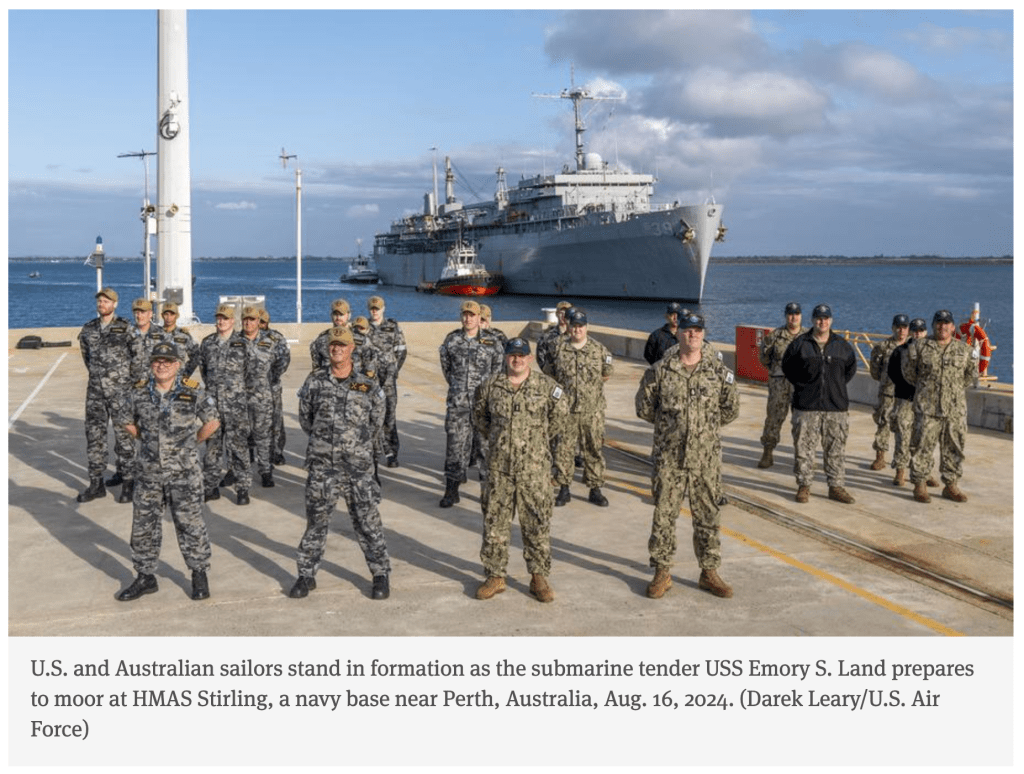
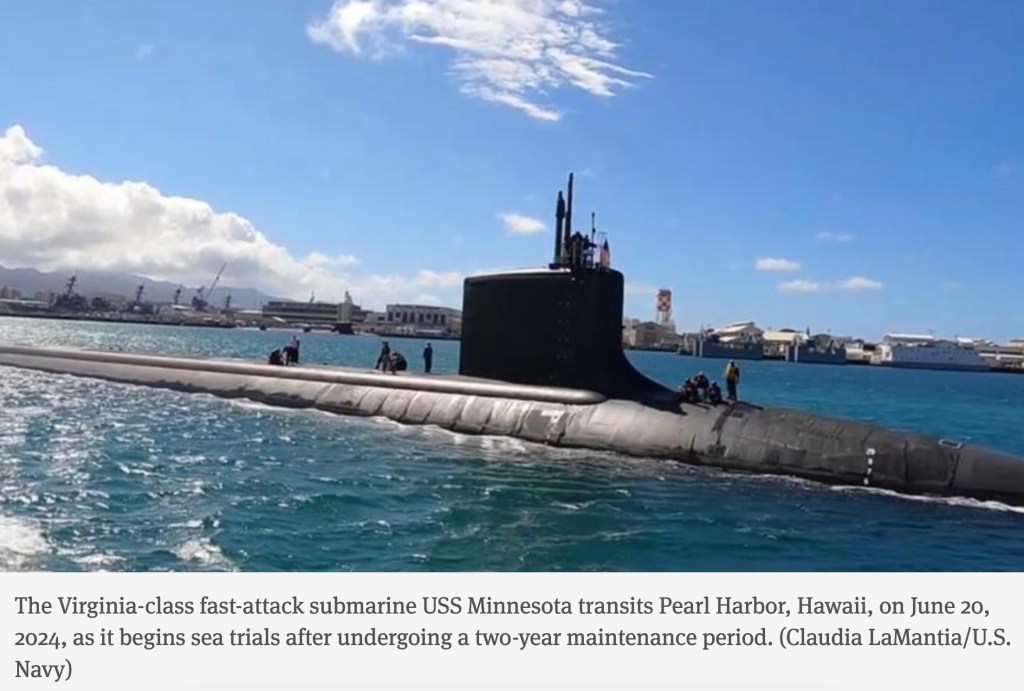
USS Hawaii (SSN 776) and its U.S. and Australian crew pulled into Australia’s western naval base HMAS Stirling on Thursday August 22 for a maintenance period with submarine tender USS Emory S. Land (AS-39). It’s the first time a U.S. nuclear-powered submarine will undergo an overhaul on foreign soil.
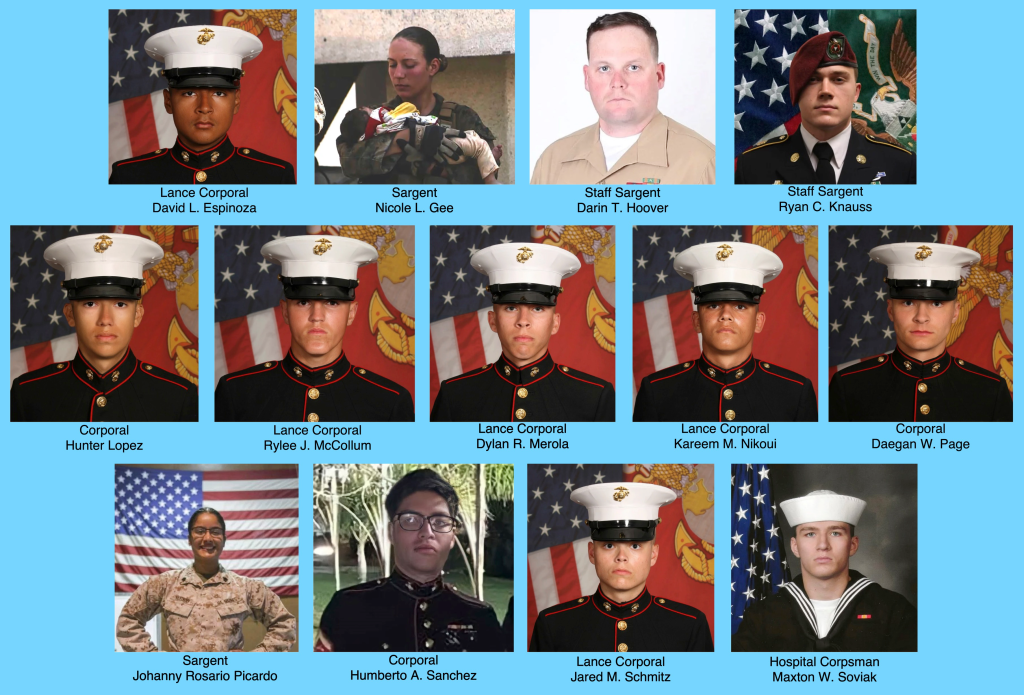
On August 26, 2021, 13 U.S. military members part of Operation Allies Refuge, the mission to evacuate American citizens and Afghans who assisted the U.S. and its allies during their 20-year war in Afghanistan. Were killed near the Abbey Gate of the Hamid Karzai International Airport in Kabul, Afghanistan by a suicide bomber. The bomb was a vehicle born improvised explosive device, or a car bomb. The attack marked one of the deadliest days for American forces in the past decade of the 20-year war in Afghanistan — and took place just days ahead of the U.S.’s planned full withdrawal.
Marine Corps Lance Cpl. David Lee Espinoza, 20 – He was originally from Laredo, Texas, and he left behind a brother, mother, and his stepfather.
Marine Corps Lance Cpl. Dylan Merola, 20 – He achieved the rank of Lance Corporal and was from Ranch Cucamonga, California. Merola was only in Kabul for two weeks before he was killed and students back home at his old high school even wore red, white and blue in his honor. He texted his mother that he would not be able to call and talk to her while on his evacuation assignment. “He wrote…’I love you and I’ll talk to you soon,’ ” said mother Cheryl Merola.
Marine Corps Lance Cpl. Jared Schmitz, 20 – Schmitz was from St. Louis, Missouri, and had achieved the rank of Lance Corporal. He was even honored in a Facebook post by State Representative Nick Schroer. The State Representative has also made several other posts since Schmitz’s death.
Marine Corps Lance Cpl. Kareem Nikoui, 20 – He was originally stationed nearby at Camp Pendleton in California and he even sent his father a video of him talking with Afghan children and giving them candy at the airport. The video was sent the day before he was killed.
Marine Corps Lance Cpl. Rylee McCollum, 20 – McCollum was from Bondurant, Wyoming, and was on his first deployment. He had only just graduated from high school in 2019 and was recently married and only 3 weeks away from becoming a father. There is a Go Fund Me page set up to help raise money for his child’s education and it has raised well over it’s goal of $5,000, which is very impressive and will be worth the while for his family.
Marine Corps Cpl. Hunter Lopez, 22 – He was from California and wanted to be like his parents after his deployment. He planned on becoming a sheriff’s deputy once he returned home, to follow in his parents’ footsteps. The family would like all donations made to the Riverside County Deputy Sheriff Relief Foundationin honor of Lopez.
Marine Corps Cpl. Humberto Sanchez, 22 – He was a Corporal from Logansport, Indiana. Sanchez was only out of high school for 4 years when he was killed and had the Indiana State Representative Jim Baird posted and identified him, Indiana Senator posted on Twitter, and the Logansport Mayor post on Facebook indirectly about Sanchez.
Navy Hospital Corpsman Maxton Soviak, 22 – Soviak was a Navy Medic working with the marines in Afghanistan, since the Marines do not have their own medical field. He is from Berlin Heights, Ohio, and there is a Go Fund Me page started by a family friend as a memorial fund for Soviak.
Marine Corps Sgt. Nicole Gee, 23 – She was a Sergeant who originates from Roseville, California, and was a maintenance technician with 24th Marine Expeditionary Unit. Gee posted an Instagram pic the week before she was killed talking about how much she loves her job and Sgt. Mallory Harrison, who was her roommate and friend from Camp Lejeune posted a painfully heartbreaking post about Gee on Facebook. While Gee was deployed, Harrison was asked to look after her car and couldn’t let the image of the car go when she stated, “Her car is still there & she’s gone forever.”
U.S. Army Staff Sgt. Ryan Knauss, 23 – Knauss was from Knoxville, Tennessee, and has been the first Army soldier to be identified from the attack. He had just completed Psychology Operation Training and hoped to move to Washington, DC, when he came back from his deployment. He left behind his Stepmother, Grandfather, and his wife, who he loved to help with her garden.
Marine Corps Cpl. Daegan Page, 23 – He was from Omaha, Nebraska, and was the 2nd Regiment of 1st Marine Regiment (aka “The Professionals”) at Camp Pendleton in Southern California. Page planned to go to trade school after his deployment. He left behind his parents, step-parents, grandparents, four siblings, and his girlfriend.
Marine Corps Sgt. Johanny Rosario Pichardo, 25 – She was a Sergeant who was from Lawrence, Massachusetts, and was a member of the U.S. Marine Corps Female Engagement Team. Rosario Pichardo was also part of the Naval Amphibious Force, Task Force 51/5th Marine Expeditionary Brigade and was on the ground aiding in the evacuation that took place. At this time, her family wants privacy and want their loved one to be honored as the hero she was.
Marine Corps Staff Sgt. Darin Taylor Hoover Jr., 31 – Hoover was from Midvale, Utah, and was a Staff Sergeant in the Marine Corps. He played football in high school and loved what he did in the marines and spent most of his life fighting for the country. The Utah Governor ordered that flags at all state facilities and public grounds be at half-staff through sunset on Monday, August 30, 2021, in honor of Taylor’s memory along with all the other soldiers that have been killed.
An American submarine tender recently arrived in Western Australia, where sailors are training to service U.S. and British nuclear-powered fast-attack boats under a mutual defense pact.
The USS Emory S. Land, a Guam-based tender crewed by American and Australian sailors, pulled into naval base HMAS Stirling, near Perth, on Aug. 16, the Navy announced in a news release that day.
The crew will perform maintenance on a U.S. nuclear-powered submarine over several weeks, the release said, without naming the boat.
Aboard the USS Tiru (SS 416), September 1967; This Northern Run started off like most diesel submarine Cold War patrols did. We were told not to tell anyone we were leaving our home port of Pearl Harbor for parts unknown, then we painted over our hull number, took aboard umpteen tons worth of food, topped off our fuel oil tanks, and were issued foul weather gear topside in front of God and everybody. So much for secrecy. I had no ‘need to know’ where this here ‘there’ we were headed to was. I still don’t know what we did or where we went. We were told that if anyone should question us, we were on an ‘oceanographic survey mission’. I’m happy to report no one ever asked.
All I knew was that when we raised the top of our snorkel mast just above the surface in order to run the diesel engines, the arctic air we sucked in was so damned cold we wore foul weather jackets and hats in the normally sweltering Engine Rooms. I would stand in a corner to stay away from the frigid blast traveling between the air induction piping and the engine intakes. The occasional slug of ice cold salt water coming in with the air needed to be avoided also. My favorite spot had an electrical switchboard that I leaned back against so that at least my butt was warm.
One day a large hulking Engineman named Lurch (he looked and acted like the butler Lurch on the Addams Family TV show) strolled up to the Control Room after he got off watch to shoot the shit and warm up a bit. The Chief Of The Watch spots him and says “Hey Lurch, go wake up Chief Mac. Tell him he’s late relieving me.”
Lurch, a man of few words and no visible emotions, comes back in a couple of minutes and reports “He can’t wake up. He’s dead”.
The Diving Officer, Torpedoman Chief ‘Spooks’ Merrill (it was his second tour of duty aboard Tiru), jumps in and says “That can’t be!” Lurch calmly looks him in the eye and replies softly, “I worked at a mortuary before I joined the Navy. I know what dead people look like.” No one believes him so a seaman is sent to wake Chief Mac. He can’t rouse him either. “Get the Corpsman!”
‘Doc’ Brandt (a bespectacled First Class pill pusher who was also the night cook and ship’s baker) agrees with Lurch’s prognosis, Chief Mac is dead. The reason for his sudden demise was unknown.
Captain Shilling, who had steered Tiru through many major problems, orders that his body be placed in the freezer. The Chief Of The Boat drafts four volunteers to help Doc load him into a body bag. They carry him out of the Goat Locker in the Forward Battery, through the Control Room, and into the After Battery Compartment. The freezer is located under the mess decks. They lower him down the ladder and lay him out between the salisbury steaks and the boneless pork chops.
You should have heard the bitching and moaning, “Chief Mac is going to contaminate the ice cream” and similar complaints. Hell, Chief Mac was sealed up in his black body bag better than those cardboard boxes of beef, pork, and chickens stored in the freezer! The Captain finally relented and had the Mark 37 torpedo removed from number two torpedo tube. Four new ‘volunteers’ removed him from the freezer, carried him out of the After Battery through Control, through the Forward Battery Compartment, and into the Forward Torpedo Room. They loaded him into #2 tube and closed the inner door. He was already frozen and the sea water surrounding the outside of the tube was 28 degrees. He would keep in there.
The past year had been hard on the Tiru and her crew. We spent three days aground on a reef in Australia, and sailed to Brisbane for emergency repairs after two Aussie ships towed us off the rocks. Unable to submerge, we headed to Yokosuka Japan for an extended dry docking that replaced 3/4 of our keel. We had to pull into some obscure port in Korea for more repairs, had a diesel engine run away (until it broke), visited most of the dry docks in the western Pacific, and made a couple of Vietnam patrols and a Northern Run. We hit some great liberty ports too! Our scheduled six month deployment had turned into a nine month submarine saga. By the time we got back to Pearl Harbor 100 percent of the crew was qualified in submarines. It seemed as if we had barely gotten back home when we were tasked with this patrol. All these tribulations forged very strong bonds amongst the crew. We experienced chaos. We experienced joy. Chief Mac had been through all of this with us. I believe most of the crew walked up to the Torpedo Room individually to pay their respects to the man in number two torpedo tube. I know I did.
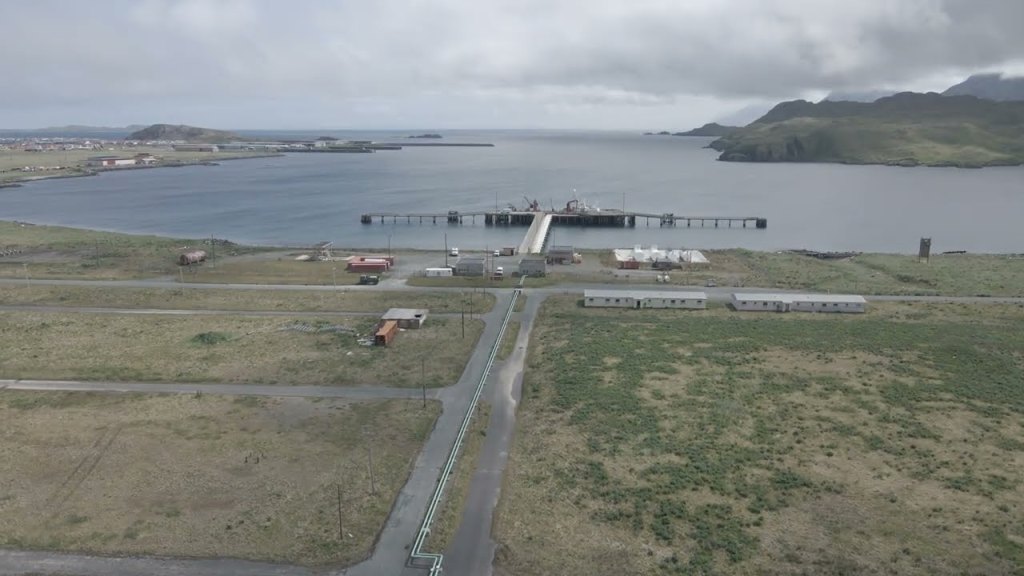
While all this underwater drama was unfolding, we headed for a spot in the open ocean where no one could easily surveil us and broke radio silence to ask for instructions. Pacific Submarine Force (SubPac) replied in a few hours with a message that probably went something along the lines of “Proceed undetected to Nome Alaska where a Naval aircraft will rendezvous. Do not divulge to officials in Nome the name of your submarine.”
We dropped anchor in Nome Harbor and our Executive Officer, LCDR. Meaux, rode the pilot boat to shore. He had an old, worn, leather jacket that had several ship’s patches sewn on it, but ours had not yet been added. He wore that to keep ‘em guessing.
Nome Airstrip
His mission was to secure a boat to transfer Chief Mac to shore, then arrange to get him moved to the Nome airstrip where a plane from Adak Naval Station was due to land. Plus manpower would be needed for the heavy lifting ashore. The Mayor of Nome and three City Councilmen said they would do it in exchange for a tour of the boat.
These burly bearded guys looked like gold miners with their plaid flannel shirts and insulated boots, not politicians. They stopped in the After Battery to chat with us for a few minutes. We went up on deck to get some eyeball liberty. Nome is a desolate looking place, a small town with big mountains and no trees. That Jack London book I read said they had saloons, but we never got the opportunity to carouse in them. We saw Chief Mac off with his escorts aboard a 16 foot outboard motorboat, and when they departed for shore we departed for that who knows where place again. It was back to work for us, the ocean wasn’t going to survey itself.
Chief Quartermaster Davis was due to be transferred so the Captain assigned him to escort Chief Mac on his travels. Davis reported back later that they flew to Anchorage in a P2V Neptune (an anti-submarine warfare plane, ironically) to do an autopsy. The Air Force Base Hospital staff was reluctant, so Davis put the Doctor In Charge on the phone with SubPac. Someone with a lot of horsepower convinced him it was in his best interests to comply. It turned out that a cerebral hemorrhage had caused his death. After a stop in Seattle to attire Chief Mac in a new dress blue uniform, he and Davis were flown to Arlington National Cemetary where his family was gathered for the burial. Chief Davis presided over the ceremony.
Chapter 2. PASS THE PEAS, PLEASE!
And there we were, again!
To make up for the time lost on that little side excursion to Nome our patrol was extended. The cooks hadn’t planned for this circumstance. We still had dehydrated and frozen food, plus flour and coffee, but we ran out of canned food. (For you non bubbleheads, the last of the fresh food was gone six weeks ago). A mess cook was sent to the After Torpedo Room to see if they had missed any provisions stored there. He laid down on his belly in the bilges with a battle lantern, peering into the dark recesses. The light reflected off of something shiny stuck under number ten torpedo tube. He slithered over and pulled it out. It was a can of green peas.
Number 10 cans.
Rumor of his discovery spread like wildfire. The only things we had to look forward to while on patrol to were watching movies and eating, and the movies weren’t very recent (think Rory Calhoun westerns). Canned green anything, yum, that was the next best thing to fresh veggies. A #10 can only holds 3 quarts which would have to be shared by 85 submariners.
We didn’t have space for a surface ship style buffet line, so we always ate family style in three shifts. Mess cooks would put food on the tables and we would take as much as we wanted of each dish. This method worked well and I still wear the belly fat to prove it. These green peas would be in high demand, so the mess cooks were instructed to personally put two tablespoons on each of our plates. I am sure the cook added bacon or dehydrated onion or something to give the peas more volume. There were no leftovers.
When the message arrived that we had surveyed the whole damn ocean and could head south, we gathered on the mess decks and were served a celebratory concoction made with Gilly (180 proof alcohol used in the torpedos, mixed with bug juice similar to kool aid but nastier). Each of our three watch sections would receive their share of this high end hooch after being relieved from duty, as we were not allowed to drink and dive.
Chapter 3. WE GET CRABS!
And then we weren’t there.
We reported our food situation to SubPac and were instructed to pull into Adak Naval Station and take on a weeks worth of vittles to sustain us during our return voyage to Pearl. And, oh, by the way and more importantly, Commander Submarine Force Pacific Admiral Maurer is hosting a big shindig and needs about a ton of crabs which just happen to be stored at Adak. Could you please transport them for him?
Adak, Alaska
Adak is an austere 28 mile long island in the Aleutian Chain, ideally situated for Navy patrol planes to keep an eye out for bad guys. The Tiru tied up to a pier and we loaded stores, sampling various fresh fruits as they were passed hand to hand aboard and stowed below. Not ones to disappoint an Admiral (especially one with two Silver Stars and the Navy Cross), we manhandled cases of crabs down the After Battery hatch and stashed them in our nearly empty freezer.
Admiral Maurer was to do a walk thru as we transited the Pearl Harbor channel, and the boat needed to be thoroughly cleaned. Everything in the Engine Rooms was covered with ‘snorkel dust’, a combination of diesel fuel, lubricating oil, and hydraulic oil bound together with dried salt and carbon from the engine exhaust. Our Chief Engineman, Eugene Gaito (a short New York Italian with a white beard and twinkling eyes, who made all 9 war patrols on USS Bowfin), told me and a couple of other snipes to go to the Adak Commissary and buy cleaning gear. First we went to Chief Of The Boat Christofferson (another WWII Submarine Veteran who had so many medals he had a port list when in his dress uniform) to get some cash from the slush fund, but he turned us down so we had to use our precious beer money for soap and such. We bought the then new ’409’ cleaner which worked so well I still use it to this day.
We got liberty on this port call. The only places to drink on Adak Island were the Officers Club, Chiefs Club, and Enlisted Mens Club. So off we went to mingle with the airdales and other sailors that called this secluded base home. When the EM Club closed, most of us stumbled back to the boat. But the Torpedomen had other ideas.They went to explore “Adak Forest”, which consisted of a traffic circle with the only three trees growing on the island. And a single totem pole.
Early the next morning the Adak Base Police were aboard wanting to know where their totem pole was. As we were the only ship in port we were the prime suspect. This totem pole was no virgin, having been stolen several times before. We heard she made it to Pearl Harbor once, and had to be flown home. They found her resting peacefully in the still torpedoless #2 torpedo tube. They got their totem pole back and we got underway.
Chapter 4. PEARL
And then we headed home.
We ate well on our southward voyage, boiled crab with canned green peas, and fresh salads, and omelets made from real eggs, not the dehydrated powdered crap we had been eating. The Engine Rooms warmed up enough to stand watch sweating and shirtless again. We could cruise on the surface and hang out on the bridge breathing fresh air and enjoy looking at the ocean without the use of a periscope. Life was good.
ComSubPac Admiral Maurer did his walk through, and we transferred his crabs after we tied up at the Submarine Base.The married men went home to catch up on their TV watching, so they said. Us single guys went to the barracks and took a shower, splashed on a quart and a half of Old Spice to mask the diesel submarine smell located deep in our pores, traded our filthy dungarees for spiffy civvies, and headed for our usual haunts in Honolulu.
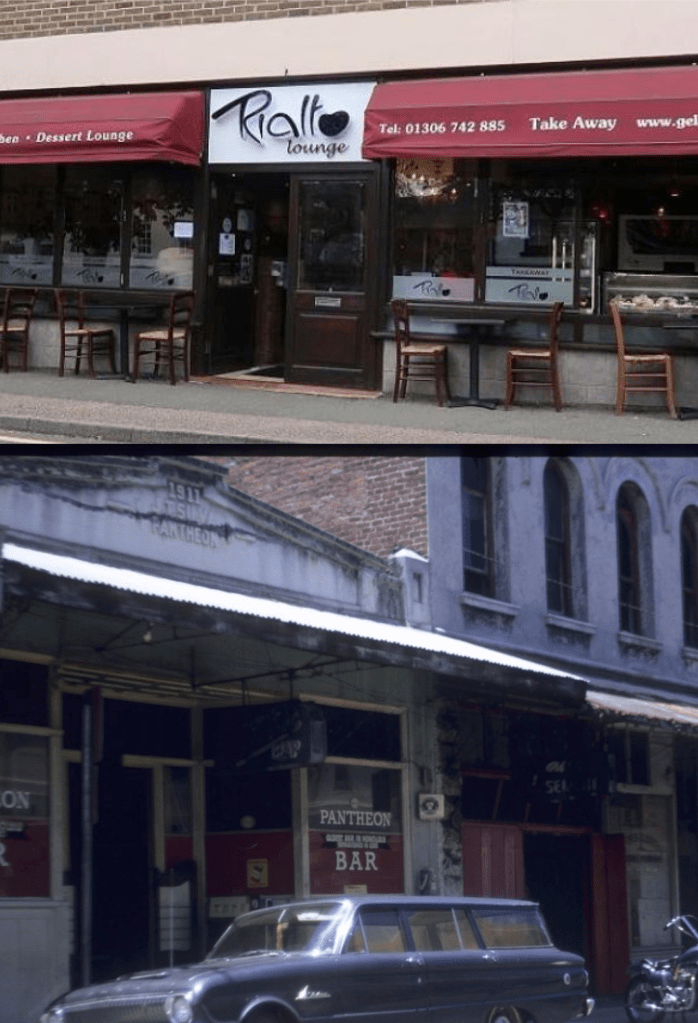
Our first stop was The Dolphin Club on Beretania Street to check in with Big Mary and the girls. We toasted Chief Mac there, and walked to the Pantheon Bar on Nuuanu Avenue and toasted Chief Mac again. There were probably a few other fine drinking establishments that we patronized before arriving at the Rialto Lounge on Hotel Street. This had been Chief Mac’s favorite hangout. Besides the obligatory jukebox, the Rialto had a bowling machine and a shuffleboard that gave us squids something to spend our money on while drinking. It may be just my imagination, but I can still picture Chief Mac sitting on a stool with his back against the Rialto’s bar, smiling at our gin mill antics with the neon beer signs reflecting off of his bald head. We intrepid sailors of the USS Tiru raised our bottles of Primo and Oly and Lucky Lager and said “Here’s to Electrician’s Mate Senior Chief Edward McKeon. Fair Winds And Following Seas, Shipmate.”
Rialto Lounge Hotel St. / Pantheon Bar Nuuanu Ave.
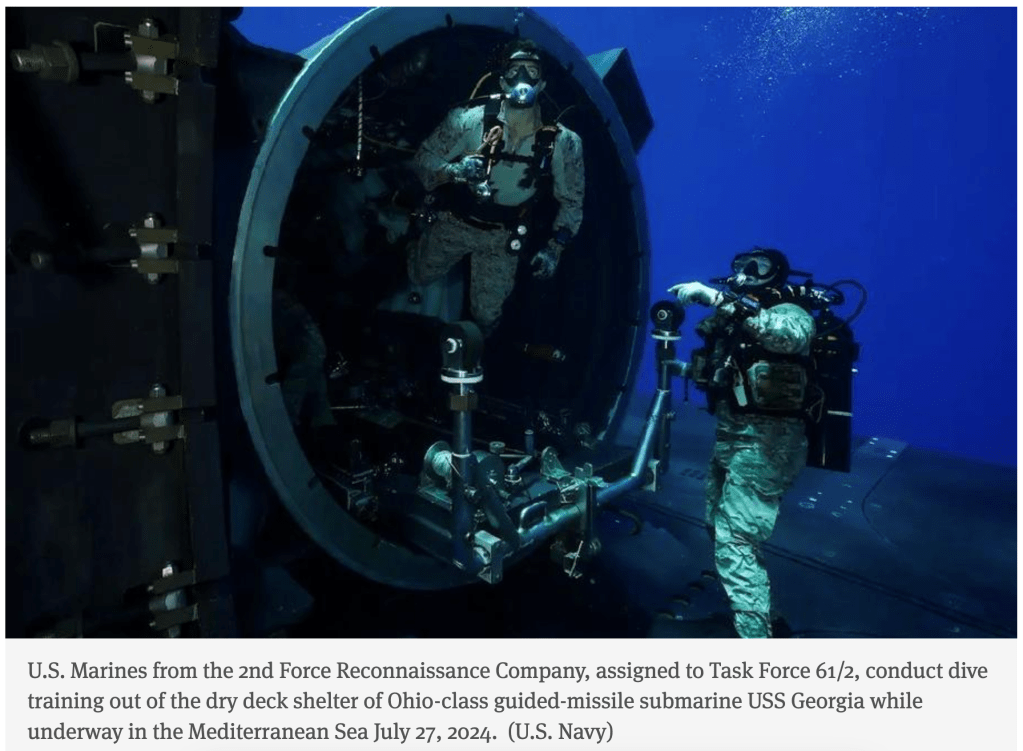
A U.S. submarine recently trained with American and allied forces in the Mediterranean Sea as the Pentagon bolsters its forces in the Middle East amid deepening worries of an Iran-Israel conflict.
The guided-missile submarine USS Georgia finished a series of training events with Force Reconnaissance Marines from the 2nd Reconnaissance Battalion and special operations forces on Monday, U.S. Naval Forces Europe-Africa/U.S. 6th Fleet said in a statement posted to its website on Friday.
To perpetuate the memory of our shipmates who gave their lives while voluntarily serving in submarine warfare in the pursuit of their duties while serving their country. That their dedication, deeds and supreme sacrifice be a constant source of motivation toward greater accomplishments. To further promote and keep alive the spirit and unity that existed among submarine crewmen during World War II. To promote sociability general welfare and good fellowship among our members. To pledge loyalty and patriotism to the United States of America and it’s constitution.
1. Bowfin Pearl Harbor Base
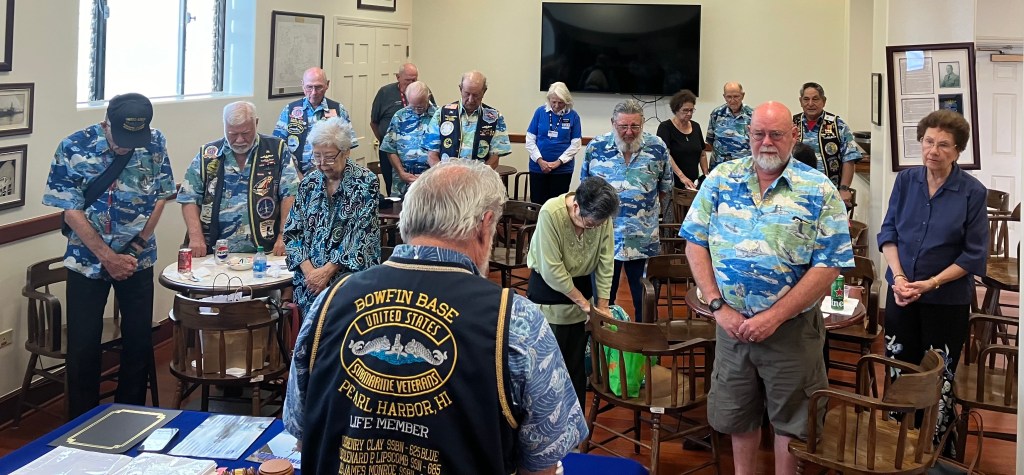
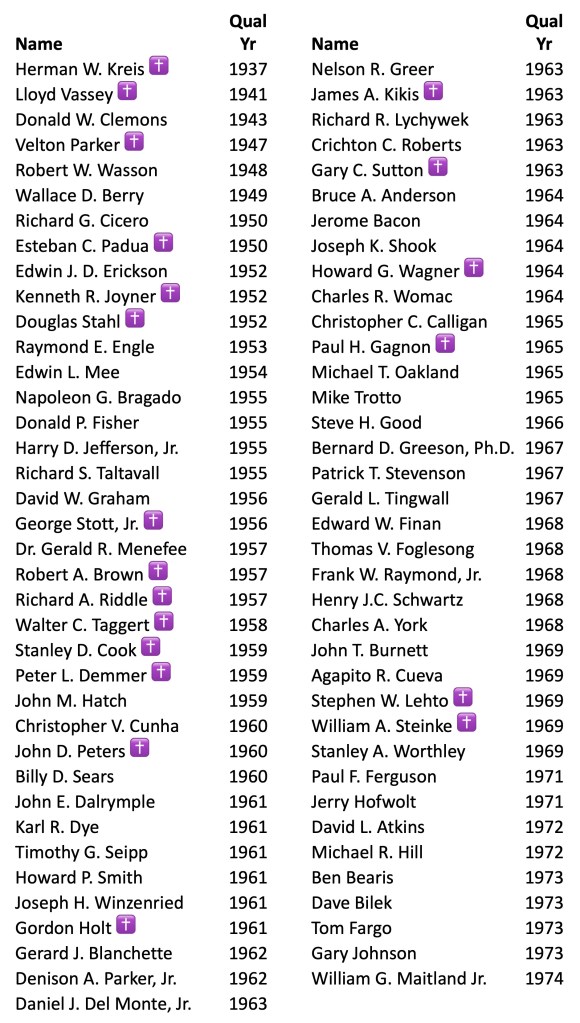
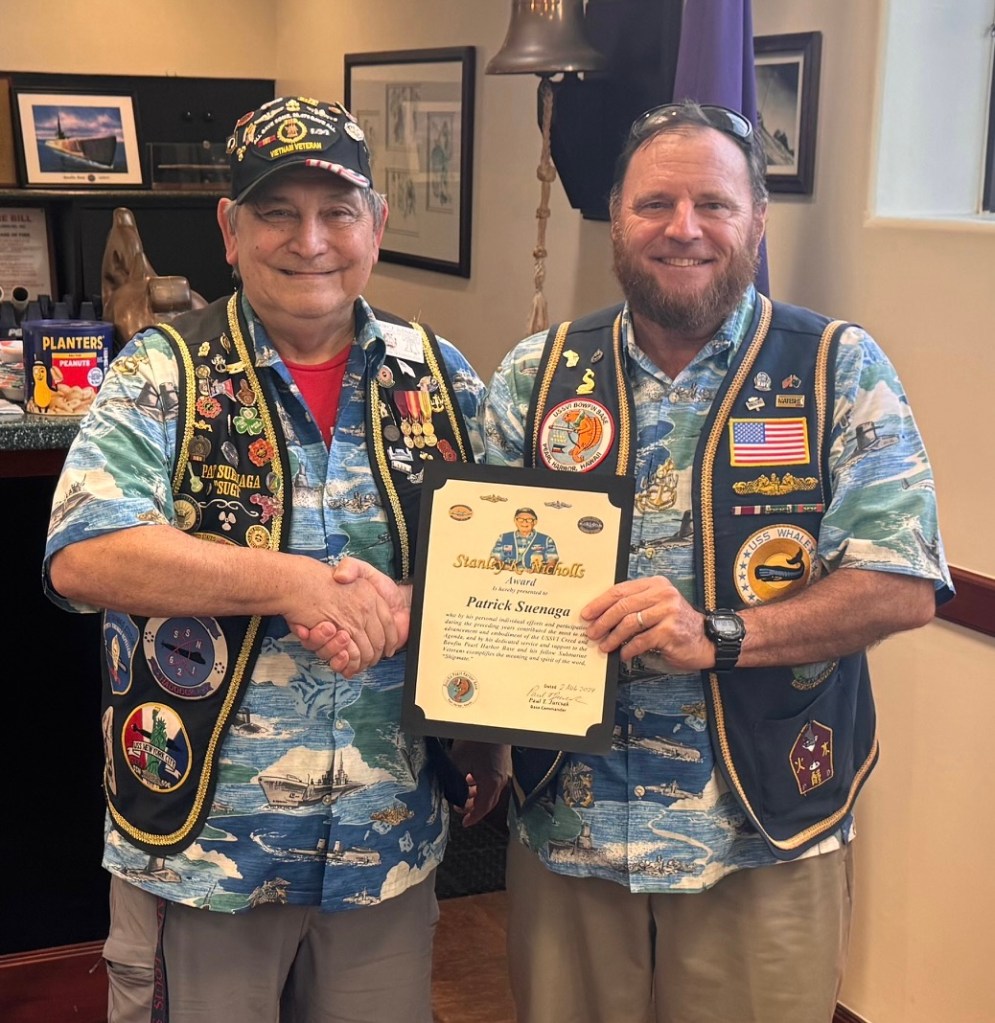
Bowfin Meeting – We conducted our August meeting at Clean Sweep Bar, Lockwood Hall. The following members attended – Base Commander Paul Jurcsak, Vice Commander Tim Sparks, Secretary Brett Kulbis, COB Gary Johnson, and members David Bilek, Allen Clemons, Karl Dye, Nelson Greer, Gary Grisham, Ben McGowan, Ace Parker, Crichton Roberts, Pat Suenaga, Wade Thode, and Joe Winzenried.
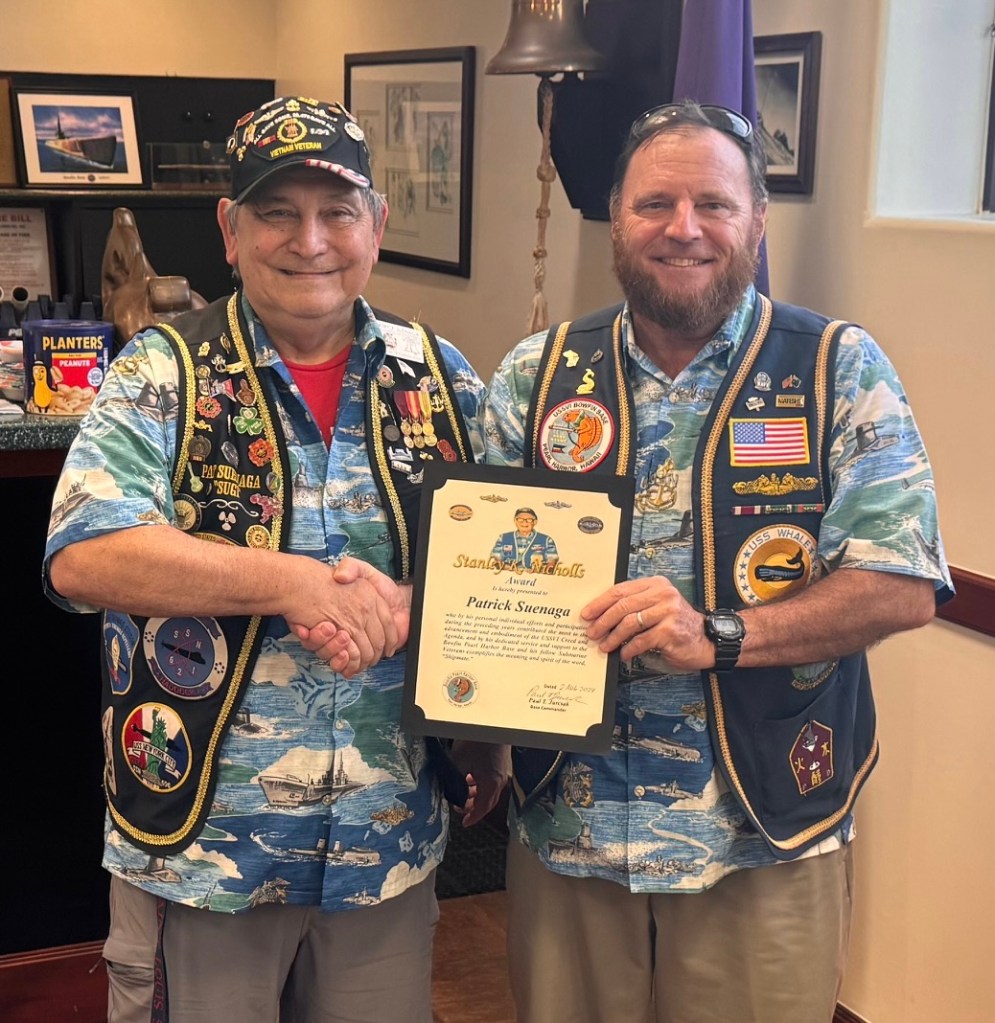
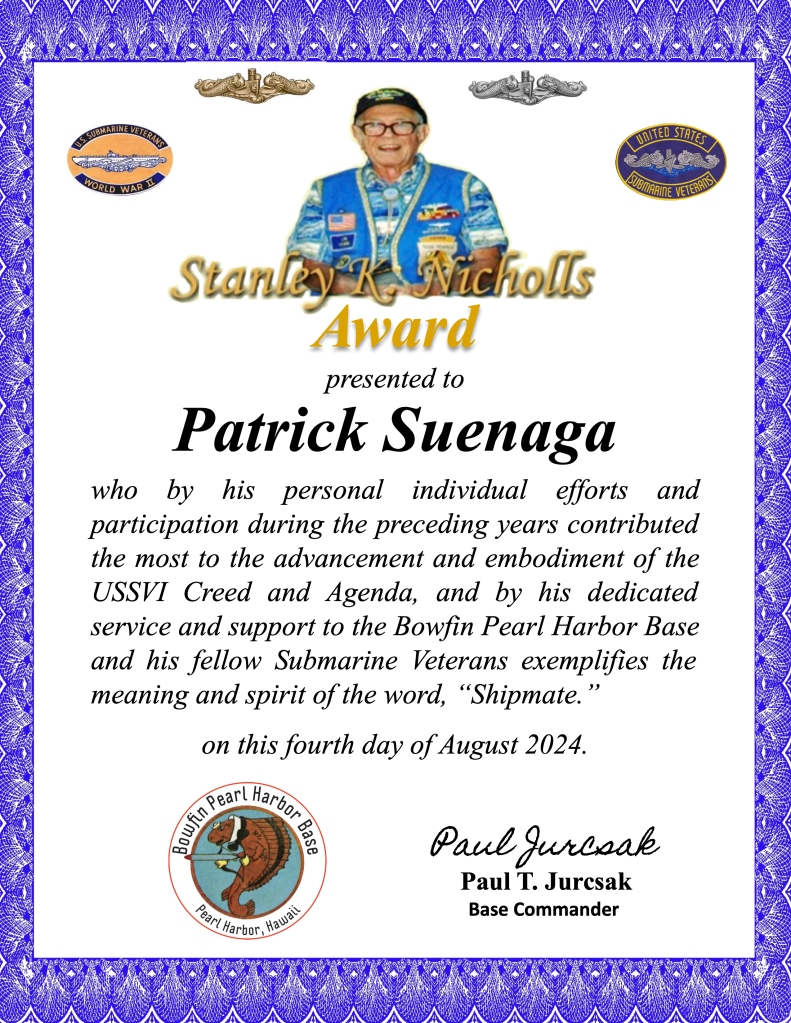
Bravo Zulu – Pat Suenaga our 2024 Stanley K. Nichols Award Winner!
Binnacle List – Please keep the all our members and their families in your good thoughts and prayers, especially Paul Ferguson, Chris Cunha, and John Hatch.
Hauʻoli Lā Hānau! Bowfin Birthdays for the month ofAugust.
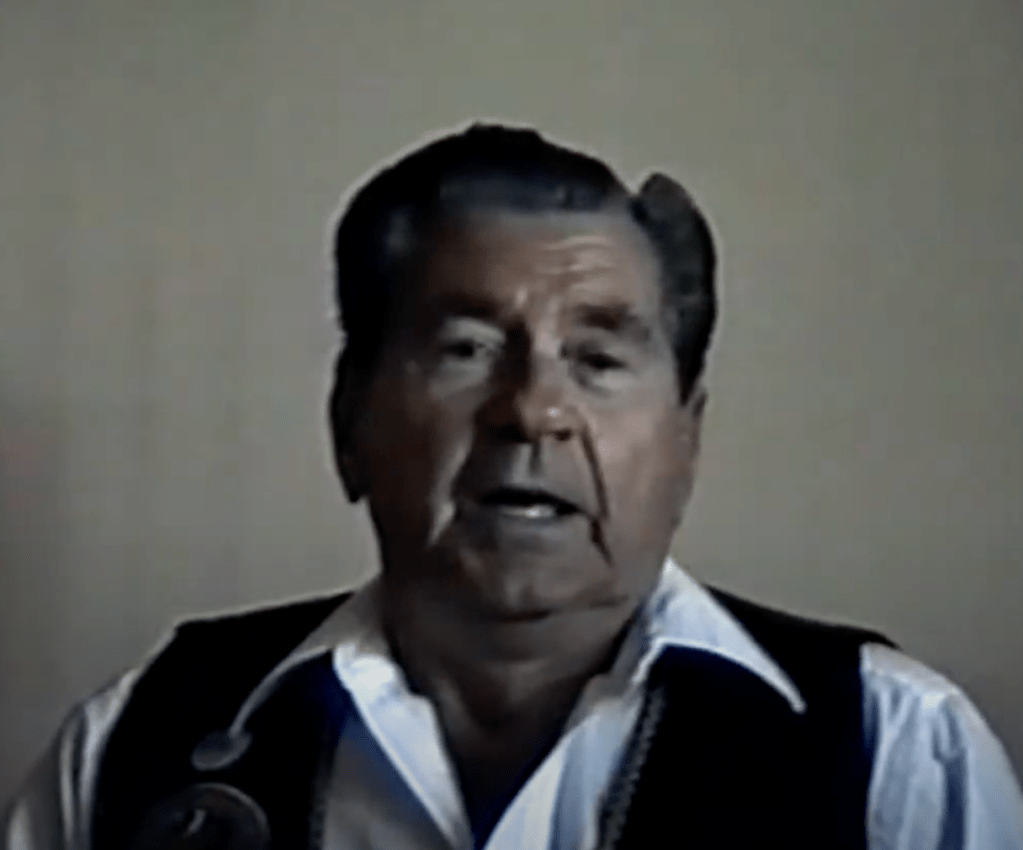
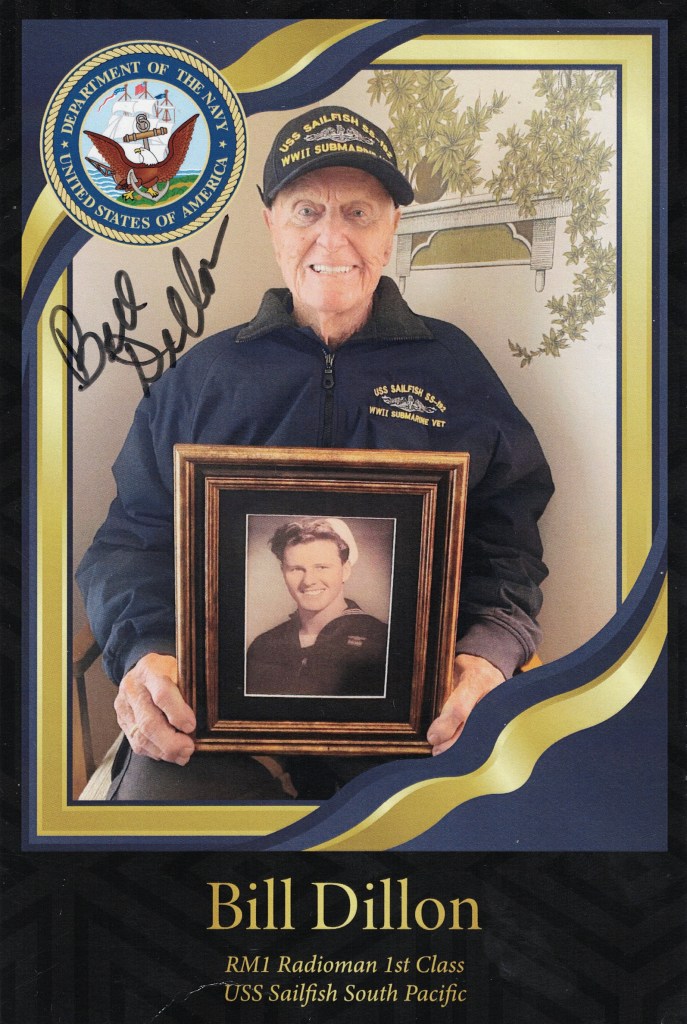
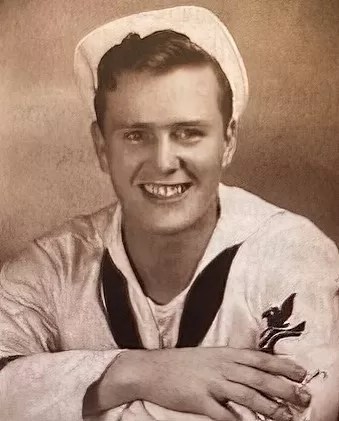
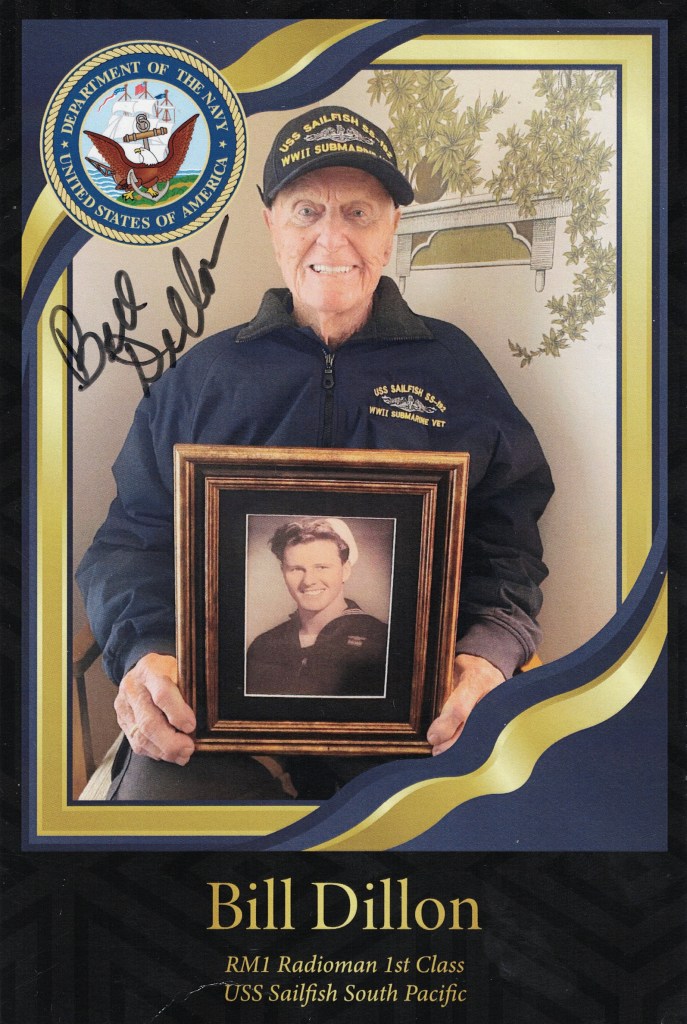
Bill Dillon was a submariner on the USS Sailfish, a radioman first class, and collaborated with the author Stephen L. Moore to tell the harrowing story of how the Sailfish sunk a Japanese Carrier.
Bill Dillion was just 17 when he signed up for military service. He received two Bronze Stars, one with valor, but it’s what he did after the war that he says is most important to him. “During the war I was killing people,” he recounts. “After the war I began helping them.”
Today, he is the sole survivor of the 200 men he served with on the Sailfish, and the last American survivor of the battle of Formosa. Bill served in the Navy from May 1942 to November 1947.
After an undefeated football season, Bill quit high school in his junior year to join the Navy. He was sent to submarine school in New London, CT and then assigned to the submarine the USS Sailfish (SS 192). This submarine was formerly the USS Sgualus which had sunk off the coast of New Hampshire during a test dive in 1939. While 26 crew members were lost, there were 33 rescued and the ship was later salvaged and renamed the USS Sailfish.
Bill served on the USS Sailfish from January 1943 until it was decommissioned in 1945. They had 5 Major War Patrols. The Sailfish sunk several Japanese commercial and military vessels, including an aircraft carrier and 2 destroyers. And rescued 12 pilots and crew that had been shot down or run out of fuel during the Battle of Formosa. They took the rescued airmen to Saipan and returned to their combat war patrol.
Bill remained in the service and got married January 5, 1946 to, Janet, his high school sweetheart. Bill received his GED and applied for college the same date and graduated in June 1951 from the University of Florida.
The U.S. space industry was just beginning, and I became a member of the launch team that placed the first U.S. satellite into orbit. He worked on several different programs including 13 down-range tracking sites; developing the first electronic checkout of launch vehicles; the initial working on the GPS system for Assistant Defense Secretary David Packard; served as Solid Rocket Booster Manager for the Air Force Titan 3 Program; and become the Systems Design Manager for the highly secret system of satellite-tracking all vehicles in space. Receiving a major citation.
Bill and his late wife, Janet, were married for 72 years and had 7 children. There are now 12 grandchildren and 12 great- grandchildren and the family is still growing.







 Bowfin Pearl Harbor Base