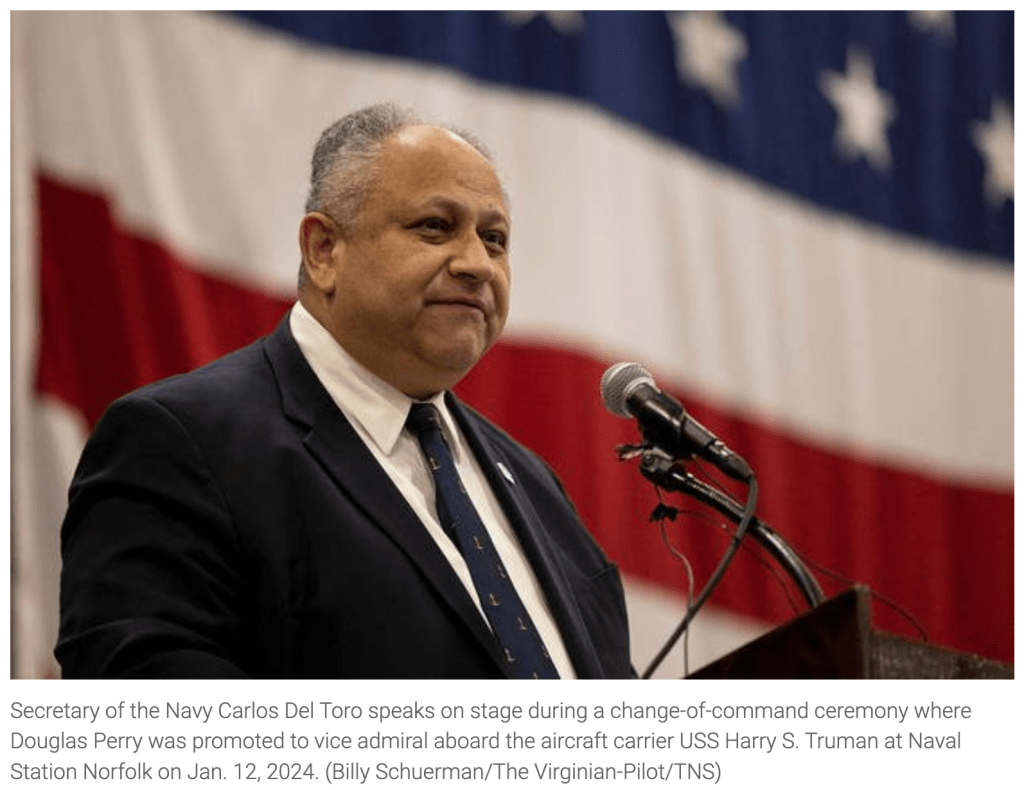
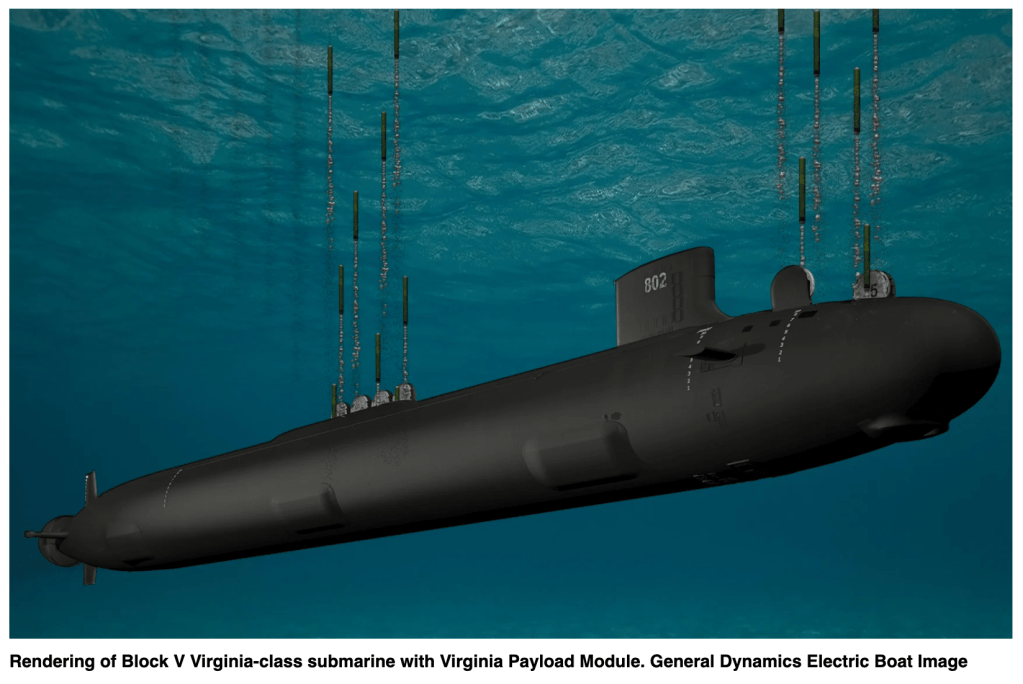
The future Virginia-class nuclear-powered attack submarine SSN 812 will be named USS Baltimore, secretary of the Navy Carlos Del Toro announced Friday during a ship naming ceremony in Baltimore.
“The city of Baltimore maintains a strong connection with our maritime services and is a critical enabler of our National Maritime Statecraft,” Del Toro. “It is my honor and privilege to announce the name of the next Virginia-class nuclear-powered submarine, SSN-812, USS Baltimore.”
The Navy’s new Virginia-class submarines are projected to run $17 billion over their planned budget through 2030, a problem emblematic of a crisis in the program, the House’s top lawmaker on defense spending disclosed.
“It’s clear that the Navy and shipbuilders have known about this shortfall for at least 18 months” but “Congress was notified just two weeks ago,” Representative Ken Calvert, chairman of the House defense appropriations subcommittee, said in remarks released Thursday before a classified hearing with Navy Secretary Carlos Del Toro.
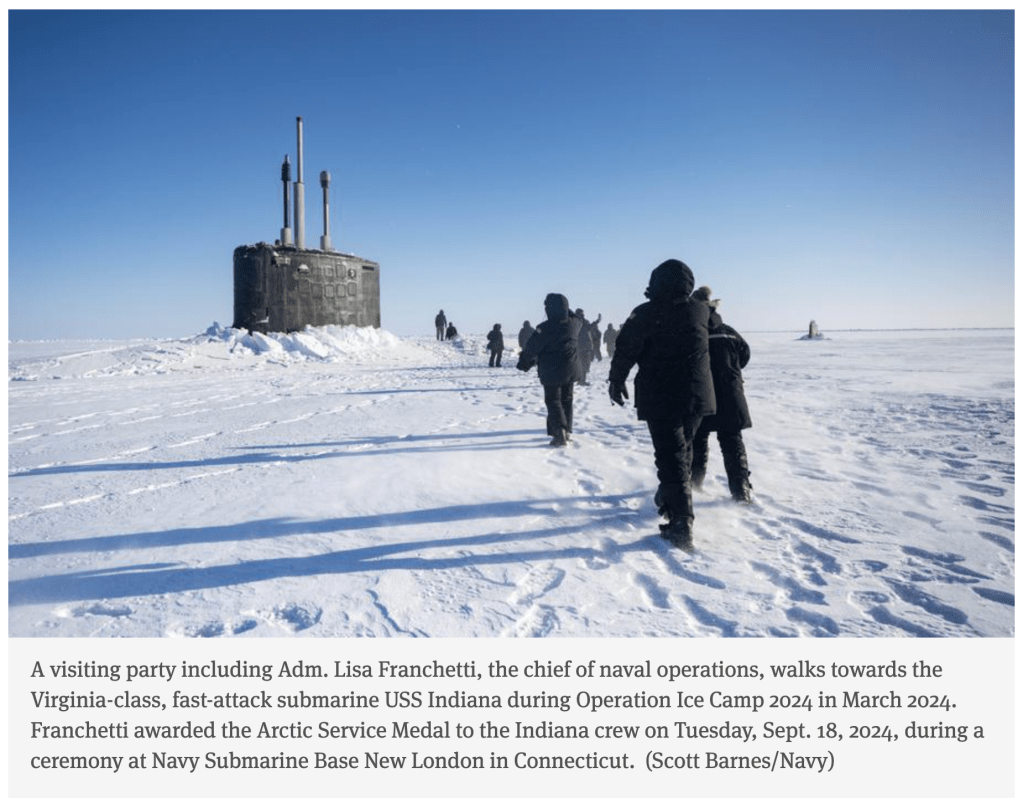
The crew of the USS Indiana, a Virginia-class, fast-attack submarine that spent three weeks in the seas near the North Pole during Operation Ice Camp 2024, were awarded the Navy’s Arctic Service Medal on Tuesday.
The Arctic Service Medal is awarded to Navy and Marine personnel who show “excellence and significant contributions to national security and maritime superiority in the Arctic region,” according to a Navy statement.
The submarine USS Georgia has arrived in the Middle East, joining two aircraft carrier strike groups in the region, the Pentagon said Tuesday.
The Georgia — an Ohio-class, ballistic-missile submarine — was ordered Aug. 11 to sail to the CENTCOM region by Defense Secretary Lloyd Austin as tensions between Israel and Iranian proxy forces reached a boiling point. The submarine carries up to 154 Tomahawk cruise missiles along with Mk48 torpedoes, according to the Navy.
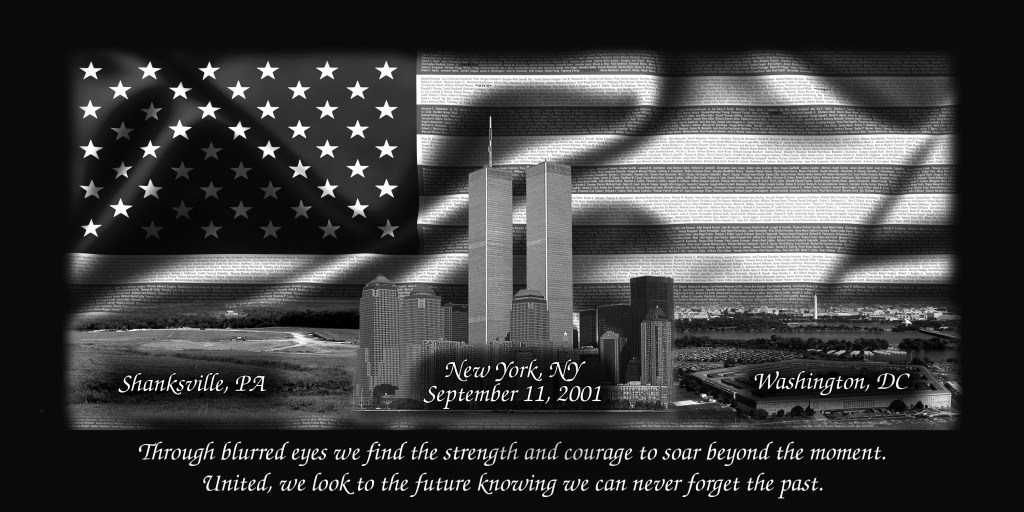
On September 11, 2001, nineteen al-Qaeda terrorists hijacked four passenger airliners so they could be flown into buildings in suicide attacks. Two of those planes, American Airlines Flight 11 and United Airlines Flight 175, were crashed into the North and South towers, respectively, of the World Trade Center complex in New York City. Within two hours, both towers collapsed with debris and the resulting fires causing partial or complete collapse of all other buildings in the WTC complex, as well as major damage to ten other large surrounding structures.
A third plane, American Airlines Flight 77, was crashed into the Pentagon (the headquarters of the United States Department of Defense), leading to a partial collapse in its western side.
The fourth plane, United Airlines Flight 93, was targeted at Washington, D.C., but crashed into a field near Shanksville, Pennsylvania after its brave passengers tried to overcome the hijackers.
In total, 2,977 people died in the attacks, including the 227 civilians on the four planes and 412 first responders in New York City.
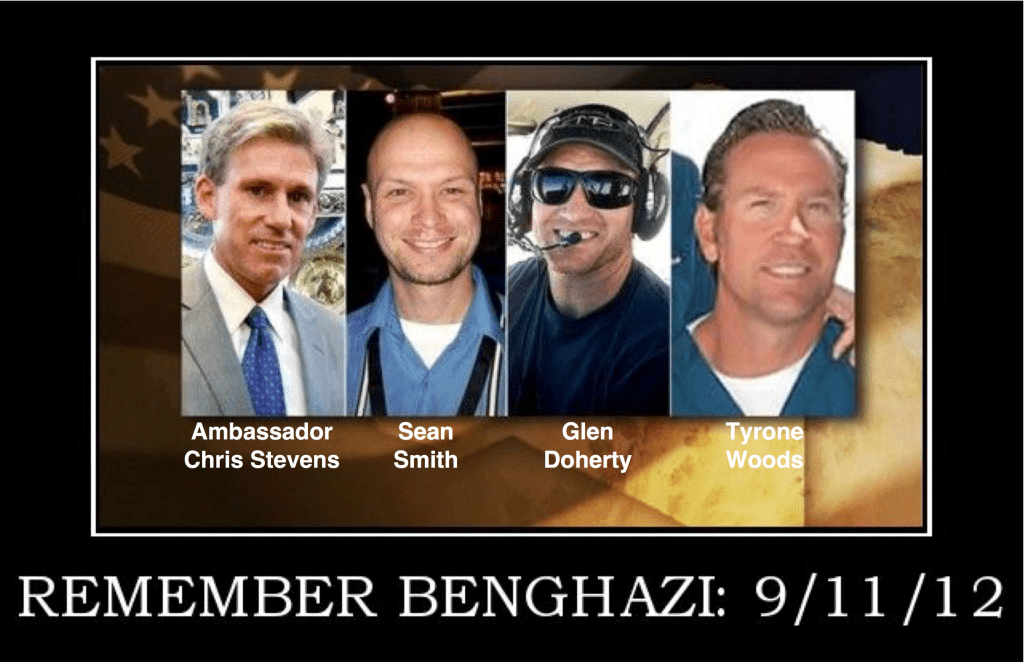
On September 11, 2012, a heavily armed group of militant terrorists attacked the American diplomatic mission at Benghazi, Libya. The attack began at night in a compound meant to protect the main diplomatic building. A second assault in the early morning the next day targeted a nearby CIA annex in a different compound. Four Americans were killed, U.S. Ambassador J. Christopher Stevens, Sean Smith, Tyrone Woods and Glen Doherty. Ten others were injured.
Although this attack took place in Libya, it happened on American soil. Our embassies and consulates are U.S. soil, and the attack in Libya violated a U.S. territory. These terrorist attacks are as heinous as if they happened in Honolulu.
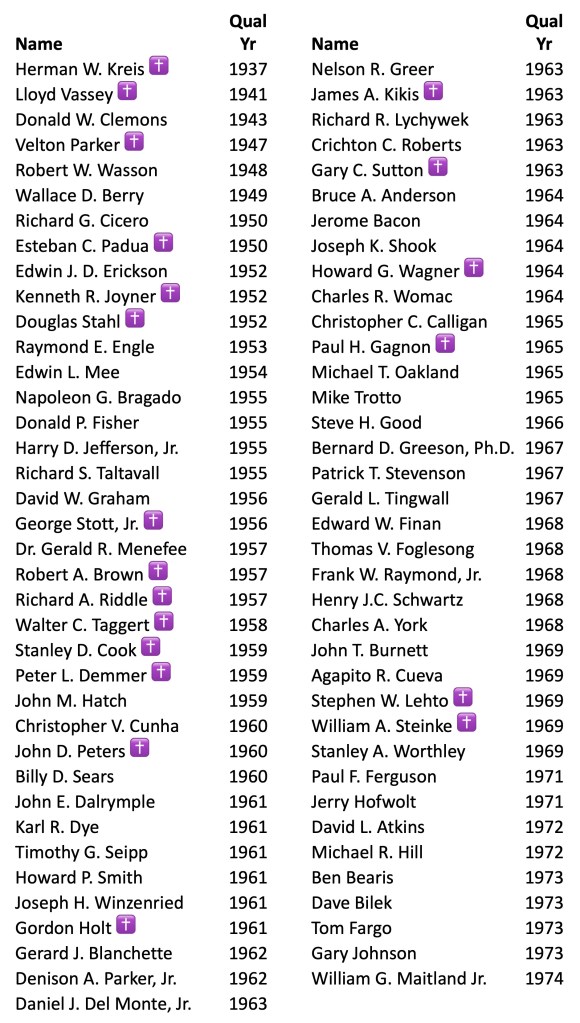
To perpetuate the memory of our shipmates who gave their lives while voluntarily serving in submarine warfare in the pursuit of their duties while serving their country. That their dedication, deeds and supreme sacrifice be a constant source of motivation toward greater accomplishments. To further promote and keep alive the spirit and unity that existed among submarine crewmen during World War II. To promote sociability general welfare and good fellowship among our members. To pledge loyalty and patriotism to the United States of America and it’s constitution.
1. Bowfin Pearl Harbor Base
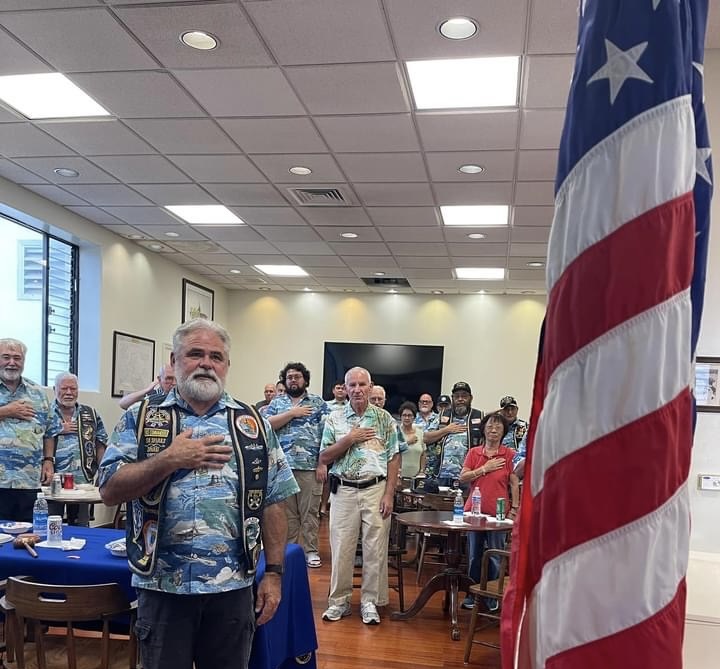
Bowfin Meeting – We conducted our September meeting at Clean Sweep Bar, Lockwood Hall. The following members attended – Base Commander Paul Jurcsak, Vice Commander Tim Sparks, Secretary Brett Kulbis, Treasurer Carl Tatro, COB Gary Johnson, and members Dave Atkins, George Barlett, Hap Belisle, David Bilek, Rodney Boucher, Allen Clemons, David Danby, Dan Del Monte, Karl Dye, Ben McGowan, Crichton Roberts, Pat Suenaga, Wade Thode, and Joe Winzenried.
Welcomed Guests – Miya Bilek, Judy McGowan, Edie Clemons, Wes and William Thode.
Binnacle List – Please keep the all our members and their families in your good thoughts and prayers, especially Paul Ferguson, Chris Cunha, Pete Cueva, John Hatch and Charlie Womack.
Hauʻoli Lā Hānau! Bowfin Birthdays for the month ofSeptember.
2014 – Location for USS Growler plaque at Arizona Memorial identified. 2008 – Newsletter of Year 2008 (Class III 2nd Place) 2007 – Newsletter of the Year 2007 (Class III Runner-Up) 1988 – POW Medal Awarded to USSVI of WWII Hawaii Chapter member Herb Conser.
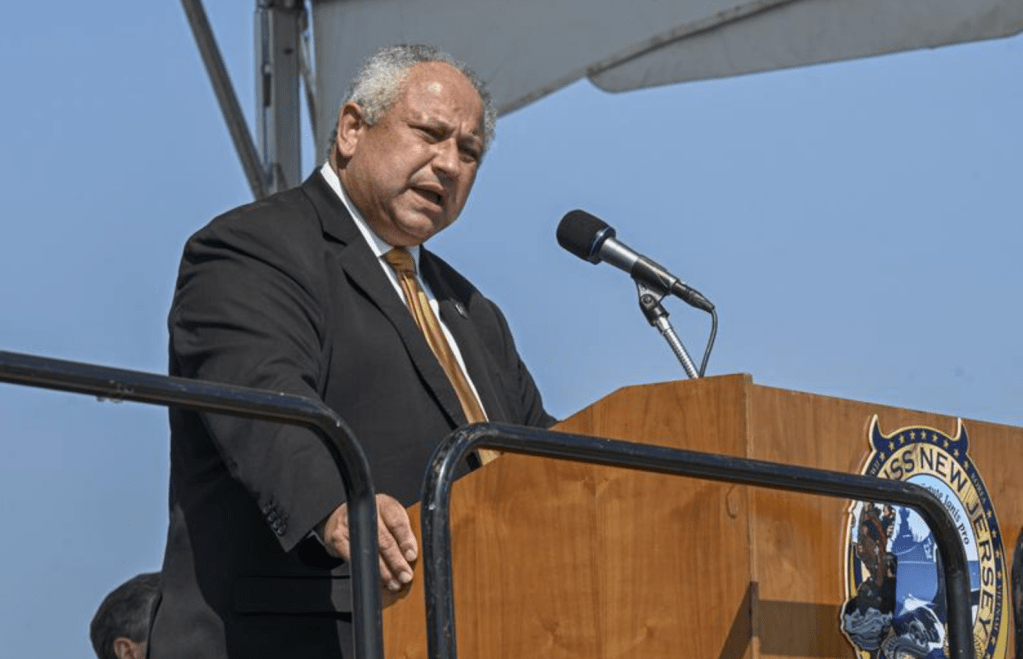
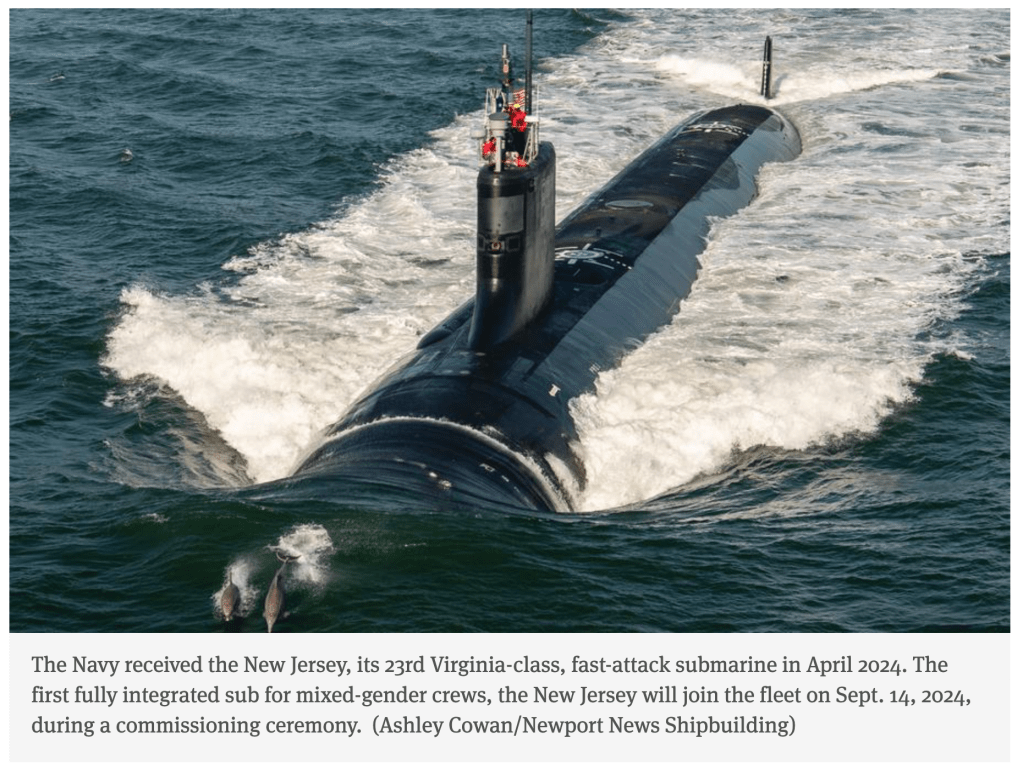
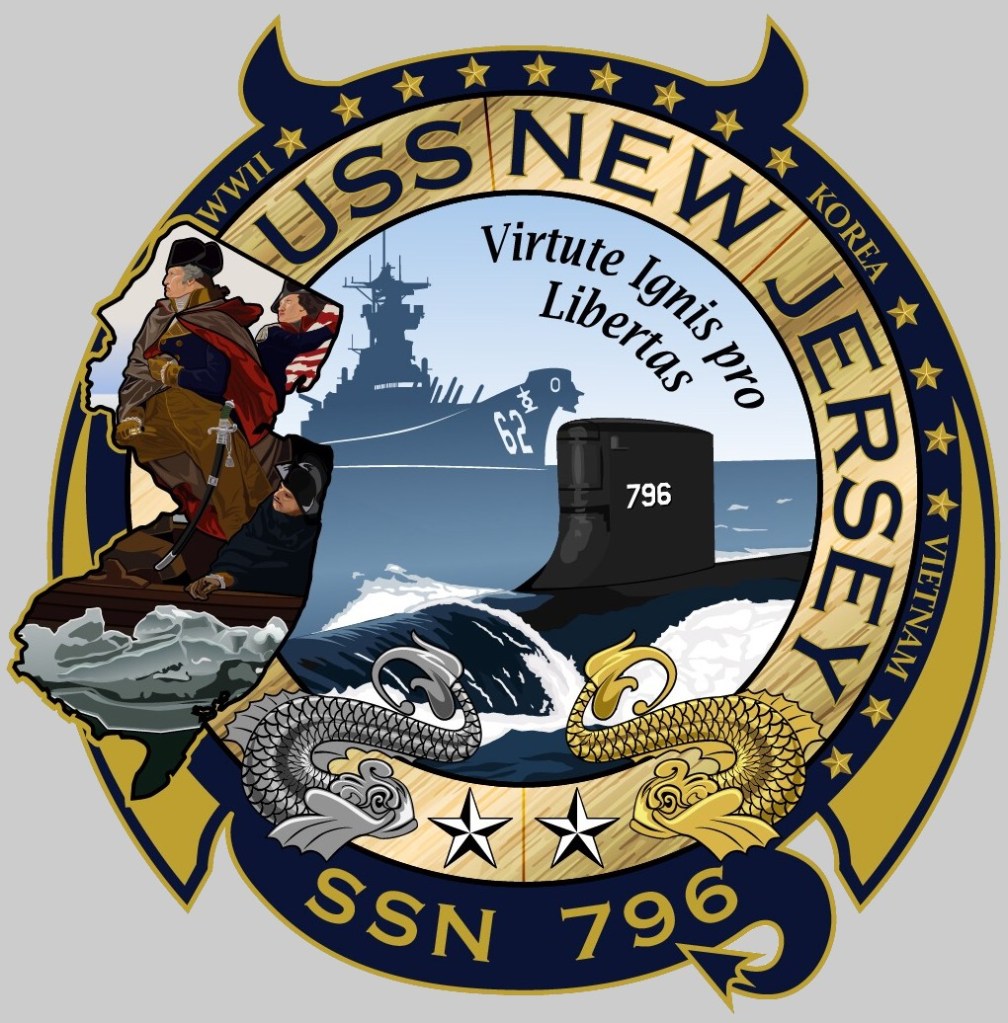
The first submarine fully integrated for mixed gender crews will join the Navy fleet next week during a commissioning ceremony in its namesake state of New Jersey.
The USS New Jersey (SSN 796) is the 23rd Virginia-class submarine, but it is the first of its kind — designed from the keel up with specific modifications for gender integration.
The White House is asking Congress for $1.95 billion to make up for a price gap for two submarines already funded as part of the congressional Fiscal Year 2024 budget, USNI News has learned. The request was included in a list of anomalies the White House asked Congress to support in the event the government is funded by a continuing resolution past the end of the fiscal year on Sept. 30.
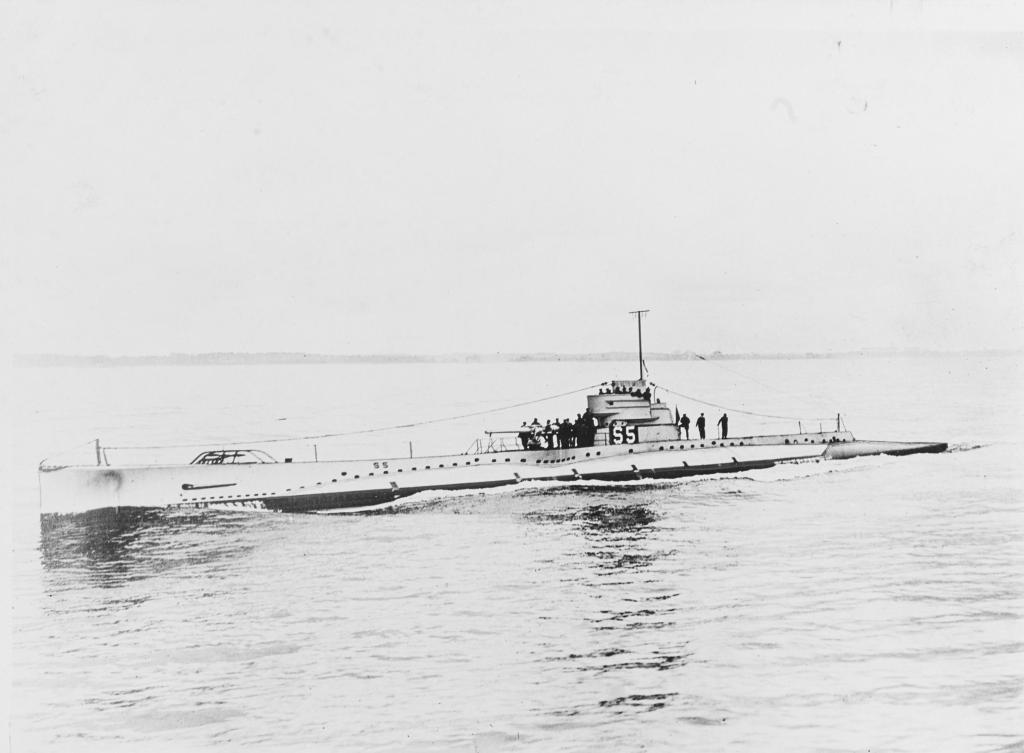
The S-5 rescue was a miraculous story of great determination and resourcefulness by the crew.
S-5 sank when the forward torpedo room was accidentally flooded preventing a successful surfacing. In a desperate move all main ballast tanks were blown to bring the stern out of the water. The result was more than 60 degree down angle with the nose stuck in the mud; 17 feet of the stern extended out of the water.
The crew was literally walking on the bulkheads; the decks had become bulkheads. There were 34 men on board, crowded into the aft compartments. All kinds of problems were overcome, but they were still trapped with no electricity other than flashlights. The commanding officer, LCDR “Savvy” Cooke, crawled into the tiller room with two chiefs. After eight hours of exhausting effort, using a breast hand drill, they drilled a ¾ inch hole through the pressure hull.
Several more holes were drilled and connected with handsaws and chisels. The effort produced a hole of 1 ½ inches by 4 inches. It was large enough to push a stick with the captain’s shirt on it out of the hole. By then the main problem was putrid air and lack of fresh water. After a painful wait, SS Alanthus’s Captain Johnson was attracted by the odd sight. The ship’s captain approached this small Tower of Pisa in a rowboat.
Using the small opening the following conversation took place:
Johnson: “What ship is this?”
Cooke: “S-5. U.S. Navy”
Johnson: “Who is speaking?”
Cook: “LCDR Charles Cook, commanding.”
Johnson: “Where is your destination?”
Cook: “To Hell by Compass!”
Whereupon both laughed.
This plate was cut from the stern of the USS S-5 to provide egress for the crew from the damaged submarine. The plate reads:
“Removed from the United States Submarine S-5 to allow the crew of that vessel to escape after being imprisoned for 37 hours, the S-5 while engaged in diving exercises flooded a forward compartment and sank at 2:00 pm September 1, 1920 in 165ft of water. After repeated efforts, the crew managed to bring the stern of the vessel to the surface. The vessel was lying at an angle of 60 degrees with the bow resting on the bottom. The crew managed to cut a small hole in the hull and by an improvised signal attracted the attention of the passing steamer ALANTHUS. Later the Pan-American steamer GEORGE W. GOETHALS arrived on the scene. The chief engineer of that that vessel, assisted by the chief engineer of the ALANTHUS, worked with a ratchet drill and chisel, removed this plate at 3:00am September 3, 1920 and the crew of S-5 numbering 34 men were rescued.“
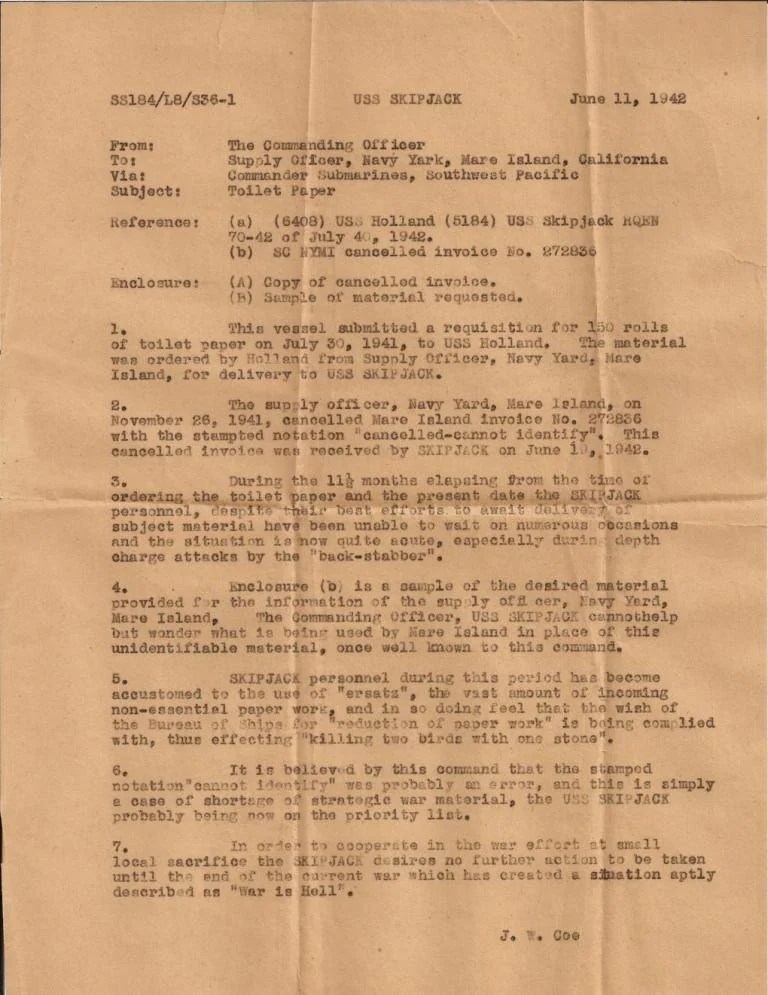
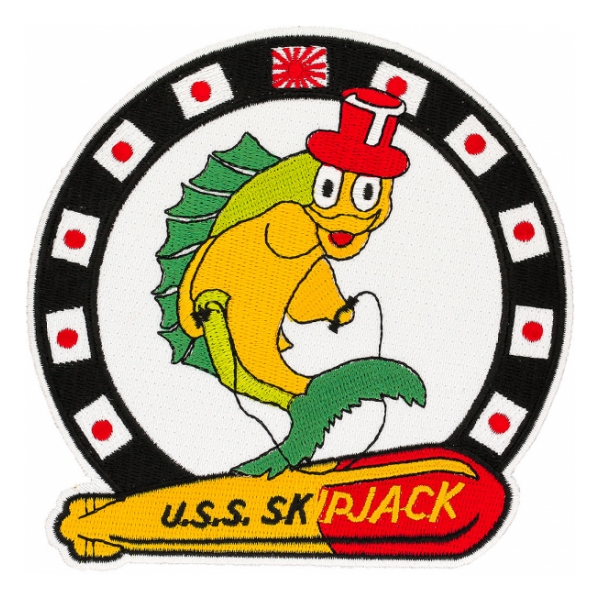
Lieutenant Commander James W. Coe was Commanding Officer of the USS Skipjack (SS 184) when he wrote his famous “Toilet Paper” letter to the Mare Island Supply Office.
USS SKIPJACK June 11, 1942
From: Commanding Officer To: Supply Officer, Navy Yard, Mare Island, California Via: Commander Submarines, Southwest Pacific Subject: Toilet Paper
Reference: (a) USS HOLLAND (5148) USS SKIPJACK req. 70-42 of 30 July 1941. (b) SO NYMI Canceled invoice No. 272836
Enclosure: (1) Copy of cancelled Invoice (2) Sample of material requested.
1. This vessel submitted a requisition for 150 rolls of toilet paper on July 30, 1941, to USS HOLLAND. The material was ordered by HOLLAND from the Supply Officer, Navy Yard, Mare Island, for delivery to USS SKIPJACK.
2. The Supply Officer, Navy Yard, Mare Island, on November 26, 1941, cancelled Mare Island Invoice No. 272836 with the stamped notation “Cancelled—cannot identify.” This cancelled invoice was received by SKIPJACK on June 10, 1942.
3. During the 11 3⁄4 months elapsing from the time of ordering the toilet paper and the present date, the SKIPJACK personnel, despite their best efforts to await delivery of subject material, have been unable to wait on numerous occasions, and the situation is now quite acute, especially during depth charge attack by the “back- stabbers.”
4. Enclosure (2) is a sample of the desired material provided for the information of the Supply Officer, Navy Yard, Mare Island. The Commanding Officer, USS SKIPJACK cannot help but wonder what is being used in Mare Island in place of this unidentifiable material, once well known to this command.
5. SKIPJACK personnel during this period have become accustomed to use of “ersatz,” i.e., the vast amount of incoming non-essential paper work, and in so doing feel that the wish of the Bureau of Ships for the reduction of paper work is being complied with, thus effectively killing two birds with one stone.
6. It is believed by this command that the stamped notation “cannot identify” was possible error, and that this is simply a case of shortage of strategic war material, the SKIPJACK probably being low on the priority list.
7. In order to cooperate in our war effort at a small local sacrifice, the SKIPJACK desires no further action be taken until the end of the current war, which has created a situation aptly described as “war is hell.”
J.W. Coe
Here is the rest of the story:
The letter was given to the Yeoman, telling him to type it up. Once typed and upon reflection, the Yeoman went looking for help in the form of the XO. The XO shared it with the OD and they proceeded to the CO’s cabin and asked if he really wanted it sent. His reply, “I wrote it, didn’t I?“
As a side note, twelve days later, on June 22, 1942 J.W. Coe was awarded the Navy Cross for his actions on the S-39.
The “toilet paper” letter reached Mare Island Supply Depot. A member of that office remembers that all officers in the Supply Department “had to stand at attention for three days because of that letter.” By then, the letter had been copied and was spreading throughout the fleet and even to the President’s son who was aboard the USS Wasp.
As the boat came in from her next patrol, Jim and crew saw toilet-paper streamers blowing from the lights along the pier and pyramids of toilet paper stacked seven feet high on the dock. Two men were carrying a long dowel with toilet paper rolls on it with yards of paper streaming behind them as a band played coming up after the roll holders. Band members wore toilet paper neckties in place of their Navy neckerchiefs. The wind-section had toilet paper pushed up inside their instruments and when they blew, white streamers unfurled from trumpets and horns.
As was the custom for returning boats to be greeted at the pier with cases of fresh fruit/veggies and ice cream, the Skipjack was first greeted thereafter with her own distinctive tribute-cartons and cartons of toilet paper.
This letter became famous in submarine history books and found its way to the movie (“Operation Petticoat”), and eventually coming to rest (copy) at the Navy Supply School at Pensacola, Florida. There, it still hangs on the wall under a banner that reads, “Don’t let this happen to you!” Even John Roosevelt ensured his father got a copy of the letter.






 Bowfin Pearl Harbor Base