
The Story of the Nautilus and the Nuns – New Years 1943
by Mister Mac
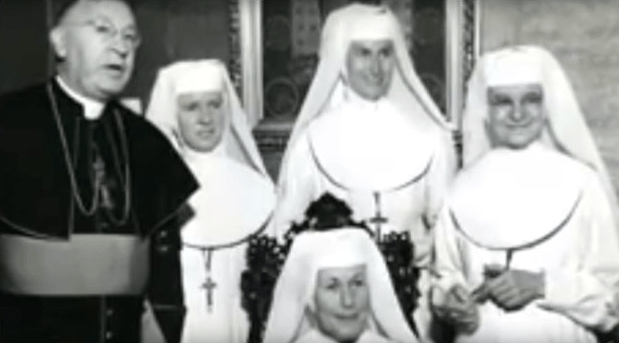
Eighty-two years ago this week, the submarine Nautilus shifted from her incredible role as a hunter killer to perform a mission of mercy. This is the story about the rescue of twenty nine refugees including four American nuns who became stranded behind Japanese enemy lines during World War II.
The Nautilus was originally named and designated V-6 (SF-9), but was redesignated and given hull classification symbol SC-2 on 11 February 1925. Her keel was laid on 10 May 1927 by the Mare Island Naval Shipyard of Vallejo, California. She was launched on 15 March 1930 sponsored by Miss Joan Keesling, and commissioned on 1 July 1930.
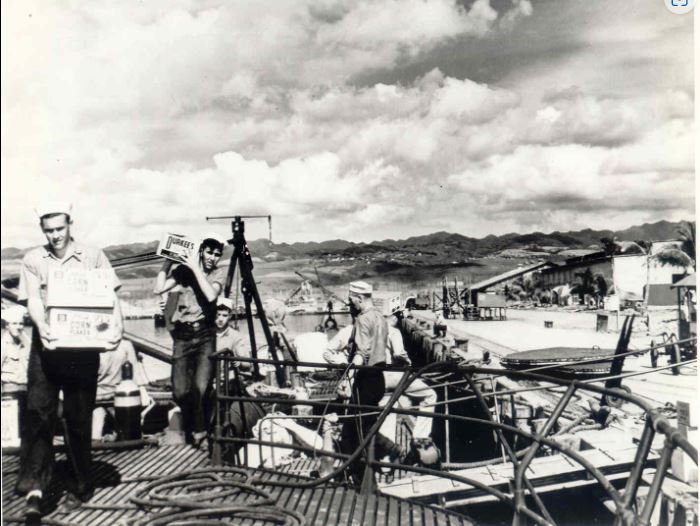
She was being refit in Mare Island during the Pearl Harbor attack but was ready by the time the Battle of Midway occurred. Her exploits included a daring raid on Makin Island landing a party of Marine Raiders. But this mission was certainly nothing the men had been prepared for.
The Nuns
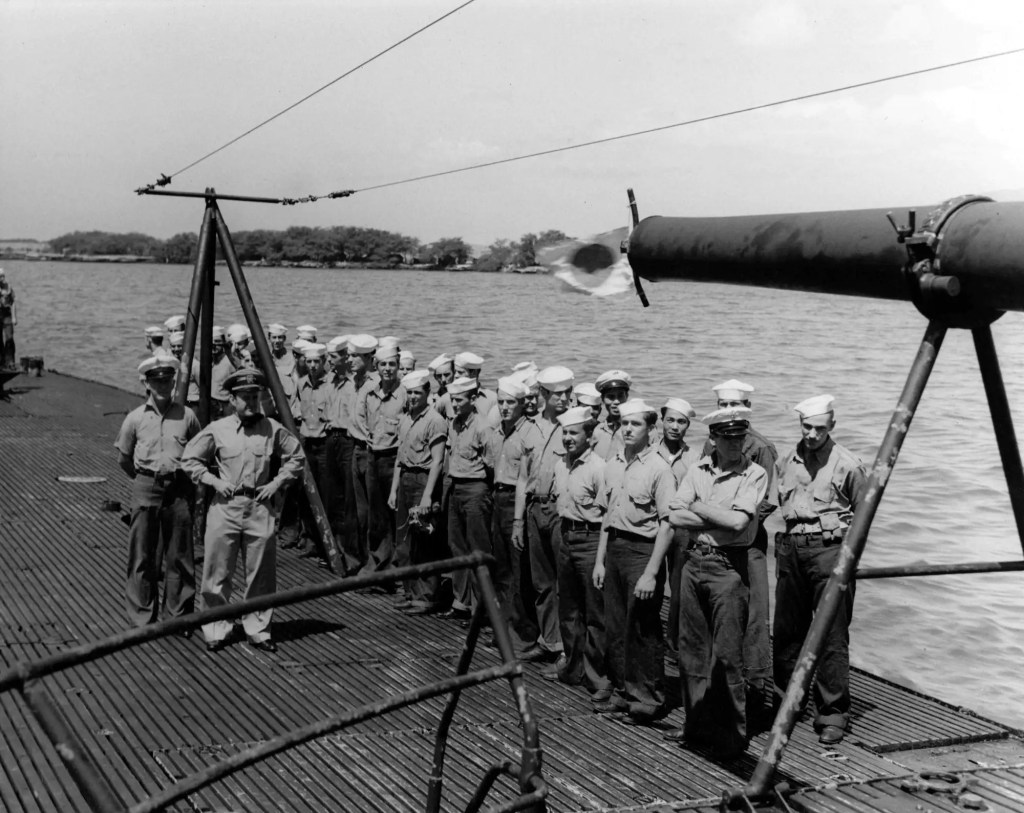
Two of the Sisters were teachers, and two were nurses. They had arrived in the Solomon Islands in December 1940. These young women were new to missionary life, confronting an unknown culture for the first time, and did not speak the languages spoken on the various islands. Also, they had to learn how to get around the jungle. One year after they arrived, the Japanese attacked Pearl Harbor.
The Japanese quickly occupied many of the islands in the South Pacific. The nuns had been deeply involved in a village on the island of Buka. They had no idea that the Japanese wanted Buka for an airfield.
Sister Hedda Jager was the nun in charge of journaling their experiences. No matter what kind of day she was having, she always managed to record the day’s happenings.
As the Japanese get closer and closer, Sister Hedda records how their lives morphed from working as missionaries to being filled with sheer terror. They made it to Bougainville where they learned how other missionaries in the Solomons had been tortured and executed.There were Marist missionary priests on the island and, knowing what the fate of the nuns would be if captured, they managed to hide the Sisters for months in the jungle. On New Year’s Eve 1942, the priests managed to get the Sisters and 25 others to the beach in Teop Harbor. It was then they all learned that a submarine would be their means of rescue.

A Number of Ladies
The next day, and for several days thereafter, the United States submarine Nautilus patrolled the coast of Bougainville. Lieut. Comdr. William H. Brockman Jr. was looking for a fat target but received instead a message from Adm. Bull Halsey’s headquarters ordering him to proceed to Teop Bay on the northeast coast of Bougainville to evacuate some civilian personnel.
“How many women can you take care of?” Lieut. Phil Eckert, the communications officer, asked Ensign Davis, the commissary officer.
“Any number, Sir,” Ensign Davis said.
Davis, Eckert and Bill Brockman were in for a surprise. Waiting at a mountain village named Tsipatavai, or soon to arrive there, were 14 missionary nuns, four other women, three young girls, two priests, five planters and the Austrian manager of a plantation‐29 refugees. They had been rounded up by the missionary priest, Father Albert Lebel of Brunswick, Me., with the aid of Jack Read, the coast watcher on northern Bougainville. (Read’s laconic messages, “40 bombers heading yours,” were a legend in the South Pacific).
Bishop Thomas Wade had put Father Lebel in charge of evacuating the nuns after four missionaries were executed on Guadalcanal, and in November Father Lebel had set out to rescue two priests and three nuns whom the Japanese had under guard at a mission on the northern tip of Bougainville. He led a party of natives 30 miles through the jungle to Read’s station, then across the island to the mission, where they discovered that the sentries had taken the night off. Sister Claire and Sister Remy were unable to walk so natives carried them on cane chairs lashed to poles. Sister Henrietta followed on foot. They fled through the night, arriving at Tsipatavai the next day.
There they were joined by four middle‐aged Sisters of St. Joseph who had been on Buka since 1940—Sister Mary Isabelle Aubin of Newport, Vt.; Sister Mary Celestine Belanger of Lowell, Mass.; Sister Mary Heda Jaeger of Saskatchewan, and Sister Mary Irene Alton of Hunting- ton Beach, Calif. From Soveli, 90 miles to the south, Father Richard O’Sullivan brought four Maris? Sisters.
Read kept trying to arrange an evacuation but the answer was always the same: no planes or ships available. Finally he asked permission for Father Lebel to appeal directly to Halsey but they were still awaiting an answer on the day before Christmas when the Japanese raided Tinputz a few miles away. The three nuns there escaped to Tsipatavai. Father Allotte and Brother Gregor hid in the bush.
New Year’s Eve Party
Father Lebel interrupted midnight mass to say the refugees must run for the hills at once. With Sister Henrietta carrying a lantern they headed into the mountains, crossing great gorges, climbing all night. On Christmas Day word came that the Japanese had departed but they stayed in camp another night, singing carols under the stars.
It was Dec. 26 when Father Lebel got to send his message to Halsey: “Urgently request immediate evacuation of American women from Bougainville. Fear repetition of crimes on Guadalcanal. Teop and Tinputz harbors safe and convenient. Eternally gratefully.” For a touch of clout, he signed Bishop Wade’s name. Two days later Read received word that a submarine would probably be sent. On Dec. 31 he was advised it would “probably” come that night. From Tsipatavai the refugees started for Teop. They were to light signal fires on the beach at 10 P.M.
There was no sign of a submarine. Not at 10 o’clock, not at 11 that New Year’s Eve. Shortly after midnight, voices came faintly over the water. The launch from the Nautilus had capsized on the reef. She was righted and bailed, and the first load of 21 refugees was ferried to the Nautilus at 3 A.M.
On New Year’s Day 1943, in the early morning darkness, the submarine Nautilus pulled to within 100 feet of the beach and the terrified passengers were safely taken on board and brought to safety.
Sister Hedda wrote in her journal: “You cannot put into words the feeling that one has for those of one’s own country, especially when one is miles from home and running away from the Japanese.”
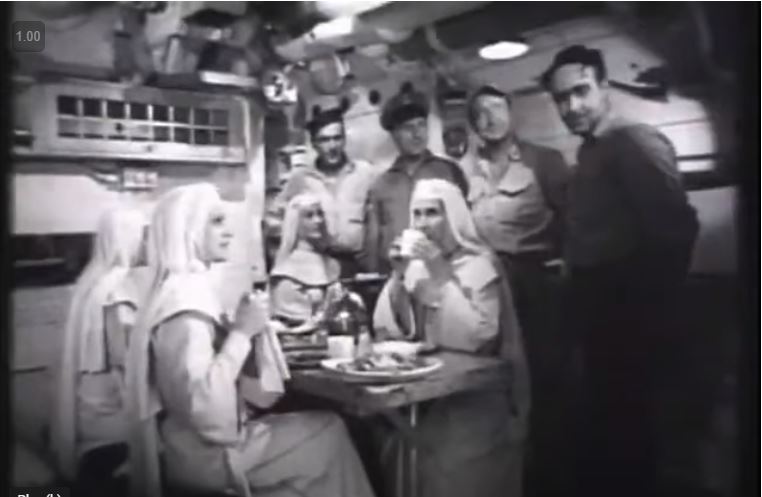
“Real sugar!” said Sister Hedda when she saw coffee and sandwiches prepared by Ensign Davis. “Real salt!” It was 4:41 when the launch returned with its second load, 5:37 when Nautilus submerged and crept out of the bay.
After months of taro and paupau, the passengers had a New Year’s Day dinner of soup, fried chicken and vegetables, including buttered asparagus, peach pie and fruit cake. The typewritten menu had a message: “Happy New Year to All Hands and Guests.”

That night when the sub came up for air, Bill Brockman received a message: “Congratulations, Nautilus. You were just ahead of the sheriff. Jap destroyer entered Teop harbor shortly after you left.”
There is more to the story which you can read HERE.
 Bowfin Pearl Harbor Base