

The S-5 rescue was a miraculous story of great determination and resourcefulness by the crew.
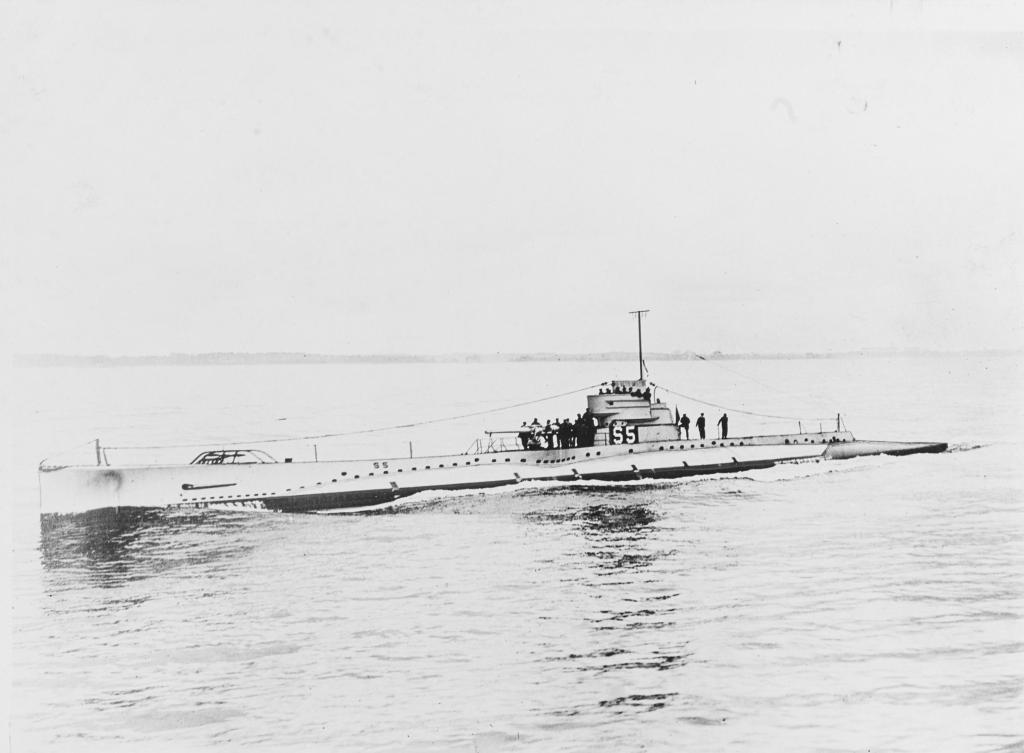
S-5 sank when the forward torpedo room was accidentally flooded preventing a successful surfacing. In a desperate move all main ballast tanks were blown to bring the stern out of the water. The result was more than 60 degree down angle with the nose stuck in the mud; 17 feet of the stern extended out of the water.

The crew was literally walking on the bulkheads; the decks had become bulkheads. There were 34 men on board, crowded into the aft compartments. All kinds of problems were overcome, but they were still trapped with no electricity other than flashlights. The commanding officer, LCDR “Savvy” Cooke, crawled into the tiller room with two chiefs. After eight hours of exhausting effort, using a breast hand drill, they drilled a ¾ inch hole through the pressure hull.
Several more holes were drilled and connected with handsaws and chisels. The effort produced a hole of 1 ½ inches by 4 inches. It was large enough to push a stick with the captain’s shirt on it out of the hole. By then the main problem was putrid air and lack of fresh water. After a painful wait, SS Alanthus’s Captain Johnson was attracted by the odd sight. The ship’s captain approached this small Tower of Pisa in a rowboat.
Using the small opening the following conversation took place:
Johnson: “What ship is this?”
Cooke: “S-5. U.S. Navy”
Johnson: “Who is speaking?”
Cook: “LCDR Charles Cook, commanding.”
Johnson: “Where is your destination?”
Cook: “To Hell by Compass!”
Whereupon both laughed.
This plate was cut from the stern of the USS S-5 to provide egress for the crew from the damaged submarine. The plate reads:
“Removed from the United States Submarine S-5 to allow the crew of that vessel to escape after being imprisoned for 37 hours, the S-5 while engaged in diving exercises flooded a forward compartment and sank at 2:00 pm September 1, 1920 in 165ft of water. After repeated efforts, the crew managed to bring the stern of the vessel to the surface. The vessel was lying at an angle of 60 degrees with the bow resting on the bottom. The crew managed to cut a small hole in the hull and by an improvised signal attracted the attention of the passing steamer ALANTHUS. Later the Pan-American steamer GEORGE W. GOETHALS arrived on the scene. The chief engineer of that that vessel, assisted by the chief engineer of the ALANTHUS, worked with a ratchet drill and chisel, removed this plate at 3:00am September 3, 1920 and the crew of S-5 numbering 34 men were rescued.“
 Bowfin Pearl Harbor Base